Owner’s manual
 Error Codes


How do I tell what model my Kenmore dryer is?
Your Kenmore dryer’s model number is printed on the model and serial number plate; on model 11062954100, that plate is located on the cabinet (commonly in the door opening). Once you have the full model number, we can match the correct parts and specifications.
Where to find the model number plate
Check these common locations on Kenmore dryers:
- Inside the dryer door opening on the front frame (most common)
- On the back panel of the dryer cabinet
- Near the lint screen housing (depending on design)
- On the side of the door opening or inside the door area
For the exact plate location and how it’s labeled, use the 11062954100 owner's manual.
What to write down (and why)
Record both numbers exactly as shown on the plate:
- Model number (example format: 110XXXXXXXX)
- Serial number (helps identify production details)
- Date of purchase (useful for service history)
Why it matters
Kenmore model numbers can look similar, but small differences change the correct fit for parts like a heating element, thermal fuse, or timer. Using the full model number prevents ordering the wrong replacement.
Quick ID tips for Kenmore model numbers
| What you see | What it usually means | How we use it |
|---|---|---|
| Starts with 110 | Common Kenmore-built platform | Matches the correct parts diagrams and lists |
| Full model number (all digits) | Exact dryer configuration | Ensures correct part fit and wiring |
| Serial number | Unit-specific identifier | Helps with service and documentation |
If the label is hard to read
- Wipe the plate gently with a damp cloth and mild soap; dry it
- Use a flashlight at an angle to make faint printing easier to see
- Take a close-up photo and zoom in
- Copy the number exactly, including any leading zeros
Last updated: February 2026
What are the most common issues with 11062954100?
The most common problems we see on Kenmore dryer model 11062954100 are no heat, long dry times, won’t start, and noisy tumbling. These issues usually trace to airflow restrictions, heat-circuit safety parts, or drum support wear.
Most common symptoms and likely causes
- No heat: failed heating element, open thermal fuse, or cut-off in the heater circuit
- Long dry times: clogged venting, restricted lint screen housing, weak blower wheel
- Won’t start: door switch issue, push-to-start switch problem, timer/contact failure
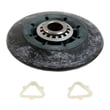
- Noisy operation (squeal, thump, rumble): idler pulley wear, drum support wear, blower wheel rubbing
- Stops mid-cycle: overheating from poor airflow, temperature sensing issues
Quick checks we recommend first
Follow the diagnostic and safety steps in the 11062954100 owner's manual.
- Confirm strong airflow at the outside vent hood while running
- Clean lint screen and check the lint screen housing for buildup
- Verify the correct cycle and temperature setting (especially on timed dry)
- If electric: confirm the dryer has full power (a partial power loss can run the motor but not heat)
Common parts involved on this model
These are frequently replaced when the symptoms above show up:
| Problem | Part to check | Example from this model |
|---|---|---|
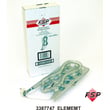
| No heat | Heater and safety devices | Dryer heating element WP3387747, dryer thermal fuse WP3390719 |
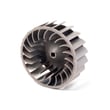
| Long dry times | Air movement | Dryer blower wheel WP697772 |
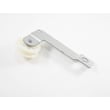
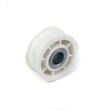
| Squealing | Belt tension path | Dryer idler pulley 279640 |
Why it matters
Dryer problems often stack up: restricted venting causes overheating, which can blow a thermal fuse and create a “no heat” complaint. Fixing airflow first helps prevent repeat failures and protects the heating circuit.
Last updated: March 2026
What is the average lifespan of 11062954100?
A Kenmore dryer like model 11062954100 typically lasts 13 years with normal household use. Consistent airflow (clean lint screen and venting) and timely replacement of wear parts help this dryer reach its full service life.
What affects lifespan most
- Vent restriction and overheating (most common life-shortener)
- Load size and cycle selection (overloading strains the drive system)
- Heat system condition (heater, thermal fuse, cut-offs)
- Drum support wear (rollers, idler pulley, seals)
- Electrical supply stability and good connections
Maintenance that adds years
Use the maintenance schedule and safety notes in the 11062954100 owner's manual.
- Clean the lint screen every load (replace if torn or warped)
- Inspect and clean the full vent run regularly; keep it short and unobstructed
- Stop using the dryer if you smell burning; check for lint buildup inside the cabinet
- Address long dry times early (often airflow, not “more heat”)
Parts that commonly determine “end of life” (and are replaceable)
Many “old dryer” symptoms are just worn components. For this model, common replacements include:
| Symptom | Often involved part | Example from this model |
|---|---|---|
| No heat or shuts off | Safety devices in the heat circuit | Dryer thermal fuse WP3390719 |
| Long dry times, weak airflow | Air movement components | Dryer blower wheel WP697772 |
| Squealing or thumping | Drum support and belt path | Dryer idler pulley 279640 |
Why it matters
Knowing the typical lifespan helps you decide whether to repair or refresh key components. On a 11062954100, restoring airflow and replacing a few wear parts often brings performance back without replacing the whole dryer.
Last updated: March 2026