Owner’s manual
 Error Codes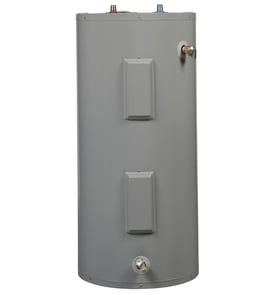



Where is the model number on my water heater?
On Kenmore electric water heater model 153313330, the model number is printed on the model rating plate located above the access panel on the tank. That same rating plate typically also lists the serial number and key electrical ratings.
What to look for on the rating plate
The rating plate is a label on the outside of the tank. When you find it, focus on the fields that help with parts and service.
- Model number (for example, 153313330)
- Serial number (useful for age and service history)
- Voltage and wattage (helps match heating elements and thermostats)
- Tank capacity (gallons)
- Safety and certification markings
For the exact label location and diagrams for your unit, use the 153313330 owner's manual.
Quick steps to find it safely
- Locate the access panel on the side of the tank.
- Look just above that panel for the model rating plate.
- Write down the model and serial number exactly as shown.
- Use a flashlight if the heater is in a dim closet or basement
- Take a clear photo so you can zoom in later
- Copy letters and numbers exactly; one digit off can change the parts list
Why it matters
The model number is what we use to match the correct Kenmore parts for your water heater, such as a thermostat, heating element, or temperature and pressure relief valve. It also helps you confirm you are using the right instructions for maintenance and troubleshooting.
Common label mix-ups
| What you see | What it means | What to use for parts |
|---|---|---|
| Model number | Identifies the exact water heater design | Use this first |
| Serial number | Identifies your specific unit | Helpful, but secondary |
| Voltage/watts | Electrical rating | Use when selecting electrical parts |
Last updated: January 2026
How long will an electric hot water heater last?
Most electric water heaters last 10 to 15 years. For Kenmore model 153313330, lifespan depends mainly on water quality and maintenance, especially keeping sediment down and protecting the tank with a working anode rod and safety valve checks.
Typical lifespan ranges
| Water heater type | Typical lifespan | What usually ends it |
|---|---|---|
| Standard tank, electric | 10 to 15 years | Tank corrosion, element failure, heavy sediment |
| Well-maintained tank, electric | 15+ years | Eventually tank corrosion |
| Tankless electric | 20+ years | Scale buildup, component wear |
What extends the life of model 153313330
We see the longest service life when these basics are done consistently (use the maintenance schedule in the 153313330 owner's manual).
- Test the temperature-pressure relief valve yearly; it must be manually operated at least once a year.
- Flush sediment periodically; sediment can cause rumbling and reduces heating efficiency.
- Keep the anode rod installed and active; removing it leaves the tank unprotected.
- Address smelly water correctly; anode replacement plus tank and line chlorination is a common fix.
- Fix small leaks early; loose fittings and connections can look like a tank problem.
Parts that commonly affect lifespan
These parts are directly tied to corrosion protection, safe operation, and heating performance.
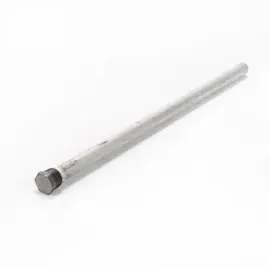
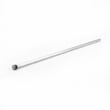
- Anode rod 100108260 (corrosion protection for the tank)
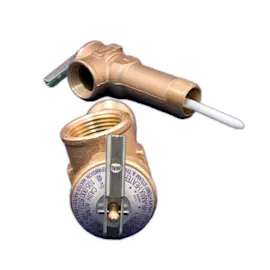
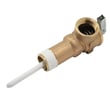
- Wheelers water heater temperature and pressure relief valve 100108455 (safety valve that should be tested yearly)
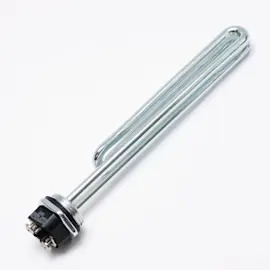
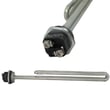
- Element 3800 100108327 (heating element; scale buildup can shorten its life)
Why it matters
A water heater usually fails in one of two ways: it stops heating (often an element or thermostat issue) or the tank begins to leak (corrosion). Regular flushing and anode maintenance help delay tank corrosion, which is the failure that ends the heater’s usable life.
Last updated: January 2026
How do I know what type of water heater I have?
For Kenmore model 153313330, you have an electric water heater. The quickest way to confirm the type on any water heater is to check the model rating plate and the hot/cold water connections on the top cover, then match that information to the 153313330 owner’s manual.
Fast ways to identify your water heater type
- Check the model rating plate: it lists the model number and electrical information; on this Kenmore unit, the plate is located above the access panel.
- Look for power supply wiring: electric water heaters have electrical wiring into an access panel (not a gas burner and vent).
- No exhaust vent: electric models do not use a metal flue vent for combustion gases.
- Confirm hot and cold ports: the top cover markings identify hot outlet and cold inlet.
- Verify voltage: this water heater is equipped for one voltage only; the correct voltage is shown on the rating plate.
What to look for on the tank (quick checklist)
| What you see | What it usually means | What to do next |
|---|---|---|
| Rating plate shows a model number and voltage | Electric water heater | Match the model number to the 153313330 owner’s manual |
| Hot outlet and cold inlet marked on top cover | Standard tank-style plumbing layout | Confirm your piping is connected to the correct ports |
| Access panels on the side of the tank | Electric elements and thermostats are behind them | If troubleshooting, plan to test components safely |
Why it matters
Knowing whether you have an electric or gas water heater changes the parts you buy and the troubleshooting steps you take. For example, “no hot water” on an electric model often points to power supply, thermostats, or heating elements rather than venting or a gas control.
Related parts that commonly come up on electric models
If you are diagnosing heating or temperature issues on model 153313330, these model-matched parts are commonly involved:
- Thermostat 100108424
- Element 3800 100108327
- Water heater temperature and pressure relief valve 100108455
Last updated: January 2026
Do I need 10 2 or 10 3 for a water heater?
For the Kenmore 153313330 electric water heater, the wiring diagram shows a 240-volt, 2-wire lead connection (two hot conductors plus equipment ground), so you normally run a 2-conductor cable with ground; 10/3 is only needed when a neutral is required.
What this model is wired for
The 153313330 owner’s manual includes a “standard wiring for 2 wire lead water heaters, 240 volt single element” diagram. That means the heater’s heating circuit uses:
- Hot leg L1
- Hot leg L2
- Equipment ground
A neutral conductor is not part of the basic heating circuit.
10/2 vs 10/3: how to choose
Use the conductor count based on whether a neutral is actually required.
- 10/2 with ground: two insulated conductors plus ground; used for straight 240V loads with no neutral
- 10/3 with ground: adds a neutral conductor; used only if the equipment specifically calls for a neutral
- If you run 10/3 but the heater does not use neutral, the extra conductor stays capped and unused in the junction box
Breaker and wire size (match the nameplate)
Cable gauge is determined by the heater’s nameplate amperage and your local electrical code. Many residential electric water heaters are on a 30-amp, 240V circuit.
| Typical circuit | Typical copper wire | Typical cable choice |
|---|---|---|
| 240V, 30A | 10 AWG | 10/2 with ground (most common) |
| 240V, 40A | 8 AWG | 8/2 with ground |
Why it matters
Using the correct conductor count prevents miswiring, and matching breaker size to the heater’s rating prevents overheated wiring and nuisance trips. The manual’s 2-wire lead diagram confirms this model’s standard hookup does not rely on a neutral.
Last updated: January 2026