 Error Codes




How to remove bottom grille on GE refrigerator?
On the GE GBE17HYRCFS bottom-mount refrigerator, the bottom grille (base grille or toe grille) typically comes off by releasing its retaining clips and then pulling the grille straight out. If your grille is screw-secured, remove the screws first, then slide or pull the grille off.
- Unplug the refrigerator or switch off power at the breaker for safety.
- Open both doors for better access and lighting.
- Look along the top edge of the grille for clip tabs; press the tabs in with your fingers or a flat-blade screwdriver.
- Pull the grille straight toward you to disengage the bottom hooks.
- If you see screws (often Phillips), remove them first, then pull the grille off.
- Set the grille aside and keep any screws together for reinstallation.
- Hidden screws: Some versions use screws at the ends or along the top edge.
- Stuck clips: Press each clip fully while gently pulling; do not yank from one side only.
- Floor contact: If the grille is rubbing the floor, raise the front leveling legs slightly and try again.
- Warped grille: A bowed grille can bind; pull evenly from the center.
| Grille style | How it goes back on | What “done” looks like |
|---|---|---|
| Clip-on | Hook bottom tabs first, then press top edge in | Even gap, no rattling |
| Screw-secured | Position grille, then reinstall screws | Grille sits flush, screws snug |
Removing the bottom grille gives you access for cleaning dust from the condenser area and checking for airflow restrictions. Keeping that area clean helps cooling performance and can reduce run time.
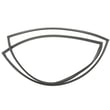
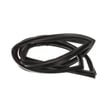
If you find a broken clip or damaged grille hardware while removing it, we recommend replacing the damaged component rather than forcing it. For example, if you are working near the freezer door area and notice sealing issues, a worn gasket can also affect cooling efficiency; the freezer door gasket WR14X39798 is a model-matched option listed for GBE17HYRCFS.
Last updated: February 2026
How to order GE appliance parts?
To order replacement parts for your GE GBE17HYRCFS bottom-mount refrigerator, match the part to your model and then purchase it from the parts list for this model. Using the exact model number helps ensure the part fits and installs correctly.
- Confirm the full model number is GBE17HYRCFS (from the rating label inside the fresh food section).
- Identify the failed part by symptom (cooling issue, door not sealing, noise, etc.).
- Compare the part name and part ID to what you need.
- If you are unsure, start with the most common failure points (thermistors, fan motor, gasket, control).
- Order by the part ID shown for this model to avoid mismatches.
These are examples from the parts available for this model:
| Symptom | Part to check | Example part on this model |
|---|---|---|
| Warm refrigerator or freezer | Evaporator fan, sensors | Refrigerator freezer evaporator fan motor assembly WR60X42165 |
| Frost buildup, poor defrost | Defrost heater, defrost sensor | Defrost heater WR09X29703, defrost sensor WR55X29702 |
| Door not sealing, moisture | Door gasket | Freezer door gasket WR14X39798 |
| Lights out or flickering | LED board | Led board WR55X39776 |
Ordering by model number and part ID prevents fit issues and repeat repairs. Refrigerators often have multiple versions of similar-looking parts (like sensors, boards, and gaskets) that are not interchangeable.
If you are troubleshooting before ordering, use these GE refrigerator resources:
Last updated: February 2026
What are the disadvantages of a bottom freezer refrigerator?
Bottom-freezer refrigerators like the GE GBE17HYRCFS keep fresh food at eye level, but the tradeoffs are more bending for frozen items, heavier freezer drawers that can wear hardware faster, and fewer easy-access freezer shelves compared with many top-freezer designs.
- You bend or squat more to reach frozen foods, especially items at the back of the drawer.
- Freezer drawers can feel heavy when fully loaded; that extra weight puts more stress on glides, rollers, and door sealing surfaces.
- Freezer organization can be harder because many bottom freezers rely on stacked bins instead of multiple fixed shelves.
- They often cost more than comparable top-freezer models (more complex drawer and sealing design).
- If the freezer door seal is not closing tightly, frost and temperature swings can show up sooner because the drawer is opened and tugged more.
If the freezer drawer starts dragging, not sealing, or feeling “off track,” these are common wear areas to check on this model:
- Drawer support and movement components such as the roller WR02X45725
- Door sealing components such as the freezer door gasket WR14X39798
- Door alignment issues that can make the gasket leak and cause frost buildup
| Feature | Bottom freezer | Top freezer |
|---|---|---|
| Fresh food access | Easier (eye level) | More bending |
| Frozen food access | More bending | Easier |
| Freezer storage style | Drawer and bins | Shelves and bins |
| Wear points | Drawer hardware, gasket sealing | Door hinges, gasket sealing |
The main downside is ergonomic and mechanical: frequent opening of a loaded freezer drawer increases strain on moving parts and can make sealing and alignment more sensitive. Keeping the drawer aligned and the gasket clean helps maintain stable temperatures and reduces frost.
- Use our how to fix a fridge door seal steps if you see gaps, frost, or moisture around the freezer drawer.
- If the door alarm is sounding due to a drawer not closing fully, follow how to reset the door alarm on a GE refrigerator.
Last updated: February 2026
What is the most common problem with a GE refrigerator?
The most common GE refrigerator complaint is not cooling properly, usually caused by restricted airflow, a frost/defrost issue, or a failed temperature sensor or fan. On the GE GBE17HYRCFS bottom-mount refrigerator, start with basic airflow checks, then test cooling-system components.
- Fridge warm, freezer cold: airflow or damper problem (cold air not moving into fresh-food section)
- Both sections warm: evaporator fan not running, control issue, or sealed-system problem
- Heavy frost on freezer back wall: defrost system problem
- Temps swing up and down: sensor (thermistor) reading wrong, control reacting incorrectly
- Door not sealing: warm air leaks in, causing long run times and frost
- Confirm vents are not blocked by food packages (especially in the freezer).
- Set temps to typical targets: 37°F fresh food and 0°F freezer.
- Clean condenser area and make sure there is a few inches of clearance for airflow.
- Check door gaskets for gaps; do the paper-strip pull test around the perimeter.
- Listen for the evaporator fan: you should hear it running when the compressor is on.
If the basic checks do not help, these model-matched parts are common next steps:
| Problem pattern | Likely part to check | What it does |
|---|---|---|
| Temps fluctuate, food freezes then warms | Fresh food thermistor upper WR55X28330 | Senses fresh-food temperature for the control system |
| Frost buildup, warm temps after a few days | Defrost sensor WR55X29702 | Monitors evaporator temperature during defrost |
| Freezer warm or weak airflow | Refrigerator freezer evaporator fan motor assembly WR60X42165 | Circulates cold air through freezer and into fridge |
| Fridge warm, freezer OK | Damper WR14X29701 | Regulates cold-air flow into fresh-food section |
When cooling is weak, the compressor and fans run longer, food spoils faster, and frost can build up and block airflow even more. Catching a sensor, damper, or fan issue early often prevents bigger cooling failures.
- Use GE refrigerator error codes to match any displayed code to the most likely failed component.
Last updated: February 2026
How much does it cost to replace a control board on a GE refrigerator?
For a GE GBE17HYRCFS bottom-mount refrigerator, replacing the control board typically runs $250 to $500 total (part plus labor). The board itself is commonly $150 to $300, and professional installation often adds $100 to $200 depending on access and diagnosis time.
- Main control board price: often the biggest variable by model and revision
- Labor: service call plus installation and testing
- Diagnosis time: confirming the board is the failure (not wiring, sensors, or a fan)
- Additional parts: sometimes needed if connectors are damaged or a related component caused the failure
| Item | Typical range | Notes |
|---|---|---|
| Control board (part) | $150 to $300 | Model-specific pricing varies |
| Labor | $100 to $200 | Includes removal, install, and verification |
| Total installed | $250 to $500 | Most common real-world range |
If you are pricing the part for this specific refrigerator, the model’s listed board is the main control board WR02X39779. That gives you a solid baseline for the parts portion of the repair.
We recommend these steps first because a control board is often replaced when the real issue is elsewhere:
- Power reset: unplug for 5 minutes, then restore power
- Check for error codes: use GE refrigerator error codes to interpret symptoms
- Inspect connectors: look for loose plugs, corrosion, or pinched wiring
- Confirm cooling airflow: a failed evaporator fan can mimic board problems (see how to fix your evaporator cooling fan)
- Rule out sensor issues: temperature sensor problems can cause erratic cooling (for example, the fresh food thermistor upper WR55X28330)
Replacing the correct part the first time saves money and prevents repeat failures. A proper diagnosis helps confirm whether the main control board is actually the cause, or if a thermistor, fan motor, or defrost component is driving the symptoms.
Last updated: February 2026





