
Should you sharpen an edger blade?
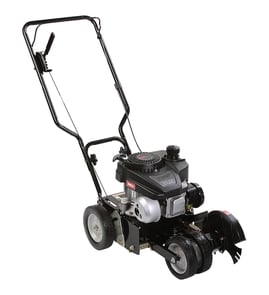
For the Mcclane 101-2R7 lawn edger, we recommend replacing a worn edger blade instead of sharpening it. Most edger blades are designed to wear down in use; sharpening can change the cutting edge shape and increase vibration, which hurts edging performance and safety.
When sharpening is a bad idea
Sharpening often creates problems that show up quickly in the cut quality.
- It can change the blade profile so it no longer tracks cleanly along the edge
- It can create an uneven edge that causes vibration and faster bearing wear
- It can remove too much material and weaken the blade
- It can make the blade harder to control, especially in hard soil or along concrete
- It can lead to a rough, torn edge instead of a crisp trench line
What to do instead (best practice)
Use blade condition to decide whether to keep using it or replace it.
| Blade condition | What you should do | Why |
|---|---|---|
| Edge is rounded but blade is straight and not cracked | Keep using it until performance drops | Normal wear is expected |
| Blade is nicked, bent, or wobbles | Replace the blade | Prevents vibration and poor tracking |
| Blade is cracked or missing chunks | Replace immediately | Reduces risk of blade failure |
| Edger won’t cut cleanly even with proper depth | Inspect and likely replace | Worn edge and/or alignment issue |
Quick checks before you blame the blade
A dull-looking blade is not always the only cause of poor edging.
- Confirm the blade is mounted tight and spins true (no side-to-side wobble)
- Check edging depth setting; too shallow can look like a dull blade
- Clear packed dirt and grass from the guard and blade area
- Inspect the drive system (belt/chain/clutch, depending on your setup) for slipping
- Verify wheel height and guide alignment so the blade tracks straight
Why it matters
A blade that is out of shape or out of balance can make the edger vibrate, wander, and cut unevenly. Replacing the blade when it is worn keeps your Mcclane 101-2R7 cutting cleanly and helps protect the spindle, bearings, and drive components.
For help matching the correct replacement blade to your exact model listing, use the parts lookup on Sears PartsDirect.
Last updated: February 2026
What can 101-2R7 be used for?
The Mcclane 101-2R7 is a lawn edger (edge trimmer) used to cut a clean, defined edge along sidewalks, driveways, curbs, and landscape borders by trimming turf back from hard surfaces.
Common jobs the Mcclane 101-2R7 handles
- Edging along concrete sidewalks and patios
- Defining driveway edges where grass creeps over
- Trimming along curbs and street edges
- Cleaning up around landscape beds (keeping a crisp border)
- Re-cutting an edge after mowing or string trimming
What it is (and is not) designed to do
| Task | Good fit for a lawn edger? | Better tool if not |
|---|---|---|
| Cutting a narrow trench-like edge line | Yes | N/A |
| Removing thick brush or saplings | No | Brush cutter or saw |
| Leveling soil or grading | No | Rake or shovel |
| Trimming grass around posts/fences | Sometimes | String trimmer |
Quick setup and use tips
- Edge when the soil is slightly damp; it cuts cleaner and reduces bouncing.
- Make shallow passes first; forcing a deep cut can stall the engine and wear the belt/blade faster.
- Keep the blade area clear of string, wire, and rocks before starting.
- If the edger pulls to one side, check wheel height and blade alignment.
Why it matters
Using the 101-2R7 for edging (not brush cutting) helps you get straighter lines, reduces vibration, and prevents premature wear on common wear items like the blade, belt, and wheels.
For help confirming you have the correct model number before ordering parts, use how to find your appliance model number (and what it means for parts).
Last updated: February 2026
How do I identify my McLane edger model number?
Your Mcclane edger’s model number is printed on an ID label or stamped plate on the machine. For model 101-2R7, check the engine area first, then the frame and underside; record every letter, number, and dash exactly.
Where to look on a Mcclane edger
Check these common locations in order:
- Front or side of the engine (blower housing or engine shroud)
- On the frame near the wheels or belt/chain guard area
- Near the handle mount or control linkage area
- Rear of the unit near the axle area
- Underside of the deck (wipe dirt off before reading)
How to write it down correctly
Small differences can change the parts list, so we recommend:
- Copy the model number exactly (example format: 101-2R7, including the dash)
- Note any extra numbers on the same tag (often a serial number or spec code)
- Take a clear photo before the label wears further
- If the label is dirty, clean gently with a rag and mild cleaner (avoid scraping)
Quick checklist: model number vs. other numbers
| What you see | What it usually means | Use it for parts lookup? |
|---|---|---|
| Model number (ex: 101-2R7) | The edger’s model ID | Yes |
| Serial number | Unique unit identifier | Sometimes helpful |
| Engine model/type code | The engine’s ID (separate from edger) | Only for engine parts |
Why it matters
Mcclane edgers can use different belts, blades, pulleys, and guards across similar-looking units. Using the exact model number helps us match the correct diagrams and replacement parts the first time.
For more help confirming the correct number format, use how to find your appliance model number (and what it means for parts).
Last updated: February 2026
What is the best edger to use?
The best edger to use depends on your yard size and how often you edge. For most homeowners, a cordless battery edger is the easiest all-around choice; for heavy weekly edging or thick turf, a gas edger is typically the strongest. If you already own a Mcclane 101-2R7, keeping it tuned and using the right blade setup often beats replacing it.
Quick pick guide (match the edger to the job)
- Small sidewalks and light touch-ups: cordless battery edger
- Medium yards, regular weekly edging: corded electric or higher-voltage cordless
- Large yards, thick bermuda or compacted edges: gas edger (more torque)
- Need a crisp, deep edge line: dedicated walk-behind edger (like many Mcclane units)
- Need to cut a shallow channel for wire or irrigation: edger with a trenching-capable blade
What to compare before you buy
| What you care about | Best match | Why it matters |
|---|---|---|
| Power for tough turf | Gas or walk-behind | Maintains blade speed under load for cleaner edges |
| Lowest maintenance | Corded electric | No fuel system, fewer tune-ups |
| Convenience | Cordless battery | Fast start, no cord management |
| Lowest noise | Corded or cordless | Better for close neighbors and early work |
Why it matters
The “best” edger is the one that keeps blade speed steady and tracks straight along the edge. When power is too low or the blade is dull, you get ragged edges, scalping, and extra passes.
If you are keeping your Mcclane 101-2R7
A performance drop is usually maintenance-related. Focus on these basics first:
- Sharpen or replace the edger blade when the edge looks torn
- Check belt/drive tension and alignment (if your configuration uses a belt drive)
- Clean packed grass from the blade guard and depth area
- Verify wheel tracking and cutting depth so the blade stays vertical
- Use fresh fuel and correct oil level on gas engines
For general DIY safety and prep before servicing, use are diy appliance repairs safe.
Last updated: February 2026
What is the significance of 101-2R7?
For the Mcclane model 101-2R7 lawn edger, 101-2R7 is the model number that identifies the exact edge trimmer version so we can match the correct parts diagrams, part listings, and repair information to your machine.
What the model number tells us
We use Mcclane 101-2R7 to narrow down the correct configuration of your lawn edger. That matters because small differences between models can change fit and function.
Common things the model number helps match:
- The correct parts breakdown (exploded view) for your edger
- The right blade, belt, and wheel components for your build
- The correct engine-related hardware (mounting, pulleys, guards)
- The right fasteners and covers that fit your frame
- The correct maintenance items you would replace over time
Where to find 101-2R7 on the edger
On most Mcclane edgers, the model number is shown on an ID plate or decal.
Check these typical locations:
- The frame near the engine mount
- The handle assembly or handle support bracket
- Near the belt/chain guard area
- On the rear of the frame by the wheels
Why it matters when ordering parts
Using the exact model number prevents ordering parts that look similar but do not fit.
| What you have | What we use it for | Why it helps |
|---|---|---|
| Model number (101-2R7) | Selects the correct parts list | Ensures fit by model/version |
| Part description (for example, “blade” or “belt”) | Narrows the section in the diagram | Speeds up identification |
| Measurements (belt length, blade size) | Confirms compatibility | Avoids returns and downtime |
Quick tip before you shop
If your ID plate also lists a serial number, keep it handy; it can help confirm production variations.
For help locating and interpreting the ID tag details, use how to find your appliance model number (and what it means for parts).
Why this matters
The model number is the key that ties your Mcclane lawn edger to the correct replacement parts, which saves time and helps you get a safe, reliable repair.
Last updated: February 2026