
How to remove router bit from Craftsman router?
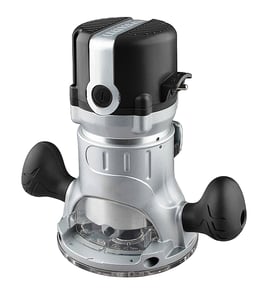
To remove a router bit from your Craftsman router model 31517431, unplug the tool, lock the spindle (or hold it with a wrench), then loosen the collet nut until the bit releases and slides out. If the bit feels stuck, a second loosen step usually frees it.
- Unplug the router (do not rely on the switch).
- Remove the base if it blocks access to the collet and bit.
- Press and hold the spindle lock (if your router has one). If it does not, use two wrenches.
- Turn the collet nut counterclockwise to loosen.
- Keep loosening until you feel the bit “pop” free from the collet taper.
- Slide the bit straight out; wipe the shank clean before reinstalling.
A bit can bind in the collet from pitch buildup, overtightening, or a slightly undersized shank.
- Loosen the collet nut a few turns, then loosen a bit more until the collet releases.
- Tap the wrench handle lightly (controlled, not hard) to help break the collet’s grip.
- Remove the bit and clean the collet and bit shank with a dry rag.
- If you see resin buildup, clean and dry thoroughly before reassembly.
| Setup | What you use | What you’ll notice |
|---|---|---|
| Spindle lock style | 1 wrench | Button/lock holds the shaft while you loosen |
| Two-wrench style | 2 wrenches | One holds the shaft, one turns the collet nut |
A properly released collet prevents damage to the collet, nut, and bit shank. It also helps the bit seat correctly next time, reducing vibration and improving cut quality.
For more DIY safety basics before working on powered equipment, use our guide: are diy appliance repairs safe.
Last updated: February 2026
Does Craftsman make a router table?
Yes. Craftsman has made router tables and router-table accessories that can be used with many Craftsman routers, including models in the same family as the Craftsman 31517431. The key is matching the router’s base mounting pattern, bit clearance, and intended use (handheld vs. table-mounted).
A router table is only a good fit if the router can mount securely and operate safely. Before buying or setting up a table, we recommend checking:
- Mounting compatibility: the table’s insert plate must match (or be drillable for) your router’s base screw pattern
- Base opening size: enough clearance for the largest bit you plan to use
- Depth adjustment access: whether you can adjust bit height from above the table (or at least easily from below)
- Switching: a safe way to turn the router on and off (many tables use a separate safety switch)
- Dust collection: a fence port and/or cabinet port to control chips
| Router table type | Best for | What to watch for |
|---|---|---|
| Benchtop router table | Small shops, occasional use | Lighter fences can flex; smaller work surface |
| Cabinet-style router table | Frequent use, better dust control | Heavier, takes more space |
| Table saw wing router table | Saving space | Fence alignment and shared workspace |
A router table turns your Craftsman 31517431 into a more controlled setup for edge profiles, grooves, and repeatable cuts. The wrong table or insert plate fit can cause vibration, poor cut quality, or unsafe operation.
If you need to troubleshoot power, switches, or wiring before table-mounting your router, use how to use a multimeter to test electrical parts video.
Last updated: February 2026
What is a Sears Craftsman router?
A Sears Craftsman router, like the Craftsman 31517431, is a handheld power tool used to shape, trim, and cut wood with a spinning router bit. We commonly see it used for edge profiles, dadoes, rabbets, hinge mortises, and laminate trimming.
A router is designed to remove material accurately and repeatedly. Typical woodworking tasks include:
- Rounding over or chamfering edges with profile bits
- Cutting grooves (dadoes) and slots
- Cutting rabbets for cabinet backs
- Flush-trimming laminate or wood to a template
- Making mortises for hinges or hardware
Exact specs vary by version and accessory setup, but most corded Craftsman routers in this class share common elements:
- 120V corded electric motor (standard U.S. household power)
- Adjustable depth setting (depth stop or ring adjustment)
- Collet to hold common shank sizes (often 1/4-inch and sometimes 1/2-inch)
- Base that can be used freehand or with guides
- Compatibility with edge guides, template guides, and straight bits
| Tool | Best for | Typical result |
|---|---|---|
| Router | Shaping and precise joinery cuts | Clean profiles, grooves, flush trims |
| Jigsaw | Curved cuts in sheet goods | Rougher edge, needs sanding |
| Circular saw | Straight cuts in lumber/sheet goods | Fast rip/crosscuts |
| Trim router | Light edge work and laminate | Smaller cuts, easier one-hand control |
Knowing what a router does helps you pick the right bit, depth setting, and guide method for safer, cleaner cuts. It also helps when you are troubleshooting issues like burning, chatter, or tear-out, which are usually tied to bit choice, speed, and feed rate.
For safe electrical troubleshooting steps (useful if your router won’t start or cuts out), follow our guide: how to use a multimeter to test electrical parts video.
Last updated: February 2026
Does Craftsman make a corded router?
Yes. Craftsman makes corded routers, and your Craftsman router model 31517431 is a corded-style woodworking tool that runs from a standard power cord for steady power during routing, edge profiling, and dado work.
A corded router plugs into an outlet, so you get consistent RPM and torque for longer cuts without stopping to recharge.
- Steadier power for heavy cuts in hardwood
- No battery downtime; good for long sessions
- Typically higher sustained RPM under load
- Works well with router tables and jigs
- Easy to pair with a shop vacuum for dust control
| Feature | Corded router | Cordless router |
|---|---|---|
| Runtime | Unlimited (plug-in) | Limited by battery |
| Best for | Router table, long cuts, larger bits | Quick trim work, portability |
| Power consistency | High | Varies with battery level |
| Typical use | Shop projects, repeated passes | On-site, light-duty tasks |
Use these checks to identify corded configuration and match the right replacement items (like a cord, switch, or brushes) when servicing.
- Look for a fixed power cord exiting the motor housing
- Check the rating label for amps (A) and volts (V)
- Inspect the cord strain relief for cracking or looseness
- If the router cuts out, check the cord for internal breaks near the handle
- If the motor runs rough or sparks heavily, inspect the brushes and commutator
Corded routers like the Craftsman 31517431 are a strong choice when you need repeatable performance for woodworking projects. Knowing it is corded helps you troubleshoot common issues (power loss, worn brushes, switch problems) and choose compatible repair parts.
For help locating the correct parts by model number and diagrams, start at Sears PartsDirect.
Last updated: February 2026