Owner’s manual
 Error Codes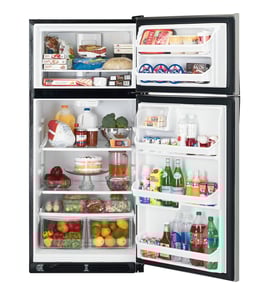





How many cubic feet is my Kenmore refrigerator by model number?
Your Kenmore top-mount refrigerator model 10662262100 has a specific cubic-foot capacity, but the most accurate way to confirm it is to read the model and serial label inside the fresh food compartment and then match that information to the specifications listed in the owner's manual.
Fast ways to find the cubic-foot capacity
Use these options in order; the first two are the most reliable for your exact model.
- Check the model and serial number label on the inside wall of the refrigerator compartment (this is the rating plate).
- Look up the specifications section in the owner's manual for model 10662262100.
- If the manual lists features but not capacity, use the label information (model and serial) to ensure you are matching the correct version of the refrigerator.
- If you are measuring for fit (not true capacity), focus on cabinet dimensions and required clearances instead of cubic feet.
What “cubic feet” means (and why it can be confusing)
Cubic feet is the interior storage volume of the refrigerator and freezer combined. It is not the same as outside dimensions, and it can vary slightly by configuration (shelves, ice maker, and door bins).
Capacity vs. space you can actually use
| What you are checking | What it tells you | Best use |
|---|---|---|
| Cubic-foot capacity | Total interior volume | Comparing refrigerator sizes |
| Shelf and bin layout | Usable storage space | Deciding if your food fits |
| Installation clearances | Space needed around the cabinet | Making sure it fits in your kitchen |
Why it matters
Knowing the correct cubic-foot capacity helps when you are comparing replacement refrigerators, planning kitchen space, or deciding whether add-ons like an ice maker reduce usable room. For installation planning, our manual also calls out typical ventilation space needs (for example, leaving clearance at the sides and top).
Last updated: February 2026
How do I tell what model Kenmore fridge I have?
You can identify your Kenmore refrigerator model by finding the model and serial number label; on Kenmore model 10662262100, the label is located on the inside wall of the refrigerator compartment. Use that full model number when looking up parts, manuals, and service information in the owner's manual.
Where to look for the model number label
Check these common spots first (use a flashlight and look for a sticker or metal tag):
- Inside the fresh food (refrigerator) compartment on a side wall (most common)
- On the ceiling or back wall of the refrigerator compartment
- Inside the freezer compartment on a side wall
- Along the door frame (open the door and look around the perimeter)
- Behind the lower crisper drawers (remove drawers to see the liner wall)
- Near the front base area behind the toe grille or kick plate
What to write down (and why)
Record the information exactly as shown on the label:
- Model number (for example: 10662262100)
- Serial number
- Purchase date (if available)
This matters because Kenmore model families can share similar styling, but use different parts such as an ice maker, door gasket, thermostat, or water inlet valve.
Quick check: model number vs. serial number
| Item on the label | What it tells us | When you need it |
|---|---|---|
| Model number | The exact design and parts match | Ordering parts and using diagrams |
| Serial number | Production details for that unit | Some service and warranty records |
Why it matters
Using the exact model number prevents ordering the wrong replacement part and speeds up troubleshooting for issues like no ice, water leaks, warm temperatures, or door seal problems.
Last updated: February 2026
How to read Kenmore model numbers?
Kenmore model numbers tell us who built the appliance and which design family it belongs to. For Kenmore refrigerator model 10662262100, the 106 prefix identifies the manufacturer, and the remaining digits narrow down the exact configuration so we can match the correct parts and service information in the 10662262100 owner's manual.
Where to find the model and serial number label
For Kenmore 10662262100, the model and serial number label is located on the inside wall of the refrigerator compartment.
- Open the fresh food (refrigerator) door
- Look along the inside side wall near the crisper area or upper liner
- Write down the full model number and serial number exactly as shown
- Record the purchase date for your records
How Kenmore model numbers are typically structured
Kenmore model numbers usually follow a predictable pattern that helps us identify the build source and the correct parts list.
| Section of model number | Example (10662262100) | What it tells us |
|---|---|---|
| Prefix (first 3 digits) | 106 | Manufacturer code (who built it) |
| Remaining digits | 62262100 | Series and feature variations (doors, controls, options) |
Why the full model number matters for parts
Even small digit changes can mean different shelves, door gaskets, ice maker wiring, or water system routing. Using the complete model number helps us match the right replacement part the first time.
- Door seal and fit can vary by series (fresh food vs freezer gasket)
- Ice maker style and harness connections can differ
- Water inlet valve and tubing routing can change by configuration
- Light switch and bulb style can vary by production run
If you are ordering common replacements for this model, examples include the ice maker assembly - refrigerator ice maker by whirlpool 4317943 and the refrigerator light switch W11384469.
Why it matters
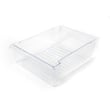
Reading the model number correctly prevents ordering the wrong refrigerator parts and reduces downtime, especially for fit-sensitive items like a gasket panel, crisper pan, or ice maker assembly.
Last updated: February 2026
What are the most common problems with Kenmore refrigerators?
The most common issues we see on Kenmore refrigerators like model 10662262100 are cooling problems, water leaks, ice maker troubles, and unusual noises. These typically trace back to airflow restrictions (dirty coils or a failing fan), defrost system issues, or water supply and door seal problems; our owner's manual also explains normal operating sounds.
Most common symptoms and what usually causes them
- Not cooling or warm temperatures: dirty condenser coils, evaporator fan not moving air, condenser fan problems, thermostat or sealed system issues
- Frost buildup or freezer icing over: defrost failure (heater, defrost thermostat, or timer/control)
- Water leaking or puddles: clogged defrost drain, cracked water tube, leaking inlet valve, door not sealing
- Ice maker not making ice: water supply issue, inlet valve not opening, ice maker assembly failure
- Noises (buzzing, sizzling, popping, gurgling): often normal; can also be a fan blade hitting ice or a failing fan motor
Quick checks we recommend before replacing parts
- Confirm airflow: keep vents clear inside the refrigerator and freezer.
- Clean condenser coils (if accessible): dust buildup commonly causes poor cooling and long run times.
- Check door sealing: look for gaps, torn gasket, or doors not closing fully.
- Listen for fan operation: evaporator fan noise should be present when the unit is running.
- For ice maker issues: verify the shutoff arm is down (on arm-style units) and the water supply is on.
Common parts that fix these problems on 10662262100
| Problem | Likely part area | Example part on this model page |
|---|---|---|
| Ice maker not working | Ice maker module/assembly | Ice maker assembly - refrigerator ice maker by whirlpool 4317943 |
| Water not dispensing or ice maker not filling | Water inlet valve, water line | Refrigerator inlet valve WP2315576, refrigerator water tube W10823511 |
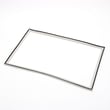
| Door not sealing, moisture, warm temps | Door gasket | Refrigerator gasket panel 2159061 |
| Clicking/humming at start, compressor struggles | Start/run components | Refrigerator run capacitor WP4387764 |
| Frost buildup from defrost issues | Defrost thermostat (bi-metal) | Refrigerator defrost bi-metal WP4387503 |
Why it matters
Cooling, leaking, and ice maker complaints usually share the same root causes: restricted airflow, poor sealing, or inconsistent water flow. Fixing those early helps protect food temperatures, reduces compressor run time, and prevents repeat icing or puddles.
Last updated: February 2026
How do you fix a refrigerator that is not cooling on top?
On Kenmore top-mount refrigerator model 10662262100, a warm refrigerator section (top) is most often caused by restricted airflow between the freezer and fresh food compartments. We fix this by clearing blocked vents, restoring proper air circulation, and then resetting temperature controls per the owner's manual.
Quick checks that solve most “not cooling on top” complaints
- Make sure no food packages are blocking the freezer vents or the top vent that feeds the refrigerator section.
- Confirm the freezer is cold; if the freezer is also warming, focus on overall cooling (compressor, condenser airflow, defrost).
- Set controls back to a normal mid setting and give the unit 24 hours to stabilize.
- Check door closure and gaskets; air leaks can reduce airflow and cause temperature swings.
- Verify the refrigerator has proper ventilation clearance around the cabinet (tight installs can trap heat).
Airflow basics (why the top gets warm)
Your 10662262100 is designed so cool air enters through the bottom of the freezer, moves up, and some air flows into the refrigerator section through the top vent. When vents are blocked, airflow stops and the refrigerator section warms first.
What to do
- Move items away from freezer vents and the refrigerator top vent.
- Avoid overpacking the freezer; leave space for air to circulate.
- After clearing vents, close doors and wait several hours; check temperatures again.
When to suspect a fan or defrost problem
If vents are clear but the refrigerator section stays warm, common causes include weak airflow from the evaporator area or frost buildup restricting air passages.
| Symptom | Most likely direction | What we recommend next |
|---|---|---|
| Freezer cold, fridge warm | Airflow issue | Inspect vents, listen for fan, check for frost blocking airflow |
| Freezer has heavy frost, airflow weak | Defrost issue | Check defrost components and clear ice buildup safely |
| Both sections warm | Sealed system or condenser airflow | Check condenser fan operation and condenser area airflow |
Related parts that can apply to airflow and cooling repairs on this model include the fan blade WP2163777 and the refrigerator condenser fan W10181323.
Why it matters
Blocked airflow can cause temperature and moisture problems, leading to spoiled food in the refrigerator section and frost issues in the freezer. Restoring airflow is the fastest, lowest-cost fix to try first.
Last updated: February 2026