Get free shipping on your order, with any water filter subscription. Find my filter

Open Hamburger Menu
Sears Parts Direct
Tips to find your model number
GE GCWN4950D0WS washer

GE GCWN4950D0WS washer Parts

Here are the diagrams and repair parts for GE GCWN4950D0WS washer, as well as links to manuals and error code tables, if available.

By Schematic
By Part
SELECT DIAGRAM
?

This is the number corresponding to the part on the diagram / schematic

Browse Parts for GCWN4950D0WS Washer

  • Stud Groun for GE GCWN4950D0WS - Part WH2X1190

    Cabinet, cover & front panel diagram

    Ground Stud

    Part #WH02X1190

    Replaced by #WH2X1190

    Info Icon
    Manufacturer substitution
    This part replaces WH02X1190. Substitute parts can look different from the original.
    In Stock
    $8.04
    11% OFF Phone Price : $9.04Info Icon
    Minus Item
    Qty
    Plus Item
  • Washing Mach for GE GCWN4950D0WS - Part WH12X10614C

    Controls & backsplash diagram

    Motor Board Assembly

    Part #WH12X10538

    Replaced by #WH12X10614C

    Info Icon
    Manufacturer substitution
    This part replaces WH12X10538. Substitute parts can look different from the original.
    In Stock
    $228.61
    Minus Item
    Qty
    Plus Item
  • Washer Tub Bearing Washer for GE GCWN4950D0WS - Part WH2X1197

    Tub, basket & agitator diagram

    Tub Bearing

    Part #WH02X1197

    Replaced by #WH2X1197

    Info Icon
    Manufacturer substitution
    This part replaces WH02X1197. Substitute parts can look different from the original.
    In Stock
    $9.14
    10% OFF Phone Price : $10.14Info Icon
    Minus Item
    Qty
    Plus Item
  • Hinge Bushing for GE GCWN4950D0WS - Part WH1X2741

    Cabinet, cover & front panel diagram

    Hinge Bushing

    Part #WH01X2741

    Replaced by #WH1X2741

    Info Icon
    Manufacturer substitution
    This part replaces WH01X2741. Substitute parts can look different from the original.
    In Stock
    $9.01
    10% OFF Phone Price : $10.01Info Icon
    Minus Item
    Qty
    Plus Item
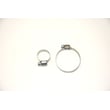
  • Washer Hose Clamp Kit for GE GCWN4950D0WS - Part WH1X2036

    Univ Clamp

    Part #WH01X2036

    Replaced by #WH1X2036

    Info Icon
    Manufacturer substitution
    This part replaces WH01X2036. Substitute parts can look different from the original.
    In Stock
    $16.14
    11% OFF Phone Price : $18.14Info Icon
    Minus Item
    Qty
    Plus Item
  • Washer Recirculation Pump Hose Nozzle for GE GCWN4950D0WS - Part WH1X2729

    Tub, basket & agitator diagram

    Siphon Fl Hd

    Part #WH01X2729

    Replaced by #WH1X2729

    Info Icon
    Manufacturer substitution
    This part replaces WH01X2729. Substitute parts can look different from the original.
    This item is not returnable
    In Stock
    $34.34
    15% OFF Phone Price : $40.34Info Icon
    Minus Item
    Qty
    Plus Item
  • Washer Leveling Leg for GE GCWN4950D0WS - Part WH2X1187

    Cabinet, cover & front panel diagram

    Leveling Leg

    Part #WH02X1187

    Replaced by #WH2X1187

    Info Icon
    Manufacturer substitution
    This part replaces WH02X1187. Substitute parts can look different from the original.
    This item is not returnable
    In Stock
    $22.66
    21% OFF Phone Price : $28.66Info Icon
    Minus Item
    Qty
    Plus Item
  • Washer Front Panel for GE GCWN4950D0WS - Part WH46X10281

    Cabinet, cover & front panel diagram

    Washer Panel And Bracket Assembly (white)

    Part #WH46X10109

    Replaced by #WH46X10281

    Info Icon
    Manufacturer substitution
    This part replaces WH46X10109. Substitute parts can look different from the original.
    In Stock
    $77.10
    7% OFF Phone Price : $83.10Info Icon
    Minus Item
    Qty
    Plus Item
  • Split Ring for GE GCWN4950D0WS - Part WH02X1195

    Tub, basket & agitator diagram

    Split Ring

    Part #WH02X1195

    The manufacturer no longer makes this part, and there's no substitute part

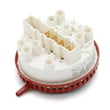
  • Washer Water-level Pressure Switch for GE GCWN4950D0WS - Part WH12X10412

    Controls & backsplash diagram

    Washer Water-level Pressure Switch

    Part #WH12X10412

    The manufacturer no longer makes this part, and there's no substitute part

GE Washer GCWN4950D0WS FAQs

For your GE GCWN4950D0WS washer, the fastest way to confirm capacity is to check the specifications in the GCWN4950D0WS owner’s manual. If you cannot find it there, you can estimate capacity by measuring the wash basket and calculating its volume in cubic feet.

Best ways to identify washer capacity

  • Check the specs section in the GCWN4950D0WS owner’s manual (capacity is typically listed in cubic feet).
  • Look for a model/serial tag on the washer cabinet and match the model number exactly (GCWN4950D0WS) when searching specs.
  • Estimate basket volume if you need a quick approximation.
  • Use loading guidance as a practical check: many GE top-load baskets perform best when clothes are loaded loosely, not packed.

How to estimate capacity (cubic feet)

  1. Unplug the washer for safety.
  2. Measure the inside diameter of the basket (in inches).
  3. Measure the usable depth from the bottom of the basket to the top row of holes (in inches).
  4. Convert inches to feet (divide by 12).
  5. Use the cylinder formula:
What to measure Symbol What it means
Basket radius r (diameter ÷ 2) in feet
Usable depth h depth in feet
Capacity estimate V V = 3.14 × r² × h

Typical capacity ranges (for context)

Washer type Typical capacity
Standard top-load ~3.0 to 4.0 cu. ft.
High-efficiency top-load ~4.0 to 5.5 cu. ft.

Why it matters

Capacity affects load size, cycle performance, and water use. This model uses automatic load sensing and a high-efficiency wash action, so water levels can look lower than older washers even when the load size is correct.

Last updated: February 2026

A 5.0 cu. ft. washer gives you 0.5 cu. ft. more tub space than a 4.5 cu. ft. washer, which mainly means easier loading of bulky items and a little more room per load. Your GE GCWN4950D0WS still uses automatic load sensing, so water level is based on the load, not the advertised capacity.

What that extra 0.5 cu. ft. changes in real use

  • Bulky items fit easier (comforters, blankets, jackets) because the basket has more usable volume.
  • Less “packed-in” loads; clothes can tumble or circulate more freely, which can improve cleaning and rinsing.
  • Slightly fewer loads per week for larger households, depending on fabric types and how you sort.
  • Same best practice: do not fill to the top; leave space so items can move.
  • Cycle time and water use are still driven by cycle selection and load sensing, not just tub size.

Typical capacity guidance (quick comparison)

Washer size Common label Best for What you notice most
4.5 cu. ft. Large Most households Great everyday capacity; bulky loads may feel tighter
5.0 cu. ft. Extra-large Families, frequent large loads More room for bulky items; fewer “stuffed” loads

Why it matters (especially on the GCWN4950D0WS)

This GE washer uses automatic load sensing and a high-efficiency wash action, so the water level can look lower than older washers and still clean effectively. More tub volume mainly helps with load comfort and movement, not with forcing the washer to use more water. For operating and loading tips specific to your washer, use the GCWN4950D0WS owner’s manual.

Tips to get the best results regardless of tub size

  • Load items loosely and evenly around the basket.
  • Mix large and small items to reduce out-of-balance spinning.
  • Use HE detergent and measure carefully to avoid oversudsing.
  • If the washer seems noisy or uneven, level the washer per the GCWN4950D0WS installation guide.
  • If you ever need to stop with water in the tub, use Drain & Spin (or Spin Only) as described in the manual.

Last updated: February 2026

A GE washing machine typically lasts 10 to 14 years. For your GE GCWN4950D0WS washer, consistent care (especially hose replacement, proper loading, and keeping the tub clean) is what most often determines whether you land closer to 10 years or push beyond it.

What extends washer life the most

  • Replace water supply hoses on schedule (GE recommends every 5 years)
  • Load items evenly around the basket; avoid wrapping large items across the infusor
  • Leave the lid open after washing so moisture can evaporate
  • Wipe spills promptly and clean the basket with a soft cloth and mild detergent
  • Turn off water faucets when not in use to reduce leak risk

Maintenance schedule (simple and effective)

Task Best practice Why it helps
Water supply hoses Replace every 5 years Prevents hose failure and water damage risk
Basket care Mild detergent wipe, then rinse Reduces residue and odor buildup
Between loads Leave lid open Limits moisture that drives mildew and corrosion
Loading Distribute items around basket Reduces vibration and wear on suspension and drive

Signs your washer is nearing end-of-life

  • Loud rumbling or grinding during spin (often points to bearing or drive wear)
  • Frequent out-of-balance shaking even with careful loading
  • Water leaks under the tub area
  • Intermittent no-spin or lid-related stopping

If you are seeing no-spin or stopping symptoms, checking the lid safety system is a common first step; the washer lid switch assembly WH12X10334 and washer lid switch magnet WH12X10276 are two related parts used on this model.

Why it matters

A washer can run for years while slowly wearing key systems (hoses, suspension, drive, seals). Following the care steps in the GCWN4950D0WS owner’s manual helps prevent the failures that most often shorten lifespan.

Last updated: February 2026
Most common symptoms to help you fix your washers

Choose a symptom to see related washer repairs.

Main causes: clogged drain hose, house drain clogged, bad drain pump, water-level pressure switch failure, bad control b…

Main causes: broken lid switch or lid lock, bad pressure switch, broken shifter assembly, faulty control system…

Main causes: worn agitator dogs, bad clutch, broken motor coupler, shifter assembly failure, broken door lock, suspensio…

Main causes: water heater failure, bad water temperature switch, faulty control board, bad water valve, faulty water tem…

Main causes: lack of electrical power, wiring failure, bad power cord, electronic control board failure, bad user interf…

Main causes: no water supply, bad water valves, water-level pressure switch failure, control system failure, bad door lo…

Main causes: unbalanced load, loose spanner nut, worn drive block, broken shock absorber or suspension spring, debris in…

Main causes: leaky water inlet valve, faulty water-level pressure switch, bad electronic control board…

Main causes: bad lid switch or door lock, bad timer or electronic control board, wiring failure, bad water inlet valve a…

Repair guides for electric ranges

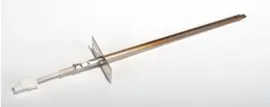
How to replace an oven temperature sensor on an electric range

How to replace an oven temperature sensor on an electric range

These step-by-step instructions guide you through replacing an oven temperature sensing probe.…

Repair time and Difficulty

 15 minutes or less
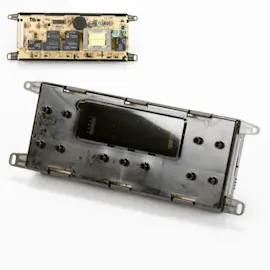
How to replace an electric range oven control board

How to replace an electric range oven control board

If the electronic oven control board isn't powering the bake and broil functions, you can replace it in less than half a…

Repair time and Difficulty

 15 minutes or less
How to replace a range surface element control switch

How to replace a range surface element control switch

The surface element control switch lets you turn the stovetop elements on and off, and to set the heat level. These step…

Repair time and Difficulty

 15 minutes or less

Effective articles & videos to help repair your washers

Use the advice and tips in these articles and videos to get the most out of your washer.

How auto-load sensing washers work (and when they don't)

How auto-load sensing washers work (and when they don't)

Your washer barely fills or seems stuck in sensing mode? Find out how auto-load sensing and Precise Fill features work, …

How to remove the main control board and user interface from a Maytag Epic Z front-load washer

How to remove the main control board and user interface from a Maytag Epic Z front-load washer

Get step-by-step instructions for removing the main electronic control board and the control panel from a Maytage Epic Z…

Using a wiring schematic to trace a current video

Using a wiring schematic to trace a current video

Find out what’s wrong with your appliance by following a circuit.…

Parts & More

Bottom-Mount Refrigerator
Dishwasher
Electric Range
Furnace
Gas Leaf Blower
Gas Range
Gas Walk-Behind Mower
Microwave/Hood Combo
Parts
Refrigerator
Room Air Conditioner
Washer