Owner’s manual
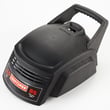

How do I remove the filter from my CRAFTSMAN wet dry vacuum?
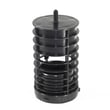
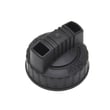
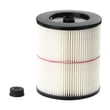
To remove the filter on your Craftsman 113179675 6-gallon wet/dry vacuum, grip the two filter tabs, then lift up on the tabs while pushing down on the Qwik Lock stud in the center. Once it releases, slide the filter straight off the cage (see the Craftsman 113179675 owner’s manual).
- Turn the vacuum OFF and unplug it.
- Open the lid/power assembly to access the filter.
- Hold the two filter tabs (one in each hand).
- Put your thumb on the Qwik Lock stud that sticks through the filter plate.
- Lift up on the tabs while pushing down on the stud.
- When the filter pops free, slide it off the filter cage.
- Dry debris: Keep the filter installed; it helps prevent leaks and protects the motor.
- Small amounts of liquid: The filter can usually stay in place.
- Large amounts of liquid: Remove the filter to prevent saturation and exhaust misting.
- Never run without the filter cage and float; they help keep liquid out of the impeller.
| Task | Filter installed? | Why |
|---|---|---|
| Vacuuming dry materials | Yes | Reduces leaks and protects the motor |
| Fine dust cleanup | Yes (clean more often) | Maintains suction and performance |
| Small liquid pickup | Usually yes | Convenient for quick spills |
| Large liquid pickup | No | Prevents saturation and misting |
A properly removed and reinstalled filter keeps airflow strong, reduces dust bypass, and helps prevent motor damage. For dry pickup, always reseat the rubber gasket fully around the base of the filter cage so debris does not slip past the filter.
Last updated: February 2026
Where is the model number on a CRAFTSMAN 113179675 wet dry vac?
On the Craftsman model 113179675 wet/dry vacuum, the model and serial numbers are found below the handle. We use those numbers to match the correct parts list and accessories for your exact vacuum.
- Unplug the vacuum before handling it.
- Stand at the handle like you are going to roll or carry the unit.
- Look on the vacuum body directly under the handle area for the identification label.
- Wipe dust off the label with a dry cloth so the numbers are readable.
- Write down both the model number (113179675) and the serial number.
| Label item | What it’s used for | What to record |
|---|---|---|
| Model number | Matches the correct diagrams and replacement parts | 113179675 |
| Serial number | Identifies the production run for service reference | The number on your label |
Craftsman wet/dry vacs can share similar-looking tanks, hoses, and nozzles across different sizes; using the exact model number prevents ordering a filter, hose, or nozzle that does not fit.
For the factory-stated location and identification details, use the 113179675 owner’s manual.
Last updated: February 2026
What is the average lifespan of 113179675?
A Craftsman 113179675 6-gallon wet/dry vacuum typically lasts 8 to 12 years with normal homeowner use. Lifespan depends most on keeping airflow clear (filter, hose, and drum) and avoiding motor overheating during heavy debris pickup.
- Filter care: a clogged filter makes the motor run hotter and shortens motor life.
- Air leaks: cracked hose or loose lid seal reduces suction and increases run time.
- Wet pickup habits: leaving dirty water in the drum can cause odor and corrosion.
- Duty cycle: long continuous runs (especially with fine dust) wear brushes and bearings faster.
- Storage: moisture and freezing temps can damage plastics and seals.
Use the maintenance schedule in the [113179675 owner's manual] and follow these best practices:
- Empty the drum after each job; rinse and dry after wet pickup.
- Clean or replace the filter when suction drops.
- Check the hose and wands for clogs after drywall dust, ash, or sawdust.
- Keep the motor head vents clear; never block exhaust.
- Unplug before servicing; this model is double-insulated, so correct parts and safe handling matter.
| What you notice | Most likely cause | Best next step |
|---|---|---|
| Motor runs but weak suction | Clog, filter restriction, air leak | Clean hose, check lid fit, service filter |
| Motor shuts off or smells hot | Overheating from restriction or long run time | Let cool, clear restriction, shorten run time |
| Loud grinding or squeal | Worn bearings/brushes | Plan motor service or replacement |
| Cracked drum or hose | Impact or age | Replace damaged component |
Wet/dry vac motors rely on steady airflow for cooling. Keeping the filter and hose clear protects suction and prevents overheating, which is the most common reason these vacuums fail early.
Last updated: March 2026