

How do I find the specs for my Briggs & Stratton engine?
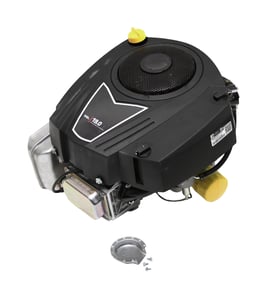
To find specs for your Briggs lawn and garden engine model 10T802-1238-B1, we use the engine identification numbers (Model, Type, and Code) stamped on the engine, then match those numbers to the correct parts and configuration so you get the right carburetor, ignition, and starter components.
Where to find the Model, Type, and Code on the engine
On most Briggs lawn and garden engines, the numbers are stamped into the metal (not on a paper label). Common locations include:
- On the blower housing (recoil starter shroud)
- Near the spark plug area
- On the valve cover area
- Near the muffler or heat shield
- On the engine shroud close to the fuel tank
How to use those numbers to identify specs
Once you have the Model, Type, and Code, we use them to confirm key spec details that affect parts fit and performance, such as:
- Carburetor style and gasket/diaphragm design
- Ignition system and stop switch wiring style
- Recoil starter design (rope, pulley, pawls, spring)
- Fuel tank and fuel line routing
- Internal components (camshaft, connecting rod, piston rings)
Quick parts examples tied to common “spec” questions
| Spec-related issue | What you typically check | Example part on this model page |
|---|---|---|
| Hard starting, needs priming | Primer bulb and carb setup | Carburetor primer bulb 694394 |
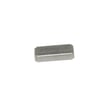
| Won’t start after a sudden stop | Flywheel key and ignition | Flywheel key 222698S |
| Pull cord won’t retract or slips | Rope, pulley, pawls, spring | Recoil starter rope 697316 |
| Engine won’t shut off | Stop switch and wiring | Stop switch 692310 |
Why it matters
Briggs engines often share similar-looking external parts, but the Type and Code numbers control the exact build configuration. Matching those numbers prevents ordering a carburetor, recoil starter, or ignition coil that bolts on but does not run correctly.
Tips before you order parts
- Clean the stamping area so every digit is readable
- Write the numbers down exactly as stamped (including dashes)
- Compare your existing part visually (linkage holes, primer location, connector style)
- If the engine “kicks back” while starting, check the flywheel key first
- If the rope is frayed or the handle is cracked, replace both at the same time
Last updated: February 2026
How to tell what HP a Briggs and Stratton engine is?
For your Briggs 10T802-1238-B1 lawn and garden engine, we tell horsepower by reading the engine identification label and using the model and type information to match the correct power rating. Many Briggs engines list gross torque or displacement instead of a simple “HP” number.
Where to find the power rating information
The engine ID label is typically on the blower housing (recoil starter shroud) or near the valve cover. Clean the area so the characters are readable.
- Look for MODEL, TYPE, and CODE on the label
- If “HP” is printed, that is the gross horsepower rating
- If torque is printed, use that as the published power rating
- If only MODEL/TYPE/CODE is shown, use those numbers to match the correct rating and parts
- Avoid scraping stamped numbers; wipe with a rag and mild cleaner
What you might see on the label
| Label detail | What it means | How to use it |
|---|---|---|
| “HP” value | Gross horsepower | Use that number for comparisons and service info |
| Torque value | Gross torque | Use torque as the rating; it often replaces “HP” labeling |
| MODEL/TYPE/CODE only | Rating not printed | Use MODEL and TYPE to identify the exact configuration |
Why it matters
Knowing the correct rating and configuration helps you choose compatible tune-up and repair parts and prevents mismatches when troubleshooting hard starting, surging, or poor power.
Parts that commonly affect starting and performance
If you are diagnosing a running issue while confirming the engine’s exact configuration, these model-matched parts are often involved:
- Carburetor 794061 (fuel metering)
- Carburetor primer bulb 694394 (priming fuel for cold starts)
- Carburetor diaphragm 795478 (diaphragm-style fuel delivery)
- Flywheel key 222698S (ignition timing alignment after a sudden stop)
Last updated: February 2026
What are common Briggs & Stratton engine problems?
Common problems on the Briggs 10T802-1238-B1 lawn and garden engine are hard starting, stalling or surging, no-start due to ignition or stop-switch issues, and pull-start problems (rope not retracting or slipping). Most fixes come down to fuel delivery, spark, or the recoil starter system.
Most common symptoms and what they usually point to
- Hard starting or no start: stale fuel, carburetor restriction, failed primer bulb, weak spark, or a grounded stop switch
- Starts then dies or surges: carburetor diaphragm or carburetor issues, air leak at a gasket or O-ring, fuel cap venting problems
- Pull cord won’t retract or slips: worn recoil parts (rope, pulley, pawls, spring)
- Backfire or sudden loss of power: sheared flywheel key after an impact (blade strike on mowers is a common cause)
- Oil seepage: worn oil seal or crankcase sealing issue
Parts we often replace for these problems (for model 10T802-1238-B1)
If your symptoms match, these model-matched parts are common repair starting points:
- Fuel and priming: carburetor primer bulb 694394, carburetor diaphragm 795478, carburetor 794061
- No-start or intermittent shutoff: stop switch 692310, armature 591420
- Backfire after impact: flywheel key 222698S
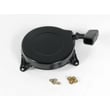
- Pull-start issues: recoil starter rope 697316, recoil starter handle 691915, recoil starter 499706
Quick troubleshooting checklist (fast, high-value checks)
- Fuel: Drain old fuel; refill with fresh fuel. If it only runs on prime, focus on the carburetor and diaphragm.
- Primer: If the bulb is cracked, stiff, or won’t spring back, replace the primer bulb.
- Spark and shutoff circuit: Disconnect the stop-switch lead temporarily to see if the switch is grounding the ignition.
- Recoil starter feel: If the rope pulls but doesn’t engage smoothly, inspect the recoil starter components.
- Impact history: If it started acting up right after hitting something, check the flywheel key.
Symptom-to-part guide
| Symptom | Most likely area | Part examples on this page |
|---|---|---|
| Won’t start, primer helps | Fuel delivery | Carburetor, diaphragm, primer bulb |
| Starts then dies, surges | Carburetion/air leak | Diaphragm, carburetor, O-ring |
| Rope won’t retract | Recoil starter | Rope, handle, recoil starter |
| Backfires after impact | Flywheel timing | Flywheel key |
Why it matters
Catching fuel and recoil issues early prevents repeated hard pulls, flooding, and unnecessary wear on the starter and ignition components. A simple flywheel key or diaphragm repair often restores normal starting and smooth running.
Last updated: February 2026
What spark plug for 8HP Briggs and Stratton?
For an 8 HP Briggs and Stratton engine, the correct spark plug depends on the exact engine model and type number, not just horsepower. For your Briggs 10T802-1238-B1 engine, we recommend matching the plug by the model and type on the engine label to ensure the right thread size, reach, and heat range.
How to identify the exact spark plug you need
Use the engine identification label (usually on the blower housing or valve cover area) and match these fields:
- Model number (example: 10T802-1238-B1)
- Type number (a separate set of digits on the same label)
- Code/date (helps confirm production run)
- Whether your engine uses a resistor plug (common on small engines)
- Plug seat style (gasket seat vs. tapered seat)
Why this matters
Two Briggs engines can both be called “8 HP” but use different cylinder heads. The wrong plug can cause hard starting, misfiring, poor power, or damaged threads.
Quick checks before you buy a plug
If the engine ran well before and you are doing routine maintenance, pull the old plug and compare:
- Thread diameter and pitch (must match exactly)
- Reach (thread length into the cylinder head)
- Terminal style (stud vs. solid terminal)
- Condition clues (wet fuel, oily deposits, white blistering)
Common spark plug service specs (typical)
These are typical small-engine targets; use your engine’s spec if it differs.
| Item | Typical range for small Briggs-style engines |
|---|---|
| Spark plug gap | 0.020 to 0.030 in. |
| Tightening | Snug plus a small additional turn (do not overtighten) |
| Replacement interval | Every season or 100 hours |
Related parts that affect starting (and get mistaken for a “bad plug”)
If you replace the plug and it still will not start, these parts commonly cause the same symptoms:
- Fuel delivery issue; consider the carburetor 794061 if the engine only runs on prime
- Primer won’t push fuel; replace the carburetor primer bulb 694394
- No spark due to a bad kill circuit; test or replace the stop switch 692310
- Rope won’t retract or won’t pull smoothly; inspect the recoil starter rope 697316
Why it matters (performance and engine life)
A correctly matched spark plug helps your Briggs 10T802-1238-B1 start easier, run cleaner, and avoid ignition misfires that can wash down the cylinder with fuel.
Last updated: February 2026