Owner’s manual
 Error Codes


What temperature should a Kenmore freezer be set at?
For Kenmore model 10651112711, we set the freezer to 0°F (-18°C) for everyday use. Use the freezer control bars to fine-tune temperature; wait 24 hours between changes so the temperature can stabilize (details are in the 10651112711 owner's manual).
Recommended settings and when to change them
Most households get the best balance of food safety and ice quality at 0°F. Adjust only if you have a clear symptom.
- Freezer items feel soft or ice cream is not firm: set the freezer colder
- Frost buildup or items are overly hard: set the freezer warmer
- Freezer seems warm after loading groceries: give it several hours before changing settings
- Temperature swings: reduce door openings and confirm the door seals close tightly
- Poor airflow: move packages away from interior vents
How to adjust the freezer control on this model
Your manual describes a bar-style set point range from 1 bar (least cold) to 5 bars (coldest).
- Press the FREEZER control to view the current set point.
- Move one bar at a time.
- Wait at least 24 hours; then recheck temperature.
Quick guide: symptoms and the right adjustment
| What you notice | Likely cause | What we do first |
|---|---|---|
| Freezer too warm or too little ice | Control set too warm, airflow blocked, doors opened often | Set freezer one bar colder, clear vents, limit door openings |
| Freezer too cold | Control set too cold | Set freezer one bar warmer |
Why it matters
A steady 0°F helps keep frozen food quality high and supports consistent ice production. Changing controls too quickly can cause chasing temperatures; the 24-hour wait prevents over-adjusting and helps you pinpoint the real issue.
Last updated: February 2026
Where is the model number on a Kenmore side by side refrigerator?
On Kenmore side-by-side refrigerator model 10651112711, the model number is printed on the appliance identification label inside the fresh food (refrigerator) compartment. Open the refrigerator door and look along the cabinet walls near the top front edge for a sticker that lists both the model and serial numbers; confirm the exact location in the 10651112711 owner's manual.
Common places to check first
- Inside the refrigerator compartment on the left or right side wall
- Along the top front frame (just behind the door gasket)
- Near the crisper drawer area on the cabinet wall
- On the ceiling of the fresh food compartment (less common)
- If doors were removed or replaced, recheck the cabinet label (not the door)
What the label looks like and what to write down
The ID label typically includes the model number, serial number, and electrical ratings. Record the model number exactly as shown so you get the correct Kenmore parts.
| Item on label | Why it matters |
|---|---|
| Model number (10651112711) | Matches diagrams and ensures correct part fit |
| Serial number | Helps identify production details for service |
| Electrical ratings | Useful when diagnosing control or compressor issues |
If you still cannot find it
- Remove items from the top shelf so you can see the cabinet walls clearly
- Use a flashlight and look behind the door gasket edge
- Wipe condensation or residue off the cabinet wall so the print is readable
- If the label is damaged, use the model family shown in the manual (106.5111*) to narrow parts, then match by features and diagrams in the 10651112711 owner's manual
Why it matters
Kenmore 106-series side-by-side refrigerators can use different ice maker, water valve, and control components depending on the exact model. Using 10651112711 prevents ordering the wrong replacement part.
Last updated: February 2026
What's the average lifespan of a Kenmore refrigerator?
Most Kenmore refrigerators average 10 to 15 years of service life. For a Kenmore side-by-side like model 10651112711, lifespan depends most on basic care (airflow, clean coils, good door sealing) and fixing cooling or ice-maker issues early using the 10651112711 owner's manual.
Typical lifespan ranges (what to expect)
In normal household use, these are realistic targets:
- 10 to 15 years: common for many modern refrigerators
- 15 to 20 years: achievable with strong maintenance and timely repairs
- 20+ years: possible, especially when the sealed system stays healthy and the doors continue sealing well
| Lifespan range | What it usually means | What helps most |
|---|---|---|
| 0 to 5 years | Early failures are usually isolated parts | Correct installation, stable power, clean airflow |
| 6 to 15 years | Most common ownership window | Coil cleaning, door seal care, filter changes |
| 16+ years | “Long life” territory | Fast repair of cooling, defrost, and water system problems |
Maintenance that adds years
These actions reduce compressor run time and prevent common failures:
- Clean condenser coils and keep vents clear (dust makes the compressor work harder)
- Keep door gaskets clean and sealing; fix gaps before frost and warm spots start
- Set stable temps (typically 37°F fresh food, 0°F freezer)
- Replace water filters on schedule to protect the dispenser and ice maker
- Address unusual noises, warming, or heavy frost quickly (often prevents bigger repairs)
Parts that commonly affect “how long it lasts”
A refrigerator often reaches the end of its practical life when a major system becomes expensive to repair. These are common decision points:
- Compressor (sealed system performance and cost)
- Evaporator fan motor (airflow through the freezer and fresh-food sections)
- Defrost heater (prevents frost buildup that blocks airflow)
- Water inlet valve (ice maker and dispenser water supply)
- Ice maker assembly (ice production and leaks)
If you are troubleshooting water or ice issues on this model, the refrigerator water inlet valve WPW10179146 is a common component to test and replace when the dispenser or ice maker stops getting water.
Why it matters
Knowing the typical lifespan helps you decide whether to maintain, repair, or replace. A 12-year-old refrigerator with a simple airflow or water-supply issue is often worth repairing; a unit with repeated sealed-system problems is often near end-of-life.
Last updated: February 2026
What are the most common problems with Kenmore refrigerators?
The most common problems we see on Kenmore refrigerators like model 10651112711 are cooling issues, water and ice dispenser problems, leaks, and unusual noises. Many of these come down to airflow restrictions, door sealing problems, or a failing component in the defrost, fan, or water supply system; use the 10651112711 owner's manual troubleshooting section to narrow it down.
Common symptoms and what they usually point to
- Not cooling or warm temperatures: blocked air vents, dirty condenser coils, evaporator fan issue, or a defrost problem causing ice buildup
- Runs all the time: doors not sealing, frequent door openings, warm room conditions, or restricted airflow
- Water dispenser slow or not working: supply line issue, frozen water tube, clogged filter, or a weak inlet valve
- Ice maker not making ice: water supply problem, inlet valve issue, ice maker failure, or ice jam in the bin
- Water leaking inside or on the floor: clogged defrost drain, loose water line, or door not sealing
- Moisture buildup: humid room air, doors opened often, or doors not closing completely
Quick checks we recommend first (fast, no parts)
- Confirm power and outlet are good; avoid extension cords.
- Set temps to normal and wait 24 hours after any change or new installation.
- Make sure air vents are not blocked by food packages.
- Check both doors close fully and the gasket seals all the way around.
- If water or ice is affected, confirm the refrigerator is connected to a cold water pipe and the shutoff valve is fully open.
Parts that commonly solve these problems on 10651112711
| Problem area | Common fix | Example model-matched part |
|---|---|---|
| Ice maker not working | Replace ice maker module/assembly | Refrigerator ice maker assembly WPW10300022 |
| No water to dispenser/ice maker | Replace inlet valve | Refrigerator water inlet valve WPW10179146 |
| Warm fridge, noisy, poor airflow | Service/replace evaporator fan motor | Refrigerator evaporator fan motor WP2315549 |
| Frost buildup, warm temps | Repair defrost heat circuit | Refrigerator heater WP2323198 |
Why it matters
Cooling, ice, and leak complaints often share the same root causes: airflow (vents, fans, frost) and water supply (valve, tubing, filter). Fixing the underlying cause prevents repeat failures and helps protect food quality.
Last updated: February 2026
How to read Kenmore model numbers?
Kenmore model numbers tell us who built the appliance and which design family it belongs to. For your Kenmore side-by-side refrigerator model 10651112711, the 106 prefix identifies the manufacturer family, and the remaining digits narrow down the exact configuration so we can match the correct parts and owner's manual.
What the numbers mean (quick breakdown)
Kenmore model numbers are typically split into two useful sections:
- Prefix (first 3 digits): identifies the manufacturer family (for example, 106 is a common Kenmore refrigerator prefix)
- Core model digits: identify the base design and platform
- Trailing digits: identify feature and color variations (these can affect bins, shelves, doors, and dispenser parts)
Where to find the model number on a side-by-side refrigerator
On most Kenmore side-by-side refrigerators, we see the model/serial tag in one of these spots:
- Inside the fresh food compartment on a side wall
- On the ceiling of the fresh food compartment near the lights
- Behind the crisper drawers (on the cabinet wall)
- Along the door frame area when the door is open
Why the full model number matters for parts
Even small digit differences can change which parts fit, especially on water and ice systems.
| System area | Parts that often vary by model digits | Example part for 10651112711 |
|---|---|---|
| Ice maker and bin | Ice maker assembly, ice container, auger components | Refrigerator ice maker assembly WPW10300022 |
| Water supply | Water inlet valve, water tube, filter housing | Refrigerator water inlet valve WPW10179146 |
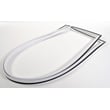
| Doors and sealing | Door gasket, door bins, door assemblies | Gasket, door (beige) 2159075 |
Tips to avoid ordering the wrong part
- Use the entire model number (all digits) when searching parts
- Match the part ID exactly when replacing a component
- If you are replacing a door, gasket, or dispenser part, confirm the color/finish variation
- Keep the model tag info handy when checking diagrams and troubleshooting steps in the owner's manual
Why it matters
Kenmore used the same brand name across multiple manufacturers and platforms. Reading the model number correctly is the fastest way to identify the right refrigerator parts, avoid returns, and restore proper cooling, ice production, and water dispensing.
Last updated: February 2026
How wide is a Kenmore side by side refrigerator?
For Kenmore side-by-side refrigerators, the most common overall width is about 36 inches. For Kenmore model 10651112711 specifically, the installation opening requirement listed in the 10651112711 owner's manual is a 36-inch minimum cabinet cut-out width; plan additional clearance for door swing and ventilation.
What “width” can mean
When you shop or measure, “width” is usually one of these:
- Overall exterior cabinet width (refrigerator body)
- Minimum cabinet cut-out width (opening between cabinets)
- Door swing clearance (space needed beside a wall)
- Clearance for airflow and hookups (space behind and above)
Model 10651112711 fit requirements from the manual
The manual for the 106.5111* / 106.5175* platform calls out these installation numbers:
| Measurement type | Value | Why it matters |
|---|---|---|
| Minimum cabinet cut-out width | 36 in (91.44 cm) | Minimum opening for installation |
| Side and top clearance | 1/2 in (1.27 cm) | Helps ventilation and cooling performance |
| Rear clearance | 2 in (5.08 cm) | Room for airflow and water line connections |
| If next to a fixed wall | 2 in minimum on hinge side (varies by model) | Helps doors open and improves access |
How we recommend measuring your space
- Measure the opening at the floor, mid-height, and near the top.
- Include baseboards, trim, and countertop overhangs.
- If the refrigerator sits next to a wall, plan for door swing clearance.
- Leave room behind the unit for the water line if you use the ice maker.
- Confirm the final fit using the manual’s installation section.
Why it matters
A refrigerator that fits the opening but lacks clearance can run warmer, make doors hard to open, and limit access to drawers and bins. Using the 36-inch cut-out width plus the listed clearances prevents those problems.
Last updated: February 2026
What is the cubic foot of my Kenmore refrigerator model 10651112711?
The cubic-foot capacity for Kenmore refrigerator model 10651112711 is listed in the specifications section of the 10651112711 owner's manual. Capacity is shown as total interior volume (fresh food plus freezer); it is the rated volume, not the exact usable space after bins and the ice system are installed.
Where to find the cubic feet in the manual
Look for these common labels in the specs section:
- “Capacity” or “Total volume”
- “Refrigerator capacity” (fresh food section)
- “Freezer capacity”
- “Total” (combined)
- Units shown as “cu. ft.”
Quick way to confirm you are using the right spec
Kenmore 106-series manuals often cover multiple similar models, so match the model on your rating label first.
- Open the fresh food door
- Check the model/serial tag on the inside wall (often upper side wall)
- Confirm the model number reads 10651112711 exactly
- Then use the matching model line in the manual’s specifications
Rated capacity vs. usable space
Rated cubic feet is measured as interior volume. Usable space is usually less because of shelves, door bins, and the ice system.
| Measurement | What it represents | What changes it |
|---|---|---|
| Rated capacity (cu. ft.) | Published interior volume | Nothing (fixed spec) |
| Usable space | What you can actually load | Ice bin, door bins, shelf positions, bulky items |
Why it matters
Knowing the correct cubic feet helps you compare replacement refrigerators, choose organizers that fit, and avoid airflow problems that can cause warm temperatures in a side-by-side.
Last updated: February 2026
Why is there water leaking from the bottom in my Kenmore refrigerator?
Water leaking onto the floor from the bottom of your Kenmore 10651112711 side-by-side refrigerator is most often caused by a clogged or frozen defrost drain (water backs up and spills out) or a water supply leak at the rear connections. We check the drain first, then the water line.
Quick checks to pinpoint the source
- Look for ice or standing water under the freezer floor; this points to a defrost drain issue.
- Check the drain pan underneath; overflow or heavy water marks suggest poor drain flow.
- Inspect behind the refrigerator for drips at the household water line connection.
- If leaking happens after using the dispenser, flush air from the water system.
- If you recently replaced the filter, a few extra dispenser drips can occur until flushing is complete.
Fix a clogged or frozen defrost drain
- Unplug the refrigerator.
- Remove freezer items and check for ice at the bottom panel.
- Thaw ice with warm water (not boiling) and clear the drain opening.
- Confirm water flows down to the drain pan.
Check water supply and dispenser-related leaks
Your 10651112711 owner's manual covers two common water causes: loose water line connections at the back and air in the lines after installation or filter replacement.
- Tighten water line fittings and recheck for seepage.
- Flush the dispenser 5 seconds on, 5 seconds off until about 3 gallons (12 L) dispenses.
- Hold the glass under the dispenser 2 to 3 seconds after releasing the lever.
Symptom guide
| What you notice | Most likely cause | Best next step |
|---|---|---|
| Water under freezer floor, then leaks out | Frozen/clogged defrost drain | Thaw and clear drain path |
| Water only after dispensing | Air in water line/filter | Flush water system |
| Water behind unit near tubing | Loose connection or valve seep | Tighten and inspect |
Parts that can be involved (water supply side)
- Refrigerator water inlet valve WPW10179146 (can seep or not close fully)
- Refrigerator water tube W10823511 (can crack or leak at fittings)
Why it matters
Stopping the leak prevents recurring freezer ice buildup, airflow restrictions that hurt cooling, and floor damage.
Last updated: February 2026