Owner’s manual
 Error Codes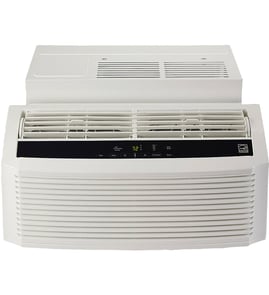




How big of a room will a 7000 BTU AC cool?
A 7,000 BTU room air conditioner typically cools about 250 to 300 square feet in average conditions. For a Kenmore room air conditioner like model 58075080500, the real-world coverage depends on heat load factors such as sun exposure, insulation, ceiling height, and humidity; see the 58075080500 owner's manual for capacity and operating guidance.
Quick sizing guide (what 7,000 BTU usually covers)
- Best fit: bedrooms, small living rooms, home offices
- Typical room size: 250 to 300 sq. ft.
- If the room is very sunny or humid: plan closer to 200 to 250 sq. ft.
- If the room is shaded and well insulated: it can feel comfortable closer to 300 to 350 sq. ft.
- If doors are open to other rooms: effective coverage drops fast
What changes the cooling area most
The Kenmore 58075080500 manual notes that proper unit size depends on square footage plus indoor and outdoor temperature and humidity, and that the unit may run longer or constantly under heavy heat load.
- Direct sun through windows (west-facing rooms run hotter)
- Poor insulation or air leaks around windows and doors
- High humidity (the unit spends more time removing moisture)
- High ceilings (more air volume than the floor area suggests)
- Heat sources like kitchens, computers, TVs, and multiple occupants
Coverage vs. conditions (simple comparison)
| Room conditions | Practical coverage for 7,000 BTU |
|---|---|
| Shaded, insulated, doors closed | 300 to 350 sq. ft. |
| Average home conditions | 250 to 300 sq. ft. |
| Hot sun, humid, leaky, doors open | 200 to 250 sq. ft. |
Why it matters
If the room is too large, the air conditioner can run constantly and still feel warm. If it is oversized, it can cool quickly but remove less humidity, leaving the room feeling clammy.
Last updated: January 2026
How do I know my AC model number?
Your Kenmore room air conditioner model number is printed on the unit’s nameplate. For model 58075080500, the manual notes the nameplate is on the right side of the cabinet; that label shows the model and electrical rating.
Where to look on the air conditioner
Check these common spots on Kenmore window and room air conditioners:
- Right side of the cabinet (nameplate label, most common)
- Behind the front grille (sometimes on the frame)
- Behind or near the air filter area
- Along the side panel near the control area
- On the back near the condenser section (less common)
What the model number looks like
Kenmore room air conditioner model numbers are usually a series of numbers with a dot in some printed formats.
| Where you see it | Example format | What to enter for parts |
|---|---|---|
| On the manual cover | 580.75080 | 58075080500 (full model on the unit label) |
| On the unit nameplate | 58075080500 | 58075080500 |
Tips to avoid mix-ups
- Copy the model number exactly as shown on the nameplate (no extra spaces).
- Also write down the electrical rating information on the same label; it helps confirm you have the right unit.
- If the label is worn, use a flashlight and take a close-up photo to zoom in.
Why it matters
We use the model number to match the correct parts diagrams and compatible replacement parts (for example, the correct power cord, fan blade, or accordion filler assemblies) for your specific Kenmore unit.
For label location details and identification help, use the 58075080500 owner's manual.
Last updated: January 2026
What are the most common issues with 58075080500?
The most common issues we see with the Kenmore 58075080500 room air conditioner are poor cooling, water leaking, and fan or power problems. These usually trace to airflow restrictions, drainage issues, or electrical/control faults; the 58075080500 owner's manual helps confirm the correct settings and basic checks.
Common symptoms and what they usually mean
- Not cooling or weak cooling: dirty filter/coils, blocked airflow, incorrect mode/temperature, or a sealed-system/compressor problem.
- Water leaking indoors: unit not level, clogged drain path, or a damaged drain component.
- Fan runs but little air movement: loose/damaged fan blade or mounting hardware.
- Won’t turn on or shuts off: power cord/outlet issue, control wiring problem, or compressor protection tripping.
- Rattling/vibration: loose fasteners, worn mounts, or fan blade contact.
Quick checks you can do first
- Set to Cool mode; lower the set temperature and confirm the fan speed.
- Clean the air filter and clear obstructions at the front grille and rear coil.
- Make sure the unit tilts slightly toward the outside for proper drainage.
- Inspect for obvious looseness or rubbing at the fan area.
- If it’s dead, verify the outlet has power and inspect the cord for damage.
Parts that commonly relate to these issues
| Symptom | Likely area | Example part on this model |
|---|---|---|
| Leaking water | Drain path | Room air conditioner drain pipe 3H02773A |
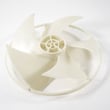
| Poor airflow/noisy fan | Fan blade/hardware | Kenmore elite room air conditioner condenser fan blade 5900A20015A |
| No power/intermittent power | Line power | Power cord 6411A20056A |
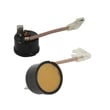
| Compressor won’t stay running | Overload protection | Compressor overload protector (match by model) |
Why it matters
Airflow and drainage problems can make the 58075080500 run longer, cool worse, and ice up or leak. Catching a clogged drain or loose fan early helps prevent bigger failures like compressor overheating.
Last updated: March 2026