
What is the 3-tooth rule for bandsaws?
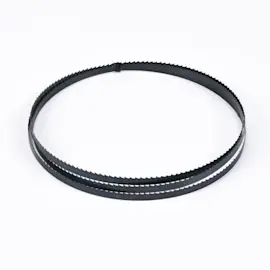
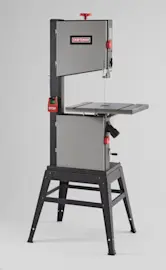
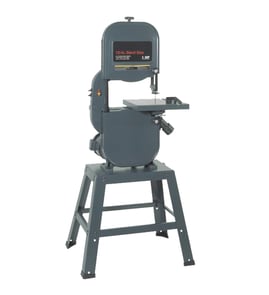
The 3-tooth rule means your Craftsman 1012290 metal cutting band saw blade should have at least three teeth in contact with the workpiece at all times. This keeps the cut stable, reduces tooth snagging or stripping, and helps the blade track smoothly through the material.
How to apply the rule (pick the right TPI)
Use the material thickness to choose a blade tooth count (TPI, teeth per inch) that keeps 3 or more teeth engaged.
- Measure the thickness where the blade enters the cut (thin wall tubing counts as thin)
- Choose a TPI that gives 3 to 6 teeth engaged as a practical target
- For thin metal, go higher TPI to avoid tooth catch and chatter
- For thicker stock, go lower TPI for better chip clearing and faster cutting
- If the cut squeals or turns blue-hot, reduce feed pressure and check TPI and blade condition
Quick guide: thickness vs. typical TPI (metal cutting)
These are common starting points for metal cutting band saws like the Craftsman 1012290.
| Material thickness (approx.) | Typical blade choice | What you’ll notice |
|---|---|---|
| Under 1/8 in. (sheet, thin wall) | 18 to 24 TPI | Smoother cut, less tooth snagging |
| 1/8 to 1/4 in. | 14 to 18 TPI | Good balance of speed and finish |
| 1/4 to 1/2 in. | 10 to 14 TPI | Faster cutting, better chip clearing |
| Over 1/2 in. | 6 to 10 TPI | Aggressive cut; needs steady feed |
Why it matters on a metal cutting band saw
If fewer than three teeth hit the metal, each tooth takes too big a bite. That causes grabbing, vibration, broken teeth, crooked cuts, and premature blade wear. Keeping multiple teeth engaged spreads the load and stabilizes the cut.
If your cut quality is still poor
Check these common causes (even with the right TPI):
- Blade installed backwards (teeth must point into the cut direction)
- Blade tension too low (wandering, chatter)
- Worn blade guides or misadjusted guide bearings
- Feed pressure too high for the blade pitch
- Dull blade (shiny rounded teeth, slow cutting)
For safe electrical checks on switches, cords, or motors, use our how to use a multimeter to test electrical parts video.
Last updated: February 2026
Where can I buy Craftsman replacement parts?
You can buy replacement parts for your Craftsman metal cutting band saw model 1012290 through the parts list for that model on Sears PartsDirect, which helps you match parts by model number and diagram so you get the right fit.
Best way to buy the right part for model 1012290
- Confirm the model number on the saw’s ID plate is 1012290 (not a similar Craftsman number).
- Use the model’s parts diagrams to identify the exact part name and location.
- Match what you see on the saw (mounting holes, shaft size, wiring connectors) to the diagram callouts.
- If you are replacing an electrical item (switch, cord, capacitor), compare ratings and terminal style before ordering.
- Order using the model lookup on Sears PartsDirect so the results stay tied to 1012290.
Common Craftsman band saw parts people replace
Even without a model-specific parts list shown here, these are the most commonly purchased wear and service items for a metal cutting band saw:
| Part type | What it affects | Typical symptom when failing |
|---|---|---|
| Blade | Cutting performance | Slow cutting, wandering cuts, tooth loss |
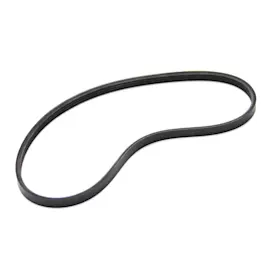
| Drive belt (if equipped) | Blade speed and torque | Slipping, squealing, inconsistent speed |
| Blade guides/bearings | Cut accuracy | Blade drift, vibration, noisy tracking |
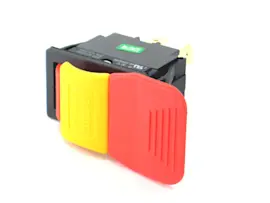
| Switch/cord | Power delivery | Won’t start, intermittent power |
Why it matters
Craftsman tools often have multiple similar-looking versions; buying parts by the exact model number (1012290) reduces returns and prevents installing a part that does not align with the saw’s frame, wheels, or electrical setup.
Last updated: February 2026
Why does my Craftsman bandsaw blade keep falling off?
On a Craftsman 1012290 metal cutting band saw, a blade that keeps falling off is almost always caused by incorrect blade tracking or tension, misaligned wheels, or worn wheel tires or guide bearings. Correcting tracking and verifying the guides and wheels are square typically stops the blade from walking off.
Most common causes (and what to check first)
- Blade tension too low: the blade can wander and climb off the wheel.
- Tracking not set: the blade should ride near the center of the wheel tire, not at the edge.
- Guide bearings or side guides set wrong: guides that pinch or sit too far back let the blade twist.
- Wheel alignment (coplanar) issue: if the wheels are not in line, the blade will drift off.
- Hardened, cracked, or crowned wheel tires: the blade cannot stay centered.
- Worn wheel bearings: wheel wobble makes the blade derail.
Step-by-step: quick tracking and guide setup
- Unplug the saw and open the wheel covers.
- Inspect the blade for kinks, missing teeth, or a welded joint bump; replace the blade if damaged.
- Set blade tension to the saw’s recommended range (a properly tensioned blade “rings” when plucked and deflects only slightly with moderate finger pressure).
- Adjust tracking (tracking knob) while slowly turning the upper wheel by hand until the blade runs centered.
- Set the guides:
- Side guides should sit just behind the gullets (not touching teeth).
- Side guides should be close to the blade but not constantly rubbing.
- Thrust bearing should sit just behind the blade and only spin when you feed material.
How to tell what’s failing
| Symptom | Most likely cause | What to do |
|---|---|---|
| Blade walks forward off wheel | Tracking set wrong, tire crown worn | Re-track; inspect/replace tires |
| Blade pops off during cutting | Low tension, guides too loose | Increase tension; reset guides |
| Blade won’t stay centered even by hand | Wheel misalignment, wheel bearing play | Check wheel alignment; check bearings |
| Squeal or heat at guides | Guides too tight or mispositioned | Back off and re-position guides |
Why it matters
A blade that derails can damage the wheel tires, bend the blade, and create a kickback hazard. Getting tracking, tension, and guide alignment right improves cut accuracy and protects the wheels and bearings.
Helpful related DIY reading
- Are diy appliance repairs safe
- Must have tools for appliance repair
- How to use a multimeter to test electrical parts video
Last updated: February 2026