 Owner’s manual
 Error Codes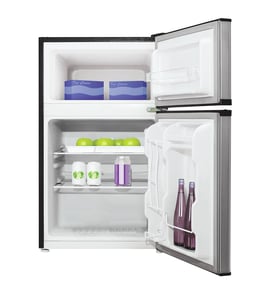




Does anyone make a 33 inch wide refrigerator?
Yes. Many manufacturers make refrigerators in the 33-inch width class (common in top-freezer, bottom-freezer, side-by-side, and French door styles). The exact cabinet width is often slightly under 33 inches to allow for airflow and easier installation; confirm the cutout and clearance requirements before you buy.
What “33-inch wide” usually means
Most 33-inch models are designed to fit between standard 30-inch and 36-inch openings. Actual dimensions vary by style and brand, so we recommend verifying the spec sheet and measuring your space carefully.
Typical real-world sizing (varies by model):
| Labeled width class | Typical actual width | Common styles |
|---|---|---|
| 33-inch | ~32 1/2 to 33 inches | French door, side-by-side, top freezer, bottom freezer |
Measuring tips before you choose a replacement
Use these checks to avoid fit and airflow problems:
- Measure the opening width at the front and back (walls are not always square).
- Measure height to the lowest cabinet or trim point.
- Measure depth to the front edge of counters, then account for door and handle swing.
- Confirm you have room to open doors and pull out crisper drawers.
- Plan ventilation space; blocking airflow can cause warm temperatures and longer run times.
How this relates to your Frigidaire FFPA33L2UM compact refrigerator
Your Frigidaire FFPA33L2UM is a compact refrigerator, not a full-size 33-inch kitchen refrigerator. If you are installing or relocating the FFPA33L2UM, follow the clearance guidance in the owner's manual; it calls for 3 inches at the sides and top and 4 inches at the back for proper air circulation.
Why it matters
A refrigerator that is “almost” the right width can still fail to fit once you account for trim, uneven walls, and required ventilation. Getting the measurements right prevents installation delays and helps the refrigerator cool properly.
Last updated: February 2026
Is Frigidaire FFPA33L2UM high end?
The Frigidaire FFPA33L2UM compact refrigerator is not a luxury, high-end refrigerator; it’s a practical compact model designed for small spaces with straightforward controls and everyday cooling performance. For model-specific features and operating details, use the FFPA33L2UM owner's manual.
What “high end” usually means for refrigerators
High-end (luxury) refrigerators typically focus on premium materials, advanced temperature management, and built-in styling. Compact refrigerators like the FFPA33L2UM are built for convenience and footprint first.
Common high-end traits include:
- Built-in or counter-depth designs with premium fit and finish
- Dual evaporators or advanced multi-zone temperature control
- High-capacity ice makers and filtered water dispensers
- Quieter, premium compressors and enhanced insulation
- Expanded electronic controls, sensors, and diagnostics
What to expect from a compact refrigerator like FFPA33L2UM
Compact refrigerators are “value and utility” appliances. They’re ideal for dorms, offices, basements, and overflow storage.
Typical strengths:
- Smaller footprint and easier placement
- Simple temperature dial or basic electronic control
- Lower upfront cost than full-size refrigerators
- Easier to move and service in tight spaces
Typical tradeoffs:
- Less precise temperature control than premium full-size units
- More noticeable compressor cycling noise in quiet rooms
- Limited freezer capacity (if equipped)
Quick comparison
| Category | Compact refrigerator (FFPA33L2UM) | High-end full-size refrigerator |
|---|---|---|
| Primary goal | Space-saving convenience | Premium performance and features |
| Controls | Simple | Advanced, multi-sensor |
| Capacity | Low | High |
| Typical price tier | Budget to mid-range | Premium to luxury |
Why it matters
Matching the refrigerator tier to your needs helps you avoid overpaying for features you will not use. If you mainly need reliable extra cold storage in a small space, the FFPA33L2UM is the right style of appliance.
Last updated: February 2026
Can I look up Frigidaire parts by model number?
Yes. For your Frigidaire compact refrigerator model FFPA33L2UM, you can look up compatible replacement parts by searching the full model number and then matching parts to the diagrams and descriptions listed for that exact model. Use the FFPA33L2UM owner's manual to confirm features and component locations.
How to find the model number and use it correctly
Model numbers must match exactly; one missing character can pull the wrong parts list.
- Check the rating label inside the refrigerator compartment (often on a side wall).
- Write the model number exactly as shown: FFPA33L2UM.
- If a serial number is listed, record it too (it can help with production variations).
- Use the model number to open the correct parts diagrams for your compact refrigerator.
- Compare the part description to what you see in the appliance before ordering.
What you should match before ordering a part
Even within the same product type, parts can vary by configuration.
| What to match | What to look for | Why it matters |
|---|---|---|
| Location | Shelf area, control box, door, light area | Prevents ordering a similar looking part for a different section |
| Function | Cooling, lighting, door seal, control | Ensures the replacement solves the right symptom |
| Fit details | Mounting holes, connector style, size | Avoids returns and installation issues |
Why it matters
Compact refrigerators use tightly packaged components; ordering by model number helps ensure the part fits the cabinet, wiring, and control layout designed for FFPA33L2UM.
Quick tip for troubleshooting before you buy
If you are chasing a symptom (not a visibly broken part), confirm the issue first:
- If temperatures are warm, adjust the control colder and allow 24 hours to stabilize.
- If the unit is noisy or vibrating, level the cabinet and confirm the floor is solid.
- If there are odors, clean the interior and cover foods.
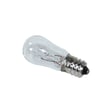
- If the cabinet light is out, check the outlet connection and the light switch; then replace the bulb if needed.
Last updated: February 2026
Can you have a fridge in an unheated garage?
Yes, you can keep a refrigerator in an unheated garage, but for a Frigidaire FFPA33L2UM compact refrigerator it only works reliably when the garage stays within normal indoor-like temperatures. Extreme cold can cause poor cooling control, and extreme heat can overwork the compressor.
What to check before you move it
Use the FFPA33L2UM owner's manual to confirm setup and ventilation requirements, then evaluate the garage conditions.
- Measure typical winter lows and summer highs in the garage (not just outdoor temps).
- Keep the unit near a grounded outlet; do not use an extension cord or adapter plug.
- Avoid outlets controlled by a wall switch or pull cord so it cannot be shut off accidentally.
- Make sure voltage is stable; repeated low voltage can damage the compressor.
- Keep the lower front area unblocked for airflow.
- Follow the clearance guidance for airflow (the manual calls out 3 inches at the sides and top).
Common problems in an unheated garage (and what they look like)
When temperatures swing, a standard compact refrigerator can behave unpredictably.
| Garage condition | What you may notice | Practical fix |
|---|---|---|
| Very cold (near or below freezing) | Fresh-food section warms, freezer softens, compressor runs less | Move the unit indoors or add controlled heat to the space |
| Very hot | Long run times, weak cooling, hot cabinet sides | Improve ventilation, keep out of direct sun, reduce door openings |
| Poor airflow around cabinet | Warm temps, short cycling | Maintain clearances; do not block the lower front |
Setup tips that matter for performance
These installation basics from the Use & Care guidance help prevent nuisance cooling issues.
- Place it on a level, solid floor that can support it fully loaded.
- Keep it away from heat sources (range, dishwasher, direct sunlight).
- Leave space around the cabinet for air circulation.
- Unplug before cleaning to reduce shock risk.
Why it matters
Compact refrigerators like the FFPA33L2UM are designed around typical indoor ambient temperatures. In a garage, temperature extremes and poor airflow can reduce cooling performance and shorten compressor life.
Last updated: February 2026
What is the best setting for a Frigidaire freezer?
On the Frigidaire FFPA33L2UM compact refrigerator, use the main refrigerator/freezer temperature control to keep frozen items solid; there is not always a separate freezer-only dial on compact models. After any change, wait 24 hours for temperatures to stabilize (as noted in the FFPA33L2UM owner's manual).
Recommended target temperature
For safe long-term frozen storage, we set the freezer area to 0°F (-18°C).
If your model uses a single control for both sections, adjust that one control until the freezer area holds 0°F.
How to set it correctly on this model
- Start at the middle setting on the refrigerator/freezer control.
- If frozen items are soft or slushy, move the control colder.
- If the freezer area is colder than you want, move the control warmer.
- Wait 24 hours after each adjustment before changing it again.
- Keep the door closed as much as possible while dialing it in.
Quick adjustments by symptom
| Symptom in freezer area | Adjustment | What to do next |
|---|---|---|
| Colder than preferred | Set control warmer | Recheck in 24 hours |
| Warmer than preferred | Set control colder | Recheck in 24 hours |
| Not cooling | Make sure control is not set to OFF/0 | Recheck in 20 to 24 hours |
Why it matters
A compact refrigerator shares cooling between the fresh-food section and the freezer area. Setting the control too warm risks thawing; setting it too cold can cause excess frost and less usable space.
Last updated: February 2026





