Installation guide
 Owner’s manual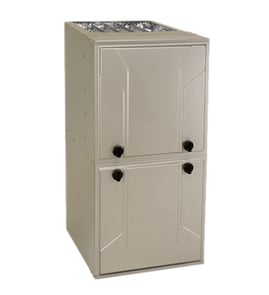




How much does it cost to install a 100,000 BTU furnace?
Installing a 100,000 BTU class furnace typically costs about $4,000 to $9,000 total in the U.S. (equipment plus labor). Your final price for a Carrier furnace like model 58CVA110---16120 depends most on venting changes, gas line work, electrical upgrades, and ductwork fit.
What drives the price most
These items usually create the biggest swings in installation cost:
- Venting changes (new flue/liner, condensate routing, or rework to meet code)
- Combustion air requirements (adding or resizing openings or ducts)
- Ductwork modifications (plenum transitions, return sizing, sealing)
- Electrical and controls (new disconnect, wiring repairs, thermostat changes)
- Permits and inspections (varies by location)
Model-specific install details that can affect labor
For the Carrier 58CVA110---16120, the installation guide emphasizes correct sizing and proper venting to avoid condensation and premature failure. It also includes combustion air opening sizing tables by BTU input, which can add labor if your current setup is undersized.
Use the installation guide to confirm:
- Approved installation orientations and clearances
- Combustion air opening sizing for your BTU input
- Venting requirements and precautions to prevent condensation
Typical cost breakdown (what you are paying for)
Here is a practical way to think about the total:
| Cost item | Typical share of total | Notes |
|---|---|---|
| Furnace equipment | 40% to 60% | Efficiency level and features drive this most |
| Labor | 25% to 45% | Complexity of venting, duct transitions, access |
| Materials | 5% to 15% | Vent pipe, fittings, gas flex, drain, sheet metal |
| Permits/inspection | 0% to 10% | Local requirements vary |
Why it matters
A 100,000 BTU furnace is often large enough that oversizing becomes a real risk. Oversizing can shorten component life and create comfort issues; the install guidance calls out proper sizing methods and warns against excessive oversizing. Checking sizing and airflow during install helps protect the heat exchanger, gas valve, and control board.
Last updated: February 2026
What is the average lifespan of a carrier furnace?
A Carrier gas furnace typically lasts 15 to 30 years. For your Carrier 58CVA110---16120, lifespan is driven most by correct sizing, proper venting and combustion air, and routine service that prevents condensation, corrosion, and repeated high-limit shutdowns (all of which shorten furnace life). See the installation guide for maintenance and installation requirements.
What most affects furnace life (and what we see in the field)
- Annual maintenance: cleaning burners, checking flame, inspecting venting, and verifying safe operation
- Correct sizing: oversized furnaces can short-cycle and may fail prematurely
- Combustion air quality: avoid corrosive or contaminated air (common household chemicals can accelerate corrosion)
- Condensation control: low return-air temps and low gas input can contribute to condensation and corrosion
- Airflow and duct condition: restricted airflow can overheat the furnace and trip limit switches
Quick lifespan guide by component
| Component | Typical service life | Why it matters |
|---|---|---|
| Heat exchanger | 20 to 30 years | Corrosion and condensation are major life reducers |
| Igniter | 3 to 7 years | Wear item; no-heat calls often trace here |
| Control board (PCB) | 10 to 20 years | Sensitive to power issues and moisture |
| Blower motor | 10 to 20 years | Bearings and heat stress drive failures |
Signs your furnace is nearing end-of-life
- Frequent cycling on and off, or repeated lockouts
- Rising repair frequency (ignition, blower, controls)
- Sooting, unusual odors, or new rattles and vibration
- High-limit trips or overheating symptoms
- Evidence of moisture, rust, or venting problems
Why it matters
A furnace that is correctly installed and kept out of corrosive environments runs cleaner, avoids condensation-related corrosion, and maintains safe venting performance. Those factors are the difference between a furnace that stops around 15 years and one that reaches the 20 to 30 year range.
Last updated: February 2026
How many sq ft will a 120000 BTU furnace heat?
A 120,000 BTU furnace can typically heat about 2,800 to 3,500 sq ft, but the real coverage depends on your climate, insulation, air sealing, ceiling height, and duct design. For Carrier model 58CVA110---16120, use the sizing guidance in the installation guide to avoid oversizing.
Typical square footage ranges (quick rule of thumb)
These ranges assume average ceiling heights and a reasonably tight home; colder climates and older, leaky homes land on the lower end.
- Warm/mild climate: ~3,200 to 4,000 sq ft
- Mixed climate: ~2,800 to 3,500 sq ft
- Cold climate: ~2,200 to 3,000 sq ft
- Very drafty or poorly insulated homes: plan toward the low end
- High ceilings or lots of glass: reduce the estimate
What changes the answer the most
- Outdoor design temperature (your climate zone)
- Insulation levels (attic, walls, rim joists)
- Air leakage (drafts, unsealed penetrations)
- Duct losses (ducts in attic or crawlspace)
- Return-air temperature and airflow setup
Why “bigger” is not better
Oversizing can cause short cycling, comfort swings, and extra wear. The Carrier installation literature also notes that excessive oversizing can contribute to premature failure and venting/condensation issues.
A better way to size than square footage
Square footage rules are only a starting point. For an accurate match, we recommend a load calculation (often called Manual J) and then selecting furnace input/output accordingly.
| Method | What you get | Best for |
|---|---|---|
| Sq ft rule of thumb | Fast estimate | Early planning only |
| Manual J load calc | True heating load (BTU/hr) | Correct sizing and comfort |
| Duct and combustion air checks | System safety and performance | Final install setup |
Related install details to keep in mind
If you are installing or reconfiguring the system, confirm these basics in the installation guide:
- Combustion air opening sizing (free area requirements)
- Venting condition and code-compliant installation
- Blower off-delay setup options
- Altitude derate considerations
Last updated: February 2026
How much does a furnace cost for a 2000 square foot house?
For a 2,000 sq ft home, a new furnace typically costs about $4,000 to $8,000+ installed, with the final price driven by fuel type (gas vs. electric), efficiency (AFUE), and installation complexity. For a Carrier furnace like model 58CVA110---16120, correct sizing matters as much as the equipment price.
Typical installed cost ranges (what changes the price)
- Standard-efficiency gas furnace (80% AFUE): usually lower upfront cost
- High-efficiency gas furnace (90% to 98% AFUE): higher upfront cost, lower operating cost
- Electric furnace: often lower equipment cost, but operating cost can be higher depending on rates
- Ductwork changes or zoning: can add significant labor and materials
- Venting and combustion air requirements: can add cost if upgrades are needed
Sizing guidance for a 2,000 sq ft home
Most 2,000 sq ft homes land in the 80,000 to 100,000 BTU input range, but the right number depends on insulation, climate zone, windows, and air leakage. The installation guide for this furnace family emphasizes using an approved load calculation method (often called Manual J) and avoiding excessive oversizing because it can contribute to performance issues and premature wear. See the installation guide.
Quick sizing snapshot (typical)
| Home condition | Typical furnace input range | Notes |
|---|---|---|
| Newer, well-insulated | 60,000 to 80,000 BTU | Often smaller equipment works best |
| Average insulation | 80,000 to 100,000 BTU | Common for many 2,000 sq ft homes |
| Older, drafty | 100,000 to 120,000 BTU | Air sealing can reduce needed size |
Why it matters
A furnace quote is not just the box price. Proper sizing, venting, and combustion air setup affect comfort, efficiency, and reliability. For example, combustion air openings and ducting are sized by BTU input, so a larger furnace can require larger openings and related installation work. Details and tables are in the installation guide.
What to ask for in a quote
- The furnace AFUE rating and whether it qualifies as high-efficiency
- The BTU input and output being proposed and the load calculation used
- Whether the quote includes venting changes and combustion air provisions
- Whether ductwork repairs or resizing are included
- Warranty terms for parts and labor (from the installer)
Last updated: February 2026