Owner’s manual
 Error Codes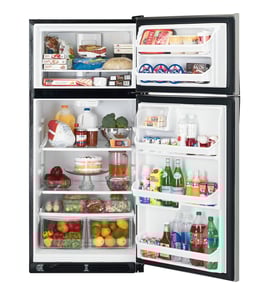



Is GE Cafe considered high end?
Yes. GE Café is considered a high-end (premium) appliance line within the GE family, positioned above standard GE models with upgraded design, finishes, and feature sets. It is separate from the GE GTE18GTHHRWW top-mount refrigerator line, which is a more traditional, value-focused configuration.
How GE Café fits in the GE lineup
GE markets multiple tiers; GE Café sits in the premium tier and is commonly compared with other “step-up” brands based on styling and features.
- Premium styling and coordinated finishes (often with customizable hardware options)
- More feature-rich platforms (controls, convenience features, and specialty options)
- Higher typical price point than standard GE models
- Often paired with matching premium cooking and dishwasher lines
- Different model families and parts than standard top-freezer refrigerators like GTE18GTHHRWW
Quick comparison: GE standard vs GE Café
| Line | Typical positioning | What you usually get |
|---|---|---|
| GE (standard) | Mainstream | Practical features, broad value range |
| GE Café | Premium | Elevated design, more features, higher price tier |
Why it matters when shopping parts or planning repairs
For parts and service, the “high-end” label matters less than the exact model number. GE Café models can use different control boards, door hardware, lighting, and ice maker configurations than a standard top-freezer unit.
- Always match parts to the exact model number on the rating label
- Use the model’s diagrams to confirm fit before ordering
- Expect different assemblies between product lines even within the same brand
Where to confirm your exact model and features
Use the GTE18GTHHRWW owner's manual to locate the model and serial number label and to review the feature set for this specific top-freezer refrigerator.
Last updated: January 2026
Which is better, top mount or bottom mount refrigerator?
A top-mount (top-freezer) refrigerator like the GE GTE18GTHHRWW is usually the better choice for value and efficiency, while a bottom-mount is usually better for everyday convenience because fresh food sits at eye level. The “best” option depends on how you use your refrigerator most.
Quick comparison: top mount vs bottom mount
| Feature | Top mount (top-freezer) | Bottom mount (bottom-freezer) |
|---|---|---|
| Fresh food access | Lower, more bending | Higher, less bending |
| Freezer access | Easy, at chest level | Lower, more bending |
| Typical cost | Lower | Higher |
| Typical efficiency | Often better | Varies by model |
| Best for | Budget, simple layout | Daily fresh-food use |
When a top-mount is the better fit
- You want a straightforward, reliable layout with fewer “extras” to maintain.
- You use the freezer often and want it at a comfortable height.
- You want strong value for the price and typically good energy performance.
- You prefer simpler door storage and shelf layouts.
- You want easier service access for common items like a door switch or light bulb.
For model-specific features and how your controls and shelves are intended to be used, follow the GTE18GTHHRWW owner’s manual.
When a bottom-mount is the better fit
- You use fresh food more than frozen food and want it at eye level.
- You want wider refrigerator shelves and easier access to produce drawers.
- You prefer freezer drawers/baskets for organization.
Why it matters
Choosing the right configuration affects daily comfort, food organization, and even how often doors stay open. For example, if you open the fresh-food section frequently, a bottom-mount can reduce bending and speed up “grab and go” access.
Installation and space note (applies to both styles)
Good airflow and door clearance matter for cooling performance. Many GE top-freezer models call for typical clearances like:
- Sides: about 3/4 inch
- Top: about 1 inch
- Back: about 2 inches
Confirm the exact requirements and leveling guidance in the GTE18GTHHRWW owner’s manual.
Last updated: January 2026
What is the most common problem with a GE refrigerator?
The most common issue we see with GE refrigerators like model GTE18GTHHRWW is a cooling problem: the fresh food section gets warm, the freezer temperature drifts, or temperatures swing. In many cases, the root cause is airflow or heat removal (dirty condenser coils, a failing fan motor, or a defrost problem) rather than a control setting.
Quick checks that fix many “not cooling” complaints
- Confirm the temperature controls were not accidentally changed.
- Make sure air vents inside the freezer and refrigerator are not blocked by food.
- Listen for the evaporator fan running when the compressor is on.
- Check that the doors close fully and the gasket seals all the way around.
- Clean dust from the condenser area so the unit can shed heat.
Common causes and what they look like
| Symptom | Most likely area | What you may notice |
|---|---|---|
| Freezer cold but fridge warm | Airflow from freezer to fridge | Weak airflow at vents, items near vents freeze or stay warm |
| Frost buildup on freezer back wall | Defrost system | Gradual warming, fan noise changes, heavy frost |
| Warm temps and loud running | Condenser heat removal | Hot cabinet sides, long run times |
| No interior light, door alarm issues | Door switch or bulb | Light stays off, alarm behavior changes |
Parts that commonly relate to cooling and airflow
If troubleshooting points to a failed component, these are common suspects for this model family:
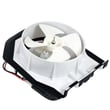
- Refrigerator evaporator fan WR60X31522 (moves cold air through the freezer and into the fresh food section)
- Refrigerator defrost heater WR09X21107 (melts frost off the evaporator during defrost)
- Refrigerator freezer door gasket WR14X27230 (prevents warm air leaks that cause frost and poor cooling)
Why it matters
Cooling problems can spoil food quickly and also force the compressor to run longer than normal. Keeping vents clear and the condenser area clean helps the refrigerator maintain stable temperatures and reduces wear on major components.
For model-specific operating tips and troubleshooting charts, use the GTE18GTHHRWW owner’s manual.
Last updated: January 2026