 Owner’s manual
 Error Codes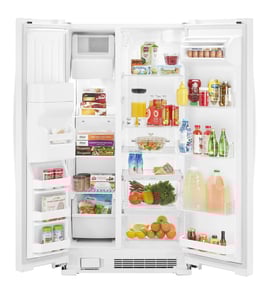


How many cubic feet is my Kenmore refrigerator by model number?
For Kenmore model 36358575890, the exact cubic-foot capacity is listed on the refrigerator’s rating plate and in the specifications section of the owner's manual. This model is part of Kenmore “Side by Side 20-27” models, so capacity typically falls in that range.
Fast ways to find the exact capacity
Use these checks in order; the first two give the most reliable result.
- Check the rating plate inside the fresh food section (often on a side wall near the crisper area) or inside the freezer section.
- Look in the specifications pages of the owner's manual for “capacity” or “cubic feet.”
- If the label is hard to read, take a clear photo and zoom in; the capacity is usually printed near the model and serial information.
- If you are measuring for fit, also confirm clearance needs (side, top, back) so the refrigerator can ventilate properly.
Typical capacity range for this model family
The manual groups this refrigerator as a “Side by Side 20-27” model family. That means most units in this family are approximately 20 to 27 cu. ft. total capacity.
| What you need | Best source | What you will see |
|---|---|---|
| Exact cubic feet | Rating plate | Capacity stated directly (cu. ft.) |
| Exact cubic feet | Manual specs | Capacity listed in specifications |
| Fit planning | Manual clearances | Side/top/back clearance requirements |
Why it matters
Cubic-foot capacity helps us match the right storage expectations and, more importantly, helps when comparing similar Kenmore side-by-side refrigerators. For installation, the manual’s clearance guidance is just as important as the capacity so airflow and door swing are not restricted.
Last updated: February 2026
How to replace an ice maker in a side by side refrigerator?
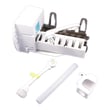
To replace the ice maker in your Kenmore 36358575890 side-by-side refrigerator, we shut off power, turn off the water supply, remove the ice bin, swap the ice maker assembly, then restore water and power and confirm the feeler arm is in the ON (down) position. Use the 36358575890 owner's manual for safety notes and icemaker operating checks.
Before you start (safety and prep)
- Unplug the refrigerator (moving the control to OFF does not remove power).
- Shut off the water supply valve feeding the refrigerator.
- Remove the ice storage bin and clear any loose cubes.
- Keep hands away from the icemaking mechanism while the unit is plugged in.
- Protect floors; a small amount of water can drip from the fill tube/line.
Replacement steps (typical side-by-side procedure)
- Access the ice maker: Pull out the ice bin and remove any covers or mounting screws holding the ice maker to the freezer wall.
- Disconnect wiring: Unplug the ice maker wiring harness connector.
- Disconnect the fill tube (if applicable): Some designs use a fill cup and tube alignment rather than a hard water-line connection at the ice maker.
- Remove the old ice maker: Lift it off mounting tabs or remove remaining screws.
- Install the new ice maker: Hang it on the mounting points, reinstall screws, and reconnect the wiring.
- Reassemble and test: Reinstall the bin, turn water back on, plug the refrigerator in, and verify the feeler arm is down (ON).
Quick checks if the new ice maker does not run
Most “no ice” issues after replacement are setup related:
- Feeler arm is in STOP (up) position
- Water supply valve is still off
- Freezer temperature is too warm (ice makers need a cold freezer to cycle)
- Cubes are jammed or piled and holding the arm up
- Water shutoff valve or supply line is restricted (small cubes or no fill)
What to look for
| Symptom | Most likely cause | What we do next |
|---|---|---|
| No cycling at all | Feeler arm up or harness not seated | Set arm down; reseat connector |
| Small/hollow cubes | Water restriction | Check supply valve and line for restriction |
| Stops early | Ice piled up holding arm | Level cubes; confirm bin fits correctly |
Why it matters
Correct power and water shutoff prevents shock and leaks, and setting the feeler arm correctly prevents a “new” ice maker from appearing dead even when it is installed properly.
Last updated: February 2026
What are the most common problems with Kenmore refrigerators?
The most common problems we see on Kenmore refrigerators like model 36358575890 are cooling issues (often airflow or defrost related), water leaks, ice maker or dispenser failures, and unusual noises or vibration. Many of these start with simple maintenance and a few targeted checks from the 36358575890 owner's manual.
Most common symptoms and what usually causes them
- Not cooling or warm temperatures: dirty condenser coils, blocked vents, evaporator fan or condenser fan problems, or a defrost system issue.
- Water leaking or puddles: a clogged defrost drain, a loose water line, or a leaking inlet valve.
- Ice maker not making ice: feeler arm stuck in STOP (up) position, water supply off, freezer too warm, or restricted water flow.
- Bad-tasting or smelly ice: old cubes, dirty ice bin, or odors transferring from unsealed food.
- Rattling or vibration: unit not level, items vibrating on shelves, or the icemaker supply line tapping the wall.
Quick checks we recommend first (fast, no parts guessing)
- Unplug the refrigerator for safety before any inspection.
- Pull the base grille and vacuum dust from the condenser area; we recommend cleaning condenser coils at least yearly.
- Confirm temperature controls are set correctly (not OFF) and doors seal fully.
- If the unit vibrates, adjust the front rollers/leveling so it rests solidly on the floor.
- For ice maker issues, confirm the water supply is on and the freezer is cold enough for ice production.
Common fixes and parts that often solve the issue
| Problem area | Typical fix | Part on this model page that may apply |
|---|---|---|
| Ice dispenser not dispensing | Clear ice jam; check chute door and solenoid action | Dr reces asm WR17X11653, refrigerator solenoid arm assembly WR62X23154 |
| No water to dispenser/ice maker | Check supply; test inlet valve | Refrigerator water valve WR57X10051 |
| Frost buildup, warming, poor airflow | Diagnose defrost system components | Refrigerator defrost thermostat WR50X122, refrigerator defrost control WR9X489 |
Why it matters
Cooling, ice maker, and leak complaints often trace back to airflow and maintenance. Keeping coils clean and the refrigerator level helps the compressor run efficiently, prevents temperature swings, and reduces nuisance noises.
Last updated: February 2026
Where is the model number on a Kenmore side by side refrigerator?
On a Kenmore side-by-side refrigerator like model 36358575890, the model number is printed on the appliance identification label (the same label that lists the serial number). Use that label to record the exact model number before ordering parts or checking troubleshooting steps in the owner's manual.
Common places to check first
We typically find the model and serial label in one of these spots on side-by-side refrigerators:
- Inside the fresh food (refrigerator) compartment on a side wall
- Along the ceiling of the fresh food compartment near the light
- On the frame around the fresh food door opening (near the gasket)
- Inside the freezer compartment on a side wall
- Behind the base grille area (less common, but worth a quick look)
What you should see on the label
The label usually includes both identifiers; the model number is the one you will use for parts lookup.
| Item on label | What it’s used for | Example format |
|---|---|---|
| Model number | Matching diagrams and ordering the correct parts | 36358575890 |
| Serial number | Identifying production run and service history | Letters and numbers |
Why it matters
Kenmore refrigerators often share similar door bins, ice maker parts, and water system components across multiple models. Using the exact model number (36358575890) helps us match the correct diagrams and avoid ordering the wrong item such as a dispenser component or ice maker-related part.
Quick tips before you write it down
- Copy the model number exactly as printed (include all digits)
- Take a clear photo of the label for reference
- If the label is hard to read, gently clean it with a damp cloth and dry it
Last updated: February 2026





