Installation guide
 Owner’s manual
 Error Codes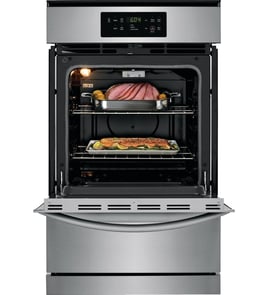


How to find wall oven model number?
For Kenmore gas wall oven model 79030553802, the model and serial number are printed on the serial plate located along the interior side trim. Open the oven door and look on the left-side inner trim area for the plate; it is visible with the door open. See the 79030553802 owner's manual for the exact serial plate location illustration.
Where to look first (fastest checks)
- Open the oven door and inspect the interior side trim.
- Focus on the left-side inner trim area.
- Look for a serial plate (a metal or foil label) with model and serial numbers.
- Record the model number, serial number, and any lot number/letter shown.
- Use those numbers exactly when ordering parts or requesting service.
What the serial plate tells you (and why it matters)
The serial plate is more than an ID label. It typically includes details used to match correct replacement parts and setup information.
| Serial plate item | Why you need it |
|---|---|
| Model number | Ensures parts diagrams and parts lists match your exact oven |
| Serial number | Helps identify production variations |
| Lot number/letter (if listed) | Can narrow down version changes within the same model |
| Fuel/rating info | Confirms gas type and burner ratings for safe service |
Tips for reading and recording the number
- Write the model number exactly as shown: 79030553802.
- Take a clear photo of the label before it fades.
- If the label is greasy, wipe gently with a damp cloth; do not scrape.
Why it matters
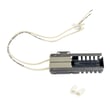
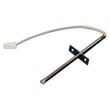
Kenmore wall ovens can have multiple versions that look similar. Using the correct model and serial information prevents ordering the wrong igniter, control board, temperature sensor, or other parts.
Last updated: January 2026
What is the disadvantage of a wall oven?
A wall oven like the Kenmore 79030553802 costs more to buy and install than a freestanding range, and repairs can take longer because the unit is built into cabinetry. You also need a separate cooktop, which adds cost and requires more planning.
Common disadvantages (what we see most often)
- Higher total cost: wall oven plus a cooktop, plus cabinet cutout work and electrical or gas hookup.
- More complex installation: it must be secured with mounting brackets and properly grounded; a qualified installer is typically required.
- Harder access for service: built-in placement can make troubleshooting and part replacement more time-consuming.
- Less flexibility to move or replace: you are tied to the cabinet opening size.
- Ergonomics vary: depending on mounting height, loading heavy cookware can be awkward for some users.
Wall oven vs. range: quick comparison
| Feature | Wall oven (like 79030553802) | Freestanding range |
|---|---|---|
| Upfront cost | Usually higher | Usually lower |
| Installation | More involved (cabinet cutout, mounting) | Simpler (slide-in, level) |
| Cooktop included | No | Yes |
| Service access | Often harder | Often easier |
Why it matters
Wall ovens deliver a built-in look and can be installed at a convenient height, but the tradeoff is planning and service complexity. For gas wall ovens, installation details like leak checking, shutoff valve use, and grounding are critical for safe operation.
Tips to reduce the downsides
- Use the exact model and serial information when ordering parts; the serial plate is typically on the left side inner trim.
- Follow the safety and operating guidance in the 79030553802 owner's manual.
- For installation requirements (mounting brackets, grounding, gas leak checks), follow the 79030553802 installation guide.
- If the oven is hard to access, plan for enough slack in the gas line and wiring (as allowed by code) so service is easier.
Last updated: January 2026
Does anyone make a 30 gas wall oven?
Yes. 30-inch gas wall ovens are made by a few manufacturers, and your Kenmore gas wall oven model 79030553802 is designed to fit a built-in wall-oven cabinet cutout in the 30-inch class. For exact cutout and clearance requirements for your installation, use the 79030553802 installation guide.
What “30-inch” means for gas wall ovens
“30-inch” usually refers to the nominal cabinet width the oven is designed to fit, not the exact outside width of the appliance. The installation guide for model 79030553802 also calls out key clearances such as door-opening space and vent location.
Common requirements to plan for:
- A square, plumb cabinet opening
- Clearance for full door swing (the guide notes 19-3/8 inches for complete door opening)
- Proper vent placement (the guide notes the vent should not be located under 36 inches from the floor)
- A grounded 3-prong electrical receptacle
- A gas shut-off valve that is accessible after installation
Quick checklist before you buy any 30-inch gas wall oven
Use this checklist to avoid fit and hookup surprises:
- Measure the cabinet cutout width, height, and depth
- Confirm gas supply location and that a shut-off valve is present
- Confirm a properly grounded 3-prong outlet is available
- Verify door swing clearance in front of the oven
- Confirm the cabinet can support the oven weight (the guide notes 150 lb support)
Typical sizing comparison (general guidance)
| Item | Typical for “30-inch” gas wall ovens | What to use for model 79030553802 |
|---|---|---|
| Nominal width class | 30 inches | 30-inch class built-in cutout |
| Cutout dimensions | Vary by brand/model | Follow the installation guide figures |
| Utilities | Gas + grounded electric | Gas + grounded electric per guide |
Why it matters
Wall ovens are built-in appliances; even small differences in cutout height, depth, or gas and electrical locations can prevent a safe install. Using the model-specific installation requirements helps you avoid cabinet modifications and ensures proper ventilation and grounding.
Last updated: January 2026
Are all 30 inch wall ovens the same size?
No. “30-inch” wall ovens are grouped by a nominal width, but the exact outside dimensions and, more importantly, the cabinet cutout size vary by brand and model. For your Kenmore 79030553802 gas wall oven, use the cutout and clearance specs in the 79030553802 installation guide before ordering a replacement.
What “30-inch” usually means (and what it does not)
Most 30-inch wall ovens are designed to fit a 30-inch class opening, but manufacturers can differ on:
- Required cutout width, height, and depth
- Trim overlap (how much the front trim covers the cabinet opening)
- Door swing clearance and handle projection
- Electrical and gas connection locations
- Mounting bracket placement
How to measure for a correct fit
We recommend measuring the cabinet opening and comparing it to the installation specs.
- Measure cutout width at the top, middle, and bottom
- Measure cutout height on both sides
- Measure cutout depth to the back wall (account for gas line and power cord)
- Confirm the cabinet is square (diagonal corner-to-corner measurements)
- Verify you have proper grounding and a correct receptacle; do not remove the ground prong
Quick comparison: nominal vs. actual fit
| What you see advertised | What you must match | Why it matters |
|---|---|---|
| “30-inch wall oven” | Cutout width, height, depth | Prevents gaps, binding, and unsafe mounting |
| “Single oven” | Actual cavity and trim style | Affects height and trim overlap |
| “Fits standard cutout” | Manufacturer’s cutout spec | “Standard” varies by brand |
Why it matters
A wall oven must be secured with mounting brackets and installed to code. If the cutout is even slightly off, the oven may not mount correctly, the trim may not cover the opening, or the door may not operate smoothly. The 79030553802 owner’s manual also covers key safety basics like proper grounding and safe use.
Last updated: January 2026