 Owner’s manual
 Error Codes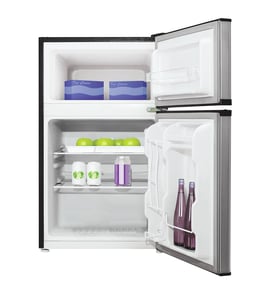
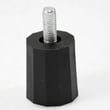
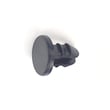

Can you still get parts for Kenmore refrigerators?
Yes. We still help customers get replacement parts for Kenmore refrigerators, including the Kenmore 56494256400 compact refrigerator. The best match comes from using your full model number so you get the correct shelves, door gasket, thermostat, or hardware listed for your exact unit in the 56494256400 owner's manual.
How to find the right Kenmore refrigerator part
- Use the complete model number from the rating label (for this unit: 56494256400).
- Compare the part name and reference number to the parts list in the manual.
- Match the part by function (for example: door gasket vs. thermostat vs. shelf support).
- If your refrigerator is not cooling, check basic settings first before ordering parts.
- For door sealing issues, inspect the gasket for gaps, tears, or areas that do not contact the cabinet.
What the manual helps you confirm
The 56494256400 owner's manual includes a parts list and everyday care guidance that helps you identify what you need and avoid ordering the wrong item.
| What you need | What to check first | Common symptom |
|---|---|---|
| Door gasket | Make sure it is not pinched and seals all the way around | Warm spots, moisture, heavy run time |
| Thermostat/temperature control | Verify the control setting is not set to OFF | No cooling or inconsistent temps |
| Shelves/bins/clips | Confirm location and style in the parts list | Broken shelf support, loose storage |
| Screws/bolts/hardware | Match size and placement from the parts list | Loose handle/hinge/trim |
Why it matters
Kenmore used multiple designs across refrigerator lines, and compact models often have unique shelves, door seals, and control parts. Matching by model number keeps fit and performance correct and prevents repeat repairs.
Last updated: February 2026
How do I know what model Kenmore refrigerator I have?
Your Kenmore refrigerator’s model number is printed on the appliance identification label; for this compact unit, the manual lists the model as 56494256400. Check the label inside the fresh food compartment or on the back of the cabinet, then match it to your paperwork or the owner's manual.
Where to find the model number label
Look for a sticker or metal plate in one of these common spots:
- Inside the refrigerator compartment on a side wall
- On the ceiling of the fresh food section
- Behind or under a crisper drawer
- Along the door frame (open the door and check the cabinet edge)
- On the upper back or lower back of the refrigerator cabinet
What the model number looks like (and why it matters)
For Kenmore compact refrigerators, the model number is typically a long number string (not a short “series” name). Using the exact model number helps us match the correct parts diagrams, door-swing instructions, and care information.
| What you have | Example | What to do with it |
|---|---|---|
| Model number | 56494256400 | Use it to look up parts and documentation |
| Serial number | Varies | Helps identify production details, not parts fit |
| “Kenmore” nameplate | Kenmore | Brand only; not enough for parts |
Quick checks if you cannot find the label
These steps usually locate it fast on compact refrigerators:
- Pull the unit slightly forward and inspect the upper back panel
- Remove the crisper drawer (if equipped) and check the side wall behind it
- Wipe the label gently; dust can hide digits
- Compare any paperwork to the model shown in the owner's manual
Why it matters
Kenmore model numbers determine the correct replacement parts and the correct procedures (for example, door reversal steps and temperature control guidance). Using the wrong model number is the most common reason parts do not fit.
Last updated: February 2026
How to tell if a Kenmore refrigerator compressor is bad?
If your Kenmore 56494256400 compact refrigerator isn’t cooling and you hear repeated clicking, buzzing, or the unit runs but never gets cold, the compressor may be failing. We confirm this by checking whether the compressor starts and stays running and whether it’s moving heat out of the cabinet.
Quick signs the compressor is the problem
- Fridge and freezer sections stay warm even after several hours of running
- Repeated clicking every few minutes (start device/overload cycling)
- Compressor is very hot to the touch and shuts off, then tries again
- Loud humming, rattling, or knocking from the sealed-system area
- Fans run (if equipped) but cooling performance does not improve
- Breaker trips or the overload protector opens repeatedly
What to check first (common look-alikes)
Before blaming the compressor, we rule out issues that can mimic a bad compressor:
- Power and control setting: Verify the outlet works and confirm the temperature control is not set to OFF (the manual notes checking the outlet with a lamp and verifying the control is not set to OFF). See the owner's manual.
- Dirty condenser area: Dust buildup reduces heat removal and can cause poor cooling.
- Door seal and door closing: Warm air leaks can keep a compact refrigerator from reaching temperature.
- Heavy frost/ice buildup: A compact unit may need manual defrosting; the manual describes setting the control to OFF for defrosting and wiping up melt water. See the owner's manual.
Simple decision guide
| What you observe | Most likely cause | What we do next |
|---|---|---|
| Clicks every few minutes, no steady run | Start device/overload or compressor locked | Test start components; then compressor amps/lockup |
| Runs continuously, still warm | Sealed-system issue (low refrigerant, restriction) or weak compressor | Check heat at condenser, frost pattern, temps |
| Very hot compressor, shuts off | Overload opening from high load | Clean condenser, verify airflow; then electrical tests |
| No sound at all, no cooling | Power/control issue or failed start components | Verify outlet, control setting, wiring |
Why it matters
A compressor is the heart of the sealed system; if it cannot start, cannot pump efficiently, or overheats and trips the overload, the refrigerator cannot remove heat. Catching a start-device problem early can prevent unnecessary sealed-system work.
Last updated: February 2026





