Owner’s manual
 Error Codes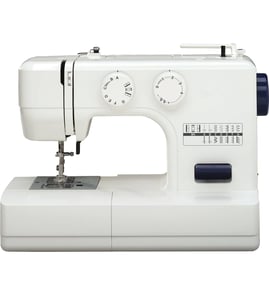

How do I know what model my Kenmore sewing machine is?
Your Kenmore sewing machine’s model number is printed on the machine’s identification label; for this page, the model is 38516130200 (often shown as 385.16130200 in documentation). Use that exact number when looking up parts, accessories, and operating instructions in the owner's manual.
Check these common label locations on Kenmore sewing machines:
- The underside (bottom) of the machine base
- The back of the machine near the power cord connection
- Inside the front or side cover (near the needle area) on some versions
- On the carrying case or tote tag (if your machine came with one)
Kenmore model numbers are commonly formatted with a 385 prefix and may include a dot.
| You might see it printed as | Use it for parts lookup as |
|---|---|
| 385.16130200 | 38516130200 |
| 385 16130200 | 38516130200 |
Also write down any serial number you find; it helps identify production runs when comparing accessories or service information.
Using the exact model number prevents mismatches in key fit and function areas like needle system compatibility, bobbin style, presser feet, and electrical items (power cord and foot controller). The owner's manual for 38516130200 also lists operating and safety guidance for household use.
- Wipe the label gently with a dry cloth; avoid solvents.
- Use your phone camera zoom and a flashlight to improve contrast.
- Copy the full number exactly, including all digits after 385.
Last updated: February 2026
How old is the Kenmore sewing machine model 38516130200?
The Kenmore sewing machine model 38516130200 is part of the Kenmore 385 model family, which dates back to the mid-1960s; most machines in this family were produced between 1965 and 1987. For the most accurate details tied to your exact unit, use the identification information and specifications in the owner's manual.
We date Kenmore sewing machines most reliably by combining the model family with the machine’s identification markings.
- Confirm the model is printed as 385.16130200 on the machine or manual cover.
- Check for a serial number plate (commonly on the back, underside, or near the power cord area).
- Note whether your machine is strictly mechanical (no computerized display), which aligns with many earlier 385 models.
- Compare included accessories and features (presser feet, stitch selector style) to the descriptions in the manual.
The documentation for model 385.16130200 clearly identifies the model and provides operating and safety guidance, but it is not intended as a manufacturing date certificate.
| Source | What it confirms | What you use it for |
|---|---|---|
| Owner's manual | Model number 385.16130200 and operating details | Matching features, settings, and correct use |
| Serial number plate on the machine | Your unit’s unique identifier | Narrowing down production timeframe |
Knowing the approximate age helps you plan maintenance and troubleshooting. Older mechanical sewing machines often need routine cleaning and lubrication, and issues like lint buildup, thread jams, or sluggish running are more common as the machine ages.
If you are also seeing unusual behavior (stopping, beeping, or indicator patterns), use Kenmore 385 error codes to match symptoms to likely causes.
Last updated: February 2026
What is the most trouble-free sewing machine?
The most trouble-free sewing machines are simple, well-maintained mechanical models with solid build quality and easy-to-service designs. For everyday reliability, many sewists choose mechanical machines from Janome, Juki, Brother, or Bernina; your Kenmore 38516130200 is also built around durable internal mechanical components when kept clean and oiled per the owner's manual.
A low-hassle sewing machine is one that stays in time, feeds fabric consistently, and avoids thread jams with normal use.
Common traits of reliable machines:
- Mechanical controls (fewer electronic boards and sensors to fail)
- Strong motor and stable drive system (belt, pulleys, handwheel)
- Easy access for cleaning lint from the hook race and feed dogs
- Straightforward threading and tension path
- Regular oiling and basic maintenance
| User need | What to look for | Why it helps |
|---|---|---|
| Beginner, basic repairs | Mechanical, fewer stitches | Less setup complexity, fewer adjustments |
| Heavy fabrics (denim, canvas) | Strong motor, slower speed control | Better torque, fewer stalls |
| Quilting and long sessions | Smooth feed, stable presser foot pressure | More consistent stitch length |
| “Set it and forget it” | Proven mechanical platform | Fewer electronic-related failures |
Even the best machine becomes “problem-prone” when lint builds up or lubrication dries out.
We recommend these habits:
- Unplug before cleaning or oiling
- Clean lint from the hook race and feed dogs regularly
- Oil the specified points at least yearly (more often with heavy use)
- Use quality sewing machine oil (1 to 2 drops, wipe excess)
- Replace needles often and match needle type to fabric
- Rethread top thread and bobbin when you see looping, nesting, or breaks
For step-by-step maintenance points and diagrams, follow the owner's manual.
Many “machine problems” are caused by threading, needle choice, tension settings, or a dirty hook area.
If you are seeing jams, skipped stitches, or inconsistent feeding, use our troubleshooting path in sewing machine common questions.
Choosing a simpler, serviceable machine and doing basic cleaning and oiling prevents the most common failures: thread nests, fabric not feeding, sluggish running, and lockups. That is what keeps a sewing machine truly trouble-free over the long term.
Last updated: February 2026
What is the most common problem of the sewing machine?
The most common sewing machine problem on the Kenmore 38516130200 is thread trouble, especially needle thread breaking, which is usually caused by incorrect threading, tension set too tight, a bent or dull needle, or lint in the bobbin area. See the owner's manual troubleshooting chart for model-specific checks.
- Needle thread breaks: mis-threaded upper path, tension too tight, needle installed wrong, needle is bent or blunt
- Bobbin thread breaks: bobbin not threaded correctly, lint packed in the bobbin holder, damaged bobbin
- Needle breaks: needle inserted incorrectly, clamp screw loose, pulling fabric, wrong presser foot or needle position
- Skipped stitches: wrong needle type/size, needle not fully inserted, thread not seated in tension discs
- Seam puckering: upper tension too tight, needle too large, stitch length too long for the fabric
- Rethread the top thread with the presser foot up, then lower the presser foot and test on scrap fabric.
- Replace the needle (a new needle fixes a surprising number of “mystery” problems).
- Check tension settings: for many straight-stitch setups, the manual commonly lists needle thread tension in a mid-range (often around 2 to 6).
- Clean lint from the bobbin holder/shuttle area; lint buildup is a top cause of thread breaks and noisy operation.
- Start seams correctly: pull both threads to the back before you sew so they do not snag.
Thread breaks, skipped stitches, and puckering are usually setup issues, not major failures. Fixing threading, needle condition, and lint in the hook or bobbin area prevents jams, protects the needle plate and presser foot, and keeps stitch quality consistent.
| Symptom | Most likely cause | Best first step |
|---|---|---|
| Needle thread breaks | Mis-threading or tension too tight | Rethread and reduce tension slightly |
| Bobbin thread breaks | Lint in bobbin holder or bobbin issue | Clean bobbin area; try a different bobbin |
| Skipped stitches | Wrong/bent needle | Install a new needle (correct type/size) |
| Fabric not feeding | Feed dogs down or packed with lint | Raise feed dogs; clean feed area |
If your issue matches a specific symptom, use our step-by-step troubleshooting: sewing machine fabric not moving. If your model displays a code, use: Kenmore 385 error codes.
Last updated: February 2026
Is it worth repairing an old sewing machine?
Yes, repairing an older Kenmore sewing machine like model 38516130200 is usually worth it when the machine is mechanically solid and the repair is routine (cleaning, lubrication, belt, motor, switch, or adjustments). If the repair cost is more than about half the price of a comparable replacement, replacement is the better value.
Use this checklist before you spend money on service:
- The machine turns by hand smoothly (handwheel rotates without binding)
- It feeds fabric consistently (feed dogs move and fabric advances)
- It forms a balanced stitch after rethreading and a new needle
- The issue is maintenance-related (lint, dried oil, timing slightly off)
- The repair estimate is 50% to 60% or less of a comparable mechanical machine
- You like the stitch quality and feel of the machine (many older Kenmore models sew very steadily)
These are common, practical fixes on mechanical sewing machines:
| Repair type | Typical cause | Why it’s usually worth it |
|---|---|---|
| Cleaning and lubrication | Lint buildup, dried oil | Restores smooth motion and stitch consistency |
| Hook race and feed dog cleaning | Thread bits and lint under needle plate | Fixes jams, skipped stitches, and poor feeding |
| Motor, wiring, switch, or speed control service | Electrical wear over time | Brings the machine back to reliable operation |
| Basic mechanical adjustment | Normal wear | Extends usable life without major parts cost |
For model-specific maintenance points and lubrication locations, follow the owner's manual.
Replacement is the better call when:
- The machine has repeated electrical failures (intermittent power, burning smell, tripping breakers)
- The machine was submerged or heavily damaged
- The internal mechanism is severely worn (persistent knocking, binding, or timing that will not hold)
- You need features this mechanical model does not have (automatic thread cutting, advanced buttonholes, embroidery)
A well-maintained mechanical Kenmore like 38516130200 can deliver consistent stitch quality for decades, and routine service (cleaning, oiling, adjustments) often restores performance faster and cheaper than replacing the machine.
If your decision depends on a specific symptom (fabric not moving, locks up, motor will not run), use the troubleshooting flow in sewing machine common questions to narrow the repair before you request an estimate.
Last updated: February 2026