 Owner’s manual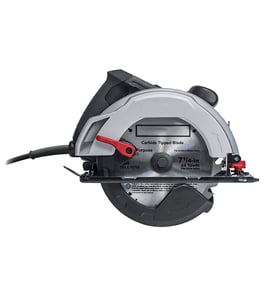


How to change an old Craftsman circular saw blade?
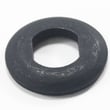
To change the blade on your Craftsman circular saw model 32010860-01, unplug the saw, lock the spindle, remove the blade screw and outer “D” washer with the blade wrench, then install a 7-1/4 inch max blade with the teeth facing the correct direction. See the owner's manual for the exact steps and safety notes.
- Unplug the saw to prevent accidental starting.
- Remove the blade wrench from the saw’s base.
- Set the saw on its side on a flat surface.
- Press and hold the spindle lock button to keep the spindle from turning.
- Use the blade wrench to loosen the blade screw by turning it counterclockwise, then remove the screw.
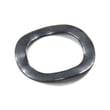
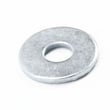
- Remove the outer “D” washer.
- Lift the lower blade guard with the guard handle and carefully remove the old blade.
- Slide the new blade inside the lower guard, onto the spindle, and against the inner bushing (the inner bushing stays in place).
- Reinstall the outer “D” washer and blade screw, then tighten securely while holding the spindle lock.
- Use 7-1/4 inch as the maximum blade diameter.
- Never use a blade so thick that the outer “D” washer cannot fully engage the flat side of the spindle.
- Confirm the blade sits flat against the inner bushing.
- Keep the lower blade guard working smoothly; do not operate the saw if the guard is damaged or sluggish.
- Spin the blade by hand (with the saw unplugged) to confirm it clears the guards.
- Verify the blade teeth point upward at the front of the saw.
- Make sure the blade screw is tight and the washer is seated flat.
| Item | What you should see | Why it matters |
|---|---|---|
| Blade diameter | 7-1/4 in max | Prevents guard contact |
| Outer washer | Fully seated on spindle flat | Prevents blade slip/wobble |
| Tooth direction | Up at the front | Ensures proper cutting action |
A correctly installed blade reduces kickback risk, prevents the blade from contacting the guards, and helps your Craftsman saw cut straight and efficiently.
Last updated: February 2026
What are the parts of a circular saw machine?
A circular saw like the Craftsman 32010860-01 is built around a motor that spins a blade, with controls and safety systems that help you guide the cut and reduce injury risk. Key parts include the trigger switch, blade guard system, spindle lock, and depth and bevel adjustments (this model also uses a laser guide).
- Blade: The cutting disc; keep it clean and sharp to reduce kickback risk.
- Lower blade guard (blade guard system): Spring-loaded guard that covers the blade when you are not cutting.
- Motor and housing: The electric motor that drives the blade (this saw is designed for 120V, 60 Hz AC power).
- Trigger switch: Starts the saw when squeezed; stops when released.
- Base plate (shoe): Flat plate that rides on the workpiece to keep the saw stable.
- Depth-of-cut adjustment: Sets how far the blade extends below the material.
- Bevel adjustment: Sets the angle for bevel cuts.
This Craftsman 32010860-01 includes features that make blade removal and installation safer and easier.
- Spindle lock button: Helps keep the spindle from turning while you loosen or tighten the blade fastener.
- Blade bolt and washer(s): Clamp the blade to the spindle (use the correct blade thickness so the washer seats properly).
- Guard handle/lever: Lets you raise the lower guard during blade changes.
| Part | What it does | Why it matters |
|---|---|---|
| Lower blade guard | Covers blade when not cutting | Reduces accidental contact injuries |
| Spindle lock | Locks spindle for blade changes | Helps prevent slipping while loosening/tightening |
| Depth adjustment | Sets blade projection | Too deep increases binding and kickback risk |
| Bevel adjustment | Sets cutting angle | Improves accuracy for angled cuts |
Knowing the names and functions of the blade guard system, trigger switch, and adjustments helps you set the saw correctly, troubleshoot issues faster, and work safer (for example, never use the saw if the guard is damaged or returning slowly).
For diagrams and model-specific feature locations, use the owner's manual.
Last updated: February 2026
Why is my Craftsman circular saw not spinning?
If your Craftsman circular saw 32010860-01 powers on but the blade will not spin, the most common causes are a power-supply issue, a trigger-switch problem, worn motor brushes, or a blade/guard condition that is binding the blade. Start with the outlet and cord checks, then move to the motor and brush inspection.
- Confirm the saw is plugged into a 120-volt, 60-Hz household outlet (the motor is designed for this supply).
- Try a different known-good outlet or reset the breaker if the circuit is tripped.
- Inspect the power cord and plug for cuts, crushed spots, or loose prongs.
- Squeeze and release the trigger switch several times; a sticky trigger can prevent consistent contact.
- Make sure the blade spins freely by hand with the saw unplugged (it should rotate without scraping).
A dull, dirty, or pitch-coated blade can load the motor heavily and make the saw feel like it is not spinning under load.
- Unplug the saw before touching the blade or guard.
- Check the lower blade guard; it must move freely and return quickly. If it returns slowly or sticks, do not operate the saw until it is repaired.
- Remove built-up gum and pitch from the blade (a dirty blade cuts poorly and increases load).
| What you notice | Likely cause | What to do next |
|---|---|---|
| Motor hums but blade barely moves | Blade binding, dull blade, guard rubbing | Inspect guard movement; clean/replace blade |
| Nothing happens when trigger is pulled | No power, bad cord, bad trigger switch | Verify outlet; inspect cord; test switch |
| Runs intermittently, sparks, or loses power | Worn motor brushes | Inspect/replace brushes |
Motor brushes wear down over time and can lose contact with the armature, stopping the motor from turning.
- Unplug the saw and access the brush caps (if equipped) to inspect brush length and condition.
- Replace brushes if they are worn, chipped, or heat-damaged.
- If you suspect an internal wiring issue, use safe electrical testing practices and follow the wiring and service guidance in the 32010860-01 owner's manual.
A circular saw that will not spin is often a simple power or brush issue, but forcing it can overheat the motor and increase kickback risk. Verifying power, guard operation, and blade condition protects both the tool and your safety.
Last updated: February 2026
What size motor is on a 10 inch Craftsman table saw?
A 10-inch Craftsman table saw motor is normally described by amperage (corded saws) or horsepower (some stationary saws). Most 10-inch corded jobsite table saws use a 120V, 15-amp motor. For your Craftsman 32010860-01 circular saw, the motor rating is 14 amps on 120V, 60 Hz AC (see the 32010860-01 owner's manual).
From the manual, this model’s motor and electrical specs are:
- Input current: 14 amps
- Power supply: 120V, 60 Hz AC (household current)
- No-load speed: 5,000 RPM
- Power type: AC only (do not operate on DC)
If your question is about a 10-inch Craftsman table saw (not this circular saw model), these are the common ways motor size is listed:
- Corded portable/jobsite table saws: 120V, 15 amps
- Hybrid/cabinet-style saws: motor listed in HP (often 1.5 to 3 HP) and may use 120V or 240V
- RPM listings: vary by model; RPM is a no-load spec and is not a direct measure of cutting power
| Saw type | Motor “size” label you’ll see | Typical range |
|---|---|---|
| 10-inch portable/jobsite table saw | Amps @ volts | 15A @ 120V |
| 10-inch stationary table saw | Horsepower (HP) | 1.5 to 3 HP |
Use the table saw’s model number to match the correct specifications.
- Find the model tag (usually on the rear of the saw or under the extension wing)
- Look up the model’s spec plate values: volts, amps, and sometimes HP
- Compare those values to the circuit you plan to use (15A vs 20A)
Motor rating affects how well the saw maintains blade speed in thick stock and hardwoods; it also determines the correct circuit, extension cord gauge, and breaker size.
Last updated: February 2026
