Installation guide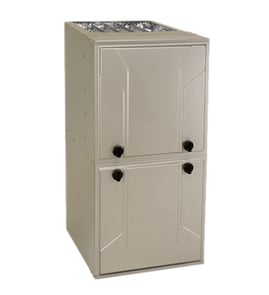

Who makes Evcon furnace?
Evcon furnaces are made within the Coleman family of HVAC products; for your Coleman Evcon DGAT070BDD furnace, Evcon is a Coleman-branded line commonly associated with the Coleman and York manufacturing group.
What that means for parts and service
When you are identifying replacement parts or looking up specifications, treat Evcon as part of the Coleman product family and always match by the full model number DGAT070BDD.
- Use the furnace data plate and model label to confirm DGAT070BDD before ordering parts
- Match parts by model number first, then by part description (gas valve, igniter, flame sensor, pressure switch tube)
- Use the correct fuel type (natural gas vs LP/propane) when selecting gas orifices
- Follow shutoff and restart steps exactly when working around gas piping and wiring
- Keep combustion air inlets clear (bird screens and obstructions can affect operation)
Quick ID checklist (Evcon vs Coleman vs York)
| What you see | What to use for parts lookup | Why it matters |
|---|---|---|
| “Evcon” branding | DGAT070BDD model number | Model number controls the correct parts list |
| “Coleman” branding | Coleman Evcon furnace category | Brand family helps narrow diagrams and documentation |
| “York” references in documents | Installation and upgrade procedures | Some service bulletins and kits are issued under the York group |
Why it matters
Furnace components like the gas valve, burner assembly, igniter, and flame sensor must match the exact model and fuel setup. Using the correct documentation also helps you follow safe steps such as turning off power, shutting off gas, disconnecting wiring, and leak-checking after reassembly.
For model-specific procedures and diagrams, use the DGAT070BDD installation guide.
Last updated: February 2026
How many square feet will a 60,000 BTU furnace do?
A 60,000 BTU furnace typically heats about 1,200 to 2,000 sq. ft. in many homes. For your Coleman Evcon DGAT070BDD, the installation specs list about 57,000 BTU/hr output (not 60,000), so real coverage depends on climate, insulation, ductwork, and ceiling height; use the installation guide specs as your baseline.
Quick sizing rule of thumb (what most homeowners use)
Use these ranges as a starting point, then confirm with a proper heat-loss calculation:
- Warm climates: ~30 to 35 BTU per sq. ft.
- Moderate climates: ~35 to 45 BTU per sq. ft.
- Cold climates: ~45 to 60 BTU per sq. ft.
- High ceilings (over ~8 ft): plan for more BTUs
- Older or drafty homes: plan for more BTUs
- Tight, well-insulated homes: plan for fewer BTUs
Estimated square footage for 60,000 BTU (and for DGAT070BDD output)
These estimates assume typical ceiling heights and average insulation.
| Heating capacity | Warm climate (30-35 BTU/sq. ft.) | Moderate (35-45) | Cold (45-60) |
|---|---|---|---|
| 60,000 BTU/hr (generic) | ~1,700 to 2,000 sq. ft. | ~1,300 to 1,700 sq. ft. | ~1,000 to 1,300 sq. ft. |
| ~57,000 BTU/hr output (DGAT070BDD) | ~1,600 to 1,900 sq. ft. | ~1,300 to 1,600 sq. ft. | ~950 to 1,250 sq. ft. |
Why it matters (comfort, safety, and efficiency)
Correct furnace sizing helps your DGAT070BDD run longer, steadier cycles for better comfort and fewer temperature swings. Oversizing can cause short-cycling and uneven heat; undersizing can leave rooms cold during the coldest weather.
What to check on your furnace before you decide it is “too small”
Before changing equipment size, we recommend checking common performance limiters:
- Air filter condition and return-air restrictions
- Supply registers open and not blocked
- Duct leaks or crushed flex duct
- Thermostat settings and location (drafts, sunlight)
- Temperature rise and airflow setup (the installation guide lists an air temperature rise range)
Last updated: February 2026
Why is my furnace turning on but not heating?
If your Coleman Evcon furnace model DGAT070BDD turns on (you hear the blower) but you get no heat, the heat call is starting but the burners are not igniting or not staying lit. The most common causes are a thermostat or power issue, gas supply shut off, ignition or flame-sensing problems, or a safety limit opening due to airflow or firing-rate issues.
Quick checks we recommend first
- Confirm the thermostat is set to HEAT and the setpoint is above room temperature.
- Make sure the furnace power switch and breaker are ON.
- Verify the manual gas shut-off valve to the furnace is fully open.
- Replace a dirty air filter and open any closed supply registers.
- Look for a blocked combustion air inlet (the guide notes removing bird screens or other obstructions at the combustion air inlet).
What the DGAT070BDD guide points to (model-relevant causes)
The DGAT documentation focuses on conditions that can prevent proper burner operation and safe heating:
- Gas valve and burner assembly issues: The guide outlines steps to turn off power and gas, disconnect wires to the gas valve, igniter, and flame sensor, and remove the gas valve and burner assembly for inspection and service. Use the installation guide for the correct shutoff and removal sequence.
- Incorrect manifold gas pressure: The guide specifies typical outlet (manifold) pressure targets of 3.5 in. w.c. (natural gas) or 10.0 in. w.c. (LP/propane) and confirms operation through a full heating cycle after adjustment.
- Air temperature rise (ATR) out of range: If ATR is too high or too low, the guide ties that to overfiring or underfiring and directs checking gas pressure, firing rate, and duct static pressure.
Symptoms and likely causes
| What you notice | What it usually means | What to do next |
|---|---|---|
| Blower runs, no flame at all | Ignition sequence not completing | Check thermostat, power, gas shutoff; then ignition/flame-sensing circuit testing |
| Flame lights then shuts off quickly | Flame not being proven | Clean/inspect flame sensor; check grounding and wiring |
| Furnace starts then stops, repeats | Safety limit opening | Replace filter, improve airflow; check ATR and static pressure |
| Weak heat output | Underfiring or duct issues | Verify gas pressure and firing rate; inspect duct restrictions |
Why it matters
A furnace that runs without heating is often being stopped by a safety control (limit, pressure switch, flame-proving) or by incorrect gas input. Fixing airflow and verifying correct gas pressure helps the DGAT070BDD heat safely and prevents nuisance shutdowns.
Last updated: February 2026
How much does a 80,000 BTU furnace cost to install?
Installing an 80,000 BTU furnace typically runs about $3,500 to $9,000 for most homes, with many straightforward replacements landing around $4,000 to $7,000. Your final price depends most on efficiency (AFUE), venting changes, ductwork condition, and local labor rates.
What changes the price the most
- Efficiency level (AFUE): higher-efficiency units usually cost more and may require venting changes.
- Venting and combustion air: switching from an older vent style to PVC or reworking the flue adds labor and materials.
- Ductwork and airflow corrections: resizing returns, sealing ducts, or fixing static pressure issues increases cost.
- Gas line and shutoff updates: adding a sediment trap, new shutoff, or correcting piping can add time.
- Electrical and controls: new disconnects, wiring repairs, or thermostat upgrades can add cost.
- Permits and code requirements: varies by location and scope.
How this relates to your Coleman Evcon DGAT070BDD
Your Coleman Evcon DGAT070BDD is a 70,000 BTU/hr input furnace (about 57,000 BTU/hr output per the installation specs). If you are being quoted for an “80,000 BTU” replacement, the contractor is likely upsizing or using a common size class; the right size should be based on a load calculation and verified airflow and temperature rise targets. For model-specific operating and checkout steps, use the installation guide.
Quick sizing reality check (common ranges)
| Home situation | Typical furnace size range | Notes |
|---|---|---|
| Mild climates, tighter homes | 40,000 to 70,000 BTU input | Often smaller equipment runs longer and more evenly |
| Average homes in colder areas | 60,000 to 100,000 BTU input | Ductwork and insulation drive the final number |
| Older, leaky, very cold climates | 80,000 to 120,000 BTU input | Air sealing can reduce needed size significantly |
Why it matters
Oversizing can increase noise, short cycling, and comfort swings; undersizing can struggle on the coldest days. A correct install also includes safety checks like gas leak testing and verifying temperature rise and static pressure, which are part of proper checkout procedures.
Last updated: February 2026