Installation guide
 Owner’s manual
 Error Codes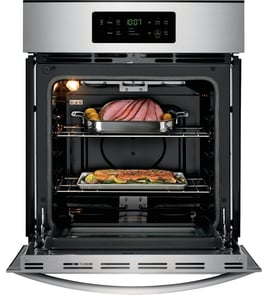


How to reset a KitchenAid wall oven?
To reset your KitchenAid wall oven model KEBS209BSS01, turn the power off at the circuit breaker for about 1 minute, then turn it back on. When power returns, the display may briefly show a power interruption message (often “PF”), confirming the control rebooted. See the KEBS209BSS01 owner’s manual for model-specific display messages.
Quick reset steps (power cycle)
- Set the oven to OFF and press Cancel/Off to stop any active cycle.
- Turn OFF the oven’s circuit breaker (or remove the fuse) for 60 seconds.
- Turn the breaker ON.
- Confirm the display lights up; “PF” commonly appears after a power loss.
- Reset the clock if needed, then test Bake or Broil.
If the display stays blank after the reset
A blank display usually points to a power supply issue (breaker, wiring connection, or junction box). Use these checks from the installation requirements in the KEBS209BSS01 installation guide.
- Verify the breaker is fully reset (switch OFF then ON).
- Confirm the oven is properly grounded and wired at the junction box.
- If you smell burning or see heat damage at wiring, stop and have the connection repaired.
- If the oven is hardwired, check for a loose or overheated connection at the terminal area.
| What you see | What it usually means | What to do next |
|---|---|---|
| Display shows “PF” | Power was interrupted; control restarted | Set clock; test Bake |
| Display is on but unresponsive | Control may be “stuck” in a state | Power cycle again; then try Cancel |
| Display stays blank | No power reaching control | Check breaker, junction box wiring |
Why it matters
A reset clears many temporary control glitches after a power flicker and helps you confirm whether the issue is the electronic control or a power supply problem.
Last updated: January 2026
What is the life expectancy of a KitchenAid wall oven?
A KitchenAid wall oven like model KEBS209BSS01 typically lasts 10 to 15 years with normal household use. Regular cleaning, avoiding heavy slamming of the door, and fixing heating or temperature issues early helps you get the full expected lifespan.
What affects wall oven lifespan most
- Heat stress over time (high-temp baking, self-clean cycles)
- Door wear (hinges loosening, heat leaks from poor sealing)
- Electrical connections (loose or overheated wiring at the power connection)
- Sensor accuracy (temperature swings can overwork elements)
- Ventilation and installation (proper clearances reduce overheating)
Maintenance that helps you reach 10 to 15 years
- Wipe spills promptly to reduce smoke and baked-on residue.
- Use self-clean sparingly; high heat accelerates wear on wiring and controls.
- Keep racks and guides clean so you do not twist the door when loading.
- If preheat times suddenly increase or baking becomes uneven, troubleshoot early.
- Confirm the oven is installed with the required clearances and a solid, level support surface (details in the KEBS209BSS01 installation guide).
Quick “repair vs replace” guide
| What you’re seeing | Most common cause | Usually worth repairing? |
|---|---|---|
| Oven not heating or slow preheat | Failed bake element | Yes |
| Uneven baking | Temperature sensor drift or convection issue | Often |
| Door won’t close evenly | Worn hinge | Often |
| Trips breaker or smells hot at wiring | Loose/overheated power connection | Yes (urgent) |
Parts that commonly extend usable life
If your oven is otherwise in good shape, replacing a failed wear part often restores normal performance:
- Range bake element W11545804 (restores baking heat)
- Sensor probe WP74008369 (helps stabilize temperature control)
- Oven door hinge W10825778 (improves door alignment and heat retention)
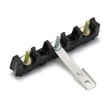
- Terminal block WPW10245259 (addresses damaged or overheated power connection points)
Why it matters
A wall oven that is heating correctly and sealing properly cycles less, holds temperature better, and puts less strain on high-heat components like elements, wiring, and thermostats. That directly supports the typical 10 to 15 year service life.
Last updated: January 2026
Why is my KitchenAid electric oven not working?
If your KitchenAid KEBS209BSS01 electric wall oven is not working, the most common causes are a tripped breaker or blown fuse, a loose or incorrect electrical connection, or a failed heating component (bake element, sensor, or high-limit thermostat). Start by confirming the oven has proper power and then test heating.
Quick checks we recommend first
- Reset the oven by turning the breaker OFF for 1 minute, then ON.
- Confirm the household fuse is intact and tight, or the circuit breaker has not tripped.
- Verify the electrical supply is connected at the junction box (power must be off before opening).
- Try BROIL for 5 minutes and carefully check for heat.
- If an error message appears or there is still no heat, stop and move to component checks.
Power and wiring issues (most common “dead oven” cause)
Built-in ovens like the KEBS209BSS01 must be connected to a grounded, permanent wiring system. If the oven was recently installed or moved, a loose connection at the junction box or terminal block can prevent operation.
- Use the wiring method shown in the KEBS209BSS01 installation guide.
- If your wiring connection is damaged or overheated, inspect the terminal block WPW10245259.
Heating problems: what to test next
If the display works but the oven will not heat, focus on the heat-producing and temperature-sensing parts.
| Symptom | Most likely checks | Common parts involved |
|---|---|---|
| No heat in Bake or Broil | Power supply, element continuity | Range bake element W11545804 |
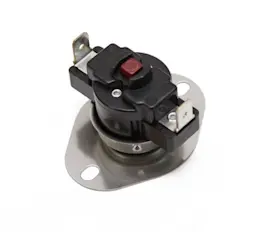
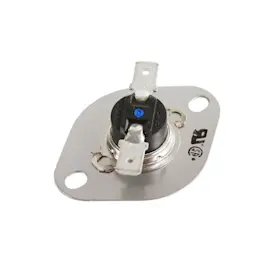
| Heats briefly then shuts off | Overheat protection opening | Range high-limit thermostat WP4449751 |
| Temperature seems wrong or error appears | Sensor circuit | Sensor probe WP74008369 |
Why it matters
An electric wall oven can look “on” (lights, display) but still fail to heat if one leg of power is missing, a safety thermostat opens, or an element burns out. Checking power first prevents unnecessary parts replacement.
Last updated: January 2026