Owner’s manual
 View engine




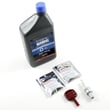
Can I use 5W30 instead of SAE 30 in my snowblower?
Yes. For Craftsman model 536886140, the owner’s manual specifies 5W-30 as the standard engine oil (20 oz capacity), so using 5W-30 is not just acceptable, it is the recommended viscosity for this snowblower; see the 536886140 owner’s manual.
The manual calls out these oil choices based on temperature:
- 5W-30: standard fill and general recommendation
- 0W-30 (partial synthetic): for 0°F and below for easier starting
- 5W-30: noted as helpful for starting when 20°F or lower
If you were planning to switch to straight SAE 30, keep in mind it is thicker in cold weather and can make starting harder.
| Oil type | Cold starting | Warm running protection | Best use case |
|---|---|---|---|
| 5W-30 | Better | Good | Most winter conditions |
| SAE 30 | Worse | Good | Warmer temps (not typical snowblower use) |
- Check oil level on the dipstick before each use; keep it between ADD and FULL.
- Do not overfill; this engine takes 20 oz.
- If you operate above 32°F, monitor oil level more often; multi-viscosity oils can increase consumption in warmer temps.
- Change oil every 25 hours and at the start of each season.
- Use a high-quality detergent oil with the proper API rating (the manual specifies API SG).
Snowblower engines run in cold, moisture-heavy conditions. Using the correct viscosity helps the engine crank faster, reduces wear at startup, and supports reliable electric-start and recoil-start operation.
Last updated: January 2026
How many years should a snowblower last?
A Craftsman gas snowblower like model 536886140 should last 15 to 20 years with normal residential use and consistent maintenance; heavy use, poor storage, and skipped service can shorten that to around 10 years. Following the maintenance schedule in the 536886140 owner’s manual helps maximize lifespan.
- Fuel care and storage: stale fuel and moisture cause hard starting and carburetor issues.
- Oil changes: change oil on schedule; low or dirty oil shortens engine life.
- Wear items: belts, friction disc, and shear pins wear out and are expected replacements.
- Snow conditions: wet, heavy snow and frequent clogging increase strain on auger and drive.
- Corrosion control: salt and slush left on the housing accelerates rust.
| Component | Typical expectation | Notes |
|---|---|---|
| Engine | 15 to 20 years | Depends heavily on oil changes and clean fuel |
| Auger/impeller system | 15+ years | Shear pins protect the gearbox when you hit debris |
| Drive system | 10 to 15 years | Friction disc and belts are common wear points |
| Chute controls | 10+ years | Keep moving parts clean and lightly lubricated per manual |
If performance drops but the machine is otherwise solid, these are common “keep it going” repairs:
- Replace a slipping ground drive belt: snowblower drive belt 1733324SM
- Replace a worn auger belt if it stops throwing well: auger belt 37X120MA
- Restore traction if it will not move well: frction disc 1501435MA
A snowblower can feel “worn out” when it really just needs routine service (oil, belts, friction disc). Replacing wear parts on time protects bigger assemblies and helps your 536886140 start easier, throw farther, and drive consistently.
Last updated: January 2026
How to get rid of an old snowblower?
For a Craftsman 536886140 gas snowblower, the safest way to get rid of it is to drain gasoline and engine oil, let the engine cool, and then recycle or scrap the machine through a metal recycler or your local bulky-item program. Our Craftsman 536886140 owner’s manual also covers safe fuel handling and storage steps that apply before transport.
- Run the engine outdoors until it stops to reduce fuel left in the carburetor.
- Drain remaining gasoline into an approved container; keep it away from flames.
- Drain engine oil into a suitable container and take it to an oil recycling drop-off.
- Remove the ignition key and disconnect the spark plug wire.
- Clean off packed snow, salt, and debris so it is safer to handle.
- Scrap metal recycler: Often the fastest option for a non-running unit.
- City or county bulky-item pickup: Schedule a pickup if your area offers it.
- Household hazardous waste program: Use this for old fuel, oil, and oily rags.
- Donate or sell: If it still runs, donation or resale can keep it in service.
If the machine is close to running again, replacing a wear item can be more cost-effective than disposal. For example, loss of drive is often tied to the ground drive belt or friction wheel; see snowblower drive belt 1733324SM if you are troubleshooting traction before you scrap it.
| Situation | Usually best choice |
|---|---|
| Engine seized, major rust, missing auger parts | Scrap/recycle |
| Runs but will not move | Repair (belt or friction wheel) |
| Starts hard, runs rough | Tune-up and reassess |
Gasoline and oil are hazardous materials; draining them first helps prevent spills during hauling and keeps your recycler, waste hauler, and property safer.
Last updated: January 2026
Is it worth fixing a snowblower?
Yes, it’s usually worth fixing a Craftsman 536886140 snowblower when the problem is a normal wear item (belt, friction disc, cable) or basic maintenance, because those repairs are typically far cheaper than replacing the whole machine. If the engine has major internal damage or the unit has repeated costly failures, replacement can make more sense.
- The engine starts and runs smoothly after basic tune-up and fresh fuel
- The auger and drive issues point to belts, cables, or friction wheel wear
- The frame, auger housing, and chute are not cracked or severely rusted through
- You can do the repair yourself using the Craftsman 536886140 owner’s manual
- The repair cost is well under about half the price of a comparable new snowblower
On the Craftsman 536886140 (22-inch, 5-HP, dual-stage, 120V electric start), the manual calls out several high-wear items that are straightforward to service.
- Replace a worn auger belt if it won’t throw snow: auger belt 37X120MA
- Replace a slipping ground drive belt if it won’t move well: snowblower drive belt 1733324SM
- Replace a worn friction disc if it won’t drive consistently: frction disc 1501435MA
Major engine work is the tipping point for most owners. Also consider replacing if you see:
- Low compression, heavy smoking, or loud internal knocking
- Repeated carburetor or fuel-system problems every season despite proper storage
- Multiple major systems failing at once (engine plus auger gearbox plus drive)
| Situation | Typical outcome | Usually worth fixing? |
|---|---|---|
| Won’t move forward, engine runs | Belt or friction disc issue | Yes |
| Won’t throw snow, engine runs | Auger belt or cable adjustment | Yes |
| Hard starting after storage | Fuel, spark plug, tune-up | Yes |
| Engine seized or internal failure | Major engine repair/replace | Often no |
A dual-stage snowblower like the Craftsman 536886140 is built around serviceable wear parts. Fixing those parts restores performance and keeps the auger/impeller and traction system working safely without the cost of a full replacement.
Last updated: January 2026
Where is the serial number on a snowblower?
On the Craftsman model 536886140 snowblower (22-inch, 5-HP, dual-stage with 120V electric start), the serial number is typically printed on the same ID label as the model number. You’ll usually find that label on the rear frame near the handles or on the main frame close to the engine or auger housing; see the 536886140 owner’s manual.
Look for a sticker or metal tag in these common locations:
- Rear frame near the handle supports
- Side of the main frame near the engine mounting area
- Back or side of the auger housing
- Near the belt cover area
- On the engine shroud (engine has separate ID numbers)
Write the numbers exactly as shown; they help match the correct Craftsman parts and diagrams.
- Snowblower model number: 536886140
- Snowblower serial number: unique to your unit
- Engine ID numbers: model/type/code (for engine-specific parts)
| Number type | What it identifies | When you need it |
|---|---|---|
| Model number (536886140) | The snowblower chassis design | Ordering chassis parts like belts, cables, and chute parts |
| Serial number | Your unit’s production run | Confirming revisions within the same model |
| Engine ID numbers | The engine build | Engine parts like carburetor, ignition, and gaskets |
Even within the same Craftsman snowblower model, production changes can affect which replacement parts fit. Using the model number plus the serial number helps us narrow down the correct parts the first time.
Last updated: January 2026
Who repairs Craftsman snow blowers?
For the Craftsman 536886140 snowblower, repairs are typically handled by small-engine repair shops and outdoor power equipment service centers. Service availability varies by location, so we recommend confirming that the shop works on dual-stage snow throwers and can source Craftsman-compatible parts using your model number.
- Local small-engine repair shops (common for carburetor, ignition, and fuel-system work)
- Outdoor power equipment dealers or service centers (often handle auger, drive, and chute systems)
- Mobile small-engine technicians (may service at your home, depending on area)
- DIY repair for maintenance and wear items using the 536886140 owner’s manual
Bring the model number and describe the symptom; it speeds up diagnosis and parts matching.
- Confirm the model number is 536886140
- Note whether the engine starts and runs, or will not start
- Identify the system affected: auger/impeller, traction drive, or chute rotation
- Check for obvious wear items (belts, friction disc, cables) and broken shear pins
- Follow the safety step in the manual: disconnect the spark plug wire before inspecting moving parts
| Symptom | Likely area to inspect | Example part that may be involved |
|---|---|---|
| Engine runs, unit will not move | Traction drive and friction wheel | Frction disc 1501435MA |
| Auger will not turn or throw snow | Auger drive belt and cable adjustment | Auger belt 37X120MA |
| Weak or slipping wheel drive | Ground drive belt | Snowblower drive belt 1733324SM |
Snowblower drive and auger systems are sensitive to belt routing and cable adjustment. Using a shop familiar with dual-stage snow throwers helps ensure correct setup and prevents repeat failures.
Last updated: January 2026
How to tell year of Craftsman snowblower by serial number?
For Craftsman model 536886140, the year cannot be reliably determined from the serial number using the model-specific information we have for this unit. The best method is to read the serial tag on your snowblower and use any printed manufacture date, or use the engine’s model and code information to identify the build timeframe. For label locations and identification details, use the 536886140 owner’s manual.
On Craftsman snow throwers like 536886140, the model and serial tag is typically on the rear frame area or on the main housing near the engine.
- Look for a sticker or metal tag listing the model and serial
- Clean the label so every character is readable
- Copy the serial exactly (letters and dashes matter)
- Take a photo for reference when ordering parts
Because Craftsman used multiple manufacturers and serial formats over time, we recommend using these checks in order.
- Check the tag for an explicit “MFG DATE” or similar line
- Check the engine label for engine model and date code information
- Compare your unit’s features to the parts diagrams for 536886140 (controls, chute hardware, drive system)
- If you are replacing wear items, match parts by model first, then confirm by diagram callouts
| What you see on the tag | What it usually means | Best next step |
|---|---|---|
| A printed date | Direct manufacture date | Use that as the year reference |
| Only a serial number | Internal tracking code | Use engine date code or parts diagrams |
| Engine model and code | Engine build info | Use the engine code to estimate year |
Knowing the approximate year helps when you are comparing design changes and selecting compatible replacement parts for drive and auger systems.
If you’re diagnosing slipping or no-drive while you’re identifying the unit, these are common replacements for 536886140:
- Snowblower drive belt 1733324SM (ground drive belt)
- Auger belt 37X120MA (auger drive belt)
- Frction disc 1501435MA (friction wheel assembly)
Last updated: January 2026