Error Codes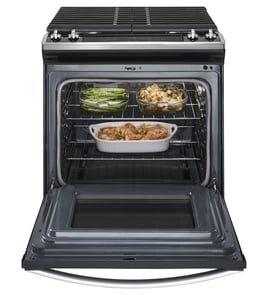

How long do Viking ranges typically last?
Viking does not publish a model-specific “expected lifespan” for the Viking VGIS30 gas range, so we cannot state a verified typical number of years for this exact model. In general, premium gas ranges often run for many years when cleaned regularly and repaired promptly.
- Cooking frequency and high-heat use (broil, long bakes)
- Spillovers and grease buildup around burner heads and ignition
- Oven door alignment and how gently the door is used
- Proper flame characteristics (steady blue flame, not lifting or yellow)
- Fast response to small issues before they stress other components
- Clean burner ports and caps after boil-overs; dry fully before relighting.
- Keep igniter areas clean so the spark lights quickly and does not keep clicking.
- Avoid slamming the oven door; a sagging door can strain hinges and seals.
- If you smell gas or see unstable flames, stop using the range and have it checked.
| Symptom you notice | What it can point to | Example part for VGIS30 |
|---|---|---|
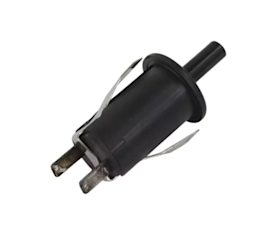
| Burner keeps clicking or won’t spark reliably | Ignition switch/ignition circuit issues | Range surface burner igniter switch PA020011 |
| Oven door won’t close tightly or feels loose | Hinge wear or misalignment | Range oven door hinge PC020007 |
| Knob is cracked, slipping, or hard to set | Worn control knob | Range oven temperature knob PB010099 |
When ignition, door hardware, and flame quality are kept in good shape, the range runs more efficiently and avoids secondary damage (overheating, poor combustion, stressed wiring). That is usually what separates a long service life from early major repairs.
Last updated: January 2026
What are common problems with Viking ranges?
Common problems we see on Viking ranges like model VGIS30 usually involve ignition and burner performance issues, oven temperature accuracy complaints, and normal wear on knobs, door hardware, and gas components. The exact failure point varies, but most symptoms trace back to a few serviceable parts and adjustments.
- Burner will not ignite or keeps clicking: dirty burner ports, a weak igniter circuit, or a failing switch such as the Viking range range surface burner igniter switch PA020011.
- Oven temperature seems off: calibration needed, sensor/control issue, or a gas delivery problem at the Viking range oven gas valve PB010084.
- Uneven baking or weak broil: burner or flame pattern issues; inspect the Viking range range broil burner G3001876 for damage or blockage.
- Loose or sagging oven door: worn hinge hardware like the Viking range range oven door hinge PC020007.
- Worn markings or hard-to-turn controls: normal cosmetic and mechanical wear; the Viking range range oven temperature knob PB010099 is a common replacement.
- Confirm the gas supply valve is fully open and other gas appliances work normally.
- Clean burner caps, ports, and the burner bowl; dry fully before relighting.
- If you smell gas, do not ignite; shut off gas and ventilate.
- For constant clicking, try lighting one burner at a time; moisture and spills often trigger it.
- If the oven is inaccurate, test with a reliable oven thermometer over multiple cycles.
| Symptom | Likely area to inspect | Example compatible part |
|---|---|---|
| No spark or intermittent spark | Ignition switch / spark circuit | Viking range range surface burner igniter switch PA020011 |
| Oven not heating properly | Gas valve / burner system | Viking range oven gas valve PB010084 |
| Door not closing evenly | Door hinge | Viking range range oven door hinge PC020007 |
| Control hard to use | Knob | Viking range range oven temperature knob PB010099 |
Ignition and gas-heat problems can look similar (clicking, delayed ignition, weak flame), but the fix can range from cleaning to replacing a specific ignition or gas component. Matching the symptom to the right VGIS30 part helps restore safe, consistent cooking performance.
Last updated: January 2026
How do I find the model number on my VGIS30?
The model number for your Viking range is on the appliance’s rating label; on VGIS30 ranges it’s typically found around the oven door frame area when you open the door, or on a side frame panel. Match the full model number exactly before ordering parts.
Check these common label locations (look for a sticker or metal plate with model and serial):
- Along the oven door frame (left or right side) with the door open
- On the front frame behind the storage drawer or kick panel area
- On a side frame panel near the lower front of the range
- Occasionally on the back panel (you may need a flashlight)
Use the model number to ensure diagrams and parts fit your exact range.
| Label item | What it’s used for | Example |
|---|---|---|
| Model number | Identifies the exact range design | VGIS30 |
| Serial number | Production run details | Varies |
| Gas type info | Helps confirm regulator/orifice setup | Natural gas or LP |
Viking ranges can have similar-looking versions with different igniters, valves, knobs, or trim. Using the correct model number helps you choose the right replacement the first time, such as a range surface burner knob PA010037 or range anti-tip bracket A2001259.
- Write the model number exactly as shown (include any extra letters or suffixes)
- Take a clear photo of the label for reference
- If the label is worn, try different lighting angles to read stamped characters
Last updated: March 2026