Installation guide
 Owner’s manual
 Error Codes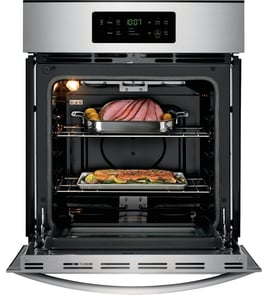




What width do wall ovens come in?
Most wall ovens come in 24-inch, 27-inch, and 30-inch widths. For Kenmore Pro model 79041003605, the installation guide shows a 30-inch wall oven configuration; always match the oven width to your cabinet cutout and trim requirements in the installation guide.
Common wall oven widths (what you will see most often)
- 24 in.: common for smaller kitchens and some European-style layouts
- 27 in.: a frequent “mid-size” built-in option
- 30 in.: the most common full-size wall oven width (including many Kenmore Pro models)
- Double ovens: typically use a 30-inch width cabinet, but require a taller cutout
What matters besides width
Even when two ovens are both labeled “30-inch,” the cabinet cutout and front trim can differ. Use these checkpoints before ordering or installing:
- Cutout width and depth (cabinet opening)
- Cutout height (single vs. double oven)
- Clearance in front for the door to open
- Junction box location and cable routing
- Mounting brackets (the oven must be secured to the cabinet)
Quick sizing guide (typical ranges)
| Nominal oven width | Typical cabinet cutout width | Best use case |
|---|---|---|
| 24 in. | About 22 1/2 to 23 1/2 in. | Tight spaces, smaller capacity |
| 27 in. | About 25 1/2 to 26 1/2 in. | Mid-size replacement installs |
| 30 in. | About 28 1/2 to 29 1/2 in. | Most standard full-size installs |
Why it matters
Choosing the wrong width can leave gaps around the trim, prevent the oven from sliding fully into the cutout, or create clearance and heat buildup issues. We always recommend confirming the cabinet cutout dimensions and required clearances before you commit to an installation or replacement.
Ordering parts while you measure
If you are refreshing the install (mounting hardware, electrical connection area, or internal components), you can order parts for model 79041003605 from the parts list for this model, or search by model number on Sears PartsDirect.
Last updated: February 2026
Are there any 36 wall ovens?
Yes, 36-inch wall ovens exist, but they are much less common than 30-inch models. For your Kenmore Pro wall oven model 79041003605, the installation guide shows it as a 30-inch wall oven, so a 36-inch unit is a different size class and requires a different cabinet cutout and electrical planning (see the installation guide).
Common wall oven widths (what you will see most often)
Most built-in wall ovens are designed around standard cabinet openings. Here are the typical sizes shoppers compare:
| Nominal width | How common it is | Typical fit notes |
|---|---|---|
| 24-inch | Less common | Often used in smaller kitchens and tight cutouts |
| 27-inch | Common | Popular alternative when a 30-inch cutout will not fit |
| 30-inch | Most common | Standard for many single and double wall ovens |
| 36-inch | Uncommon | Larger cutout; fewer model choices; heavier install planning |
What matters for fit (more than the “36-inch” label)
When you move from a 30-inch to a 36-inch wall oven, the cabinet and utility requirements change. We recommend confirming these before buying:
- Cabinet cutout width, height, and depth (the cutout must match the oven’s spec sheet)
- Support and leveling: the cutout base must be level and strong enough for the oven
- Electrical supply: built-in electric ovens typically require a dedicated 120/240V or 120/208V, 60 Hz circuit
- Junction box location and cable routing
- Clearances and filler panels when installed near adjacent cabinets
Why it matters
A wall oven that is even a little too wide will not seat correctly in the cabinet, and forcing it can damage the cabinet, the oven frame, or wiring. Matching the cutout dimensions first prevents expensive rework.
Ordering the right parts or shopping by size
If you are keeping model 79041003605, you can order replacement parts from the parts list for this model, such as the range oven temperature sensor 5304504897 if you are troubleshooting temperature accuracy. If you are switching to a different size oven (like 36-inch), search by the new model number on Sears PartsDirect.
Last updated: February 2026
Why is my Kenmore oven fan not spinning?
On Kenmore Pro wall oven model 79041003605, a “fan not spinning” complaint is usually normal operation (the fan only runs in certain modes), the door switch stopping the convection fan when the door is open, a blocked fan blade, or a failed fan motor or control. Confirm the expected fan behavior in the installation guide.
Identify which fan you are hearing (or not hearing)
This oven uses fans for different jobs.
- Convection fan: runs in convection bake/roast; it stops when the door is opened.
- Cooling fan: cycles on and off to cool internal components; it can keep running after cooking.
- Self-clean: cooling fans can run during self-clean to protect electronics.
Safe checks that solve most “no fan” issues
Turn off power at the breaker before removing panels or touching wiring.
- Select a convection mode if you are checking the convection fan.
- Close the door firmly; a misaligned door switch stops the convection fan.
- Look for foil, grease buildup, or debris contacting the fan blade.
- If you hear a hum but no airflow, the blade may be stuck or the motor is failing.
- After high-heat cooking, wait a few minutes; the cooling fan may cycle.
Parts that commonly cause a no-spin condition
If the fan should be running and never starts, these model-matched parts are typical suspects.
| What you observe | Most likely cause | Example part on this model |
|---|---|---|
| Convection mode set, door closed, fan never turns | Failed fan motor | Range convection fan motor 5304463302 |
| Motor runs but blade does not move or is noisy | Loose/damaged blade | Range convection fan blade 318398302 |
| Fan never gets power, other functions act odd | Control not driving motor | Wall oven relay control board 316443915 |
Why it matters
A non-spinning convection fan causes uneven baking and longer cook times. A cooling fan that does not run when needed can overheat electronic controls.
You can order replacement parts for model 79041003605 from the parts list for this oven, or search by model number on Sears PartsDirect.
Last updated: February 2026
What are the parts of an electric oven?
An electric wall oven like the Kenmore Pro 79041003605 is built around heating, sensing, airflow, and control components. Heating elements create heat, sensors and safety thermostats regulate it, and control boards and fans manage cooking modes, timing, and safe cooling after shutdown.
Core parts and what they do
Most electric wall ovens include these key components:
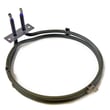
- Bake element (bottom heat for baking and roasting)
- Broil element (top heat for broiling)
- Oven temperature sensor (feeds temperature data to the control)
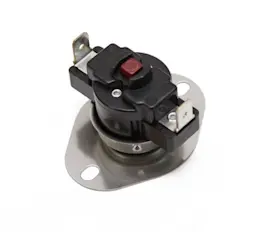
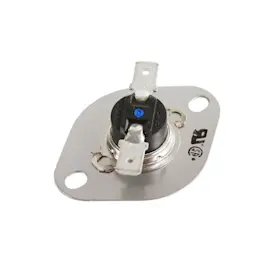
- High-limit thermostat (overheat safety cutoff)
- Electronic oven control and display (sets mode, time, temperature)
- Convection fan and motor (moves hot air for even cooking)
- Cooling/vent blower and oven vent (protects internal electronics)
- Door gasket and door assembly (seals heat in)
- Oven light (cavity illumination)
Examples of matching parts for model 79041003605
These are common “by function” examples from the parts list for this model:
| Function | Example part | What it affects |
|---|---|---|
| Temperature sensing | Range oven temperature sensor 5304504897 | Temperature accuracy, preheat behavior |
| Overheat protection | Frigidaire range high-limit thermostat 318578506 | Safety shutoff, no-heat after overheating |
| User interface | Wall oven display control board 316460300 | Display, clock/timer, keypad response |
| Power switching | Wall oven relay control board 316443915 | Element power delivery, intermittent heating |
| Convection airflow | Range convection fan motor 5304463302 | Even baking, convection performance |
Why the fan can keep running after you turn the oven off
This model uses a cooling blower to keep electrical and electronic components at a safe temperature. After high-heat cooking or self-clean, it is normal for the fan to run until the oven cools. Operating details and feature locations are in the 79041003605 owner’s manual.
Why it matters for troubleshooting
Matching symptoms to the right system speeds up diagnosis:
- No heat: element, relay control, thermostat, power connection
- Wrong temperature: sensor, calibration settings
- Uneven baking: convection fan/motor, rack placement
For ordering, use the parts list for model 79041003605 or search by model number on Sears PartsDirect.
Last updated: February 2026
Why is my Kenmore Elite oven not heating up?
If your Kenmore Pro wall oven 79041003605 is not heating, the most common causes are a tripped 2-pole breaker, a failed bake or broil element, a bad oven temperature sensor, or a control/relay issue that is not sending power to the elements. Use the 79041003605 owner's manual to confirm settings, then troubleshoot in order.
Quick checks (no tools)
- Cancel Delay Start and any special modes (such as Sabbath) and start a normal Bake cycle.
- Let the oven fully preheat before judging temperature.
- Check the house double-pole breaker; wall ovens use a dedicated 120/240V or 120/208V circuit.
- Make sure the door closes firmly; a damaged gasket can cause long preheat times.
Parts to check on this model
- Bake element: oven element 318601604
- Broil element: oven element 318255807
- Oven temperature sensor: range oven temperature sensor 5304504897
- High-limit safety: frigidaire range high-limit thermostat 318578506
- Controls: wall oven relay control board 316443915 or frigidaire range oven control board 318601500
Best troubleshooting order
| Step | What you do | What it means |
|---|---|---|
| 1 | Reset power at the breaker | Restores power after a trip or glitch |
| 2 | Inspect elements for blisters/cracks | Visible damage confirms failure |
| 3 | Check element continuity (power off) | Open circuit means replace element |
| 4 | Check sensor resistance (power off) | Out-of-range readings cause no-heat or poor heat |
Why it matters
Testing in this order finds the most common, lower-cost failures first (elements and sensor) before replacing higher-cost control boards.
You can order replacement parts for model 79041003605 from the parts list for this model, or search by model number on Sears PartsDirect.
Last updated: February 2026