Owner’s manual
 Error Codes



How many years should a GE washing machine last?
A GE washing machine typically lasts 10 to 14 years. For your GE WCVH4800K2WW washer, lifespan depends most on load size, installation (leveling), water quality, and routine cleaning; consistent maintenance helps you reach the upper end of that range.
Most washer life comes down to how hard the drive system and tub bearings work over time.
- Usage frequency: multiple loads per day shortens life faster than a few loads per week
- Overloading: strains the motor, suspension, and tub components
- Out-of-balance loads: increases vibration and wear on dampers and springs
- Water quality: sediment can affect fill performance and valves
- Moisture and residue: can lead to odor and boot wear in front-load designs
We recommend these habits for the WCVH4800K2WW:
- Keep loads properly sized (avoid packing the drum tight)
- Use HE detergent and avoid overdosing
- Leave the door slightly open between loads to dry the tub area
- Periodically inspect for leaks around the door boot and clamps
- Check that the washer stays level; adjust leveling legs if it starts to walk
If performance drops before the 10 to 14 year mark, these are frequent wear items:
| Symptom | Common area involved | Example part for this model |
|---|---|---|
| Won’t drain, stops mid-cycle | Drain system | Washer drain pump WH11X28637 |
| Excessive shaking or banging | Suspension | Washer damper WH01X10488 |
| Door won’t lock or unlocks | Door lock system | Washer door lock WH10X10008 |
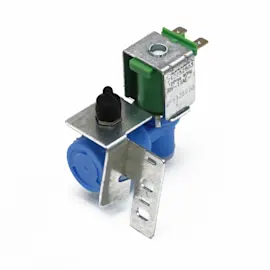
| Slow fill or no fill | Water inlet | Washer water inlet valve WH13X10046 |
Knowing the typical 10 to 14 year lifespan helps you decide whether to repair or refresh key components. A single worn part (like a drain pump or damper) can make a solid washer seem “worn out” even when the tub and motor are still in good shape.
For model-specific care and operating guidance, use the owner's manual.
Last updated: February 2026
What is the most common problem with GE washers?
The most common GE washer problem is a drain or spin failure: the washer won’t pump water out fast enough, won’t reach full spin, or leaves clothes too wet. On your GE WCVH4800K2WW, this is often tied to a restriction in the drain path or a failing drain pump.
- Water left in the tub at the end of the cycle
- Long drain times or the cycle stopping mid-cycle
- Clothes coming out dripping wet (low or no spin)
- A humming sound during drain (pump struggling)
- Intermittent draining (works sometimes, not others)
- Power reset: Unplug the washer for 2 minutes, then retry a Drain/Spin cycle.
- Drain hose: Make sure it isn’t kinked, crushed, or pushed too far down the standpipe.
- Clogs: Check for lint, coins, or small socks in the drain hose and pump area.
- Load balance: Redistribute bulky items; an out-of-balance load can reduce spin.
- Water supply (if it also fills slowly): Confirm both hot and cold valves are fully open.
If the checks above don’t help, these model-matched parts are frequent solutions:
| Symptom | Most likely area | Model-matched part to consider |
|---|---|---|
| Won’t drain or drains slowly | Drain pump or blockage | Washer drain pump WH11X28637 |
| Won’t fill or fills slowly | Inlet valve or screens | Washer water inlet valve WH13X10046 |
| Won’t start or won’t unlock | Door lock system | Washer door lock WH10X10008 |
| Shakes, bangs, walks | Suspension/damping | Washer damper WH01X10488 |
Drain and spin problems are more than an inconvenience; standing water can cause odors and leaks, and repeated low-spin cycles leave clothes overly wet and can strain the motor and control system over time.
Use the cycle and error-code guidance in the owner's manual for GE WCVH4800K2WW to confirm the correct Drain/Spin selection and any displayed fault indications before ordering parts.
Last updated: February 2026
What is the difference between 4.5 cu ft and 5.0 cu ft washer?
A 5.0 cu. ft. washer holds 0.5 cu. ft. more than a 4.5 cu. ft. washer (about 11 percent more volume), so it handles bulkier items and larger mixed loads with fewer cycles. This comparison is general; GE model WCVH4800K2WW is not a 4.5 or 5.0 cu. ft. washer.
- Bulky items (comforters, blankets, winter coats) tumble more freely
- You can add a few more towels or jeans per load
- Less overpacking improves wash and rinse performance
- Fewer total loads on heavy laundry days
- More weight per cycle can increase vibration if the load is unbalanced
| Item | 4.5 cu. ft. washer | 5.0 cu. ft. washer |
|---|---|---|
| Drum volume | Smaller | Larger (plus 0.5 cu. ft.) |
| Best for | Regular weekly loads | Bedding, towels, larger households |
| Bulky load fit | Tighter fit | Easier fit, better turnover |
| Loads per week | More cycles | Fewer cycles |
- Choose 5.0 cu. ft. if you regularly wash bedding, large towel loads, or big mixed loads.
- Choose 4.5 cu. ft. if you mostly wash everyday clothing and want a slightly smaller footprint.
- Avoid overstuffing either size; it reduces cleaning and can cause out-of-balance spinning.
Capacity affects how well items move through wash water and detergent, how thoroughly they rinse, and how stable the washer is during high-speed spin. For the correct loading guidance and specifications for GE model WCVH4800K2WW, use the WCVH4800K2WW owner's manual.
Last updated: February 2026