Error Codes



How do I reset my Maytag oven control panel?
To reset the control panel on your Maytag MER6770AAB electric range, cut power to the range for about 1 minute, then restore power and test Bake. This clears many “stuck” keypad and display glitches and restores normal operation.
Quick reset steps (recommended)
- Turn the range off.
- Switch the range circuit breaker OFF (or unplug the cord if accessible).
- Wait 60 seconds.
- Turn the breaker ON (or plug back in).
- Set Bake for a low temperature and press Start to confirm the control responds.
If the panel still acts up
These checks help separate a control issue from a heating or temperature-sensing problem.
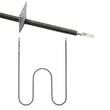
- If the display works but oven temps are erratic, the temperature sensor may be the cause; consider testing or replacing the oven sensor 12001656.
- If the oven heats but shuts off unexpectedly, inspect wiring connections at the control and at the sensor for looseness or heat damage.
- If keys do not respond, try a “Cancel/Off” press and then retry a simple Bake cycle.
- If the oven light or indicator behavior is abnormal, check the bulb and indicator connections (power off first).
What a reset does (and does not do)
| Action | What it helps | What it won’t fix |
|---|---|---|
| Power reset (breaker off/on) | Frozen display, non-responsive keypad, minor control glitches | Burned wiring, failed control board, failed sensor, failed heating element |
Why it matters
A control reset is the fastest safe first step because the oven control can lock up after a power surge or a canceled cycle. Restoring clean power often returns normal keypad response without replacing parts.
Last updated: February 2026
How to fix F1 error on Maytag oven?
On a Maytag MER6770AAB electric freestanding range, an F1 error is most often caused by a failed oven temperature sensor circuit (sensor shorted/open) or a problem in the electronic control. We start by power-cycling the range, then testing the sensor and its wiring; replacing the sensor fixes many F1 complaints.
Quick checks (do these first)
- Turn off power at the breaker for 1 minute, then restore power.
- If F1 returns immediately, avoid using Self-Clean until the issue is repaired.
- Confirm the oven isn’t overheating (strong burning smell, extreme temps, or runaway heat).
- If the code appears only during or right after Self-Clean, suspect heat-stressed sensor wiring or the sensor itself.
Test the oven temperature sensor
A good sensor is the most common, straightforward fix to rule in or out.
- Disconnect power.
- Access the sensor connector (typically at the rear panel or inside the oven cavity, depending on build).
- Check the sensor harness for melted insulation, loose pins, or corrosion.
- Measure sensor resistance with a multimeter at room temperature.
Typical sensor readings (general guidance)
| Oven temp sensor condition | What you’ll see | What it causes |
|---|---|---|
| Normal | About 1,080 ohms at room temp | Oven heats normally |
| Open circuit | OL or very high resistance | F1 or heating issues |
| Shorted | Very low resistance | F1, erratic temps |
If the sensor tests bad, replace it with the exact part listed for this model: oven sensor 12001656.
If the sensor tests good
If resistance is normal and the wiring looks clean, the issue is usually in the control or a wiring harness connection.
- Reseat the sensor connector and any visible control-board connectors.
- Inspect the rear harness for pinched, burned, or brittle wires.
- If you find damaged wiring, repair it correctly (heat-rated connectors and insulation).
For safe electrical testing techniques, we follow the steps in how to use a multimeter to test electrical parts video.
Why it matters
An F1 error can shut down baking and broiling, and an overheating fault can create unsafe temperatures. Fixing the sensor circuit restores accurate temperature feedback so the control can regulate the bake element and broil element correctly.
Last updated: February 2026
What are common Maytag range problems?
Common problems on the Maytag MER6770AAB electric freestanding range include the oven not heating or heating unevenly, surface elements not working correctly, and door-related heat loss. These issues are most often tied to a failed heating component, a temperature-sensing problem, or a worn door seal.
Most common symptoms and what they usually point to
- Oven not heating (bake): failed bake element, wiring issue, or temperature sensing problem
- Oven heats but is inaccurate or uneven: weak bake element, failing sensor, or door not sealing
- Broil not working: failed broiler element or connection issue
- Surface element stays on high or won’t regulate: failed surface element control switch
- Oven light not working: burned-out bulb or loose socket connection
- Heat escaping around the door: worn gasket or door seal, hinge alignment issue
Parts we commonly replace for these problems (MER6770AAB)
| Problem you see | Part to check first | What it does |
|---|---|---|
| Oven temperature swings, undercooks, overcooks | Oven sensor 12001656 | Tells the control the oven temperature so it can regulate heat |
| No bake heat | Range bake element 74004105 | Provides the main heat for baking |
| Heat leaking at door edge | Range oven door seal 74004518 | Helps keep heat inside the oven cavity |
| Oven light out | Range oven light bulb WP74009925 | Illuminates the oven interior |
Quick checks before replacing parts
- Confirm the range has proper power (electric ranges typically need a full 240V supply).
- For bake or broil issues, look for visible damage: blisters, cracks, or burn spots on the element.
- If food is cooking unevenly, verify the rack position and that the door closes firmly.
- If a surface element won’t regulate, test the control switch and inspect wiring for heat damage.
- If you smell overheating or see discoloration at connectors, stop using the range and inspect the harness.
Why it matters
A weak element, failing sensor, or leaking door seal can cause long preheat times, poor baking results, and extra strain on the control and wiring. Fixing the root cause restores normal temperature control and safer operation.
Last updated: February 2026
Why does my Maytag oven take so long to heat up?
Slow preheating on your Maytag MER6770AAB electric range is usually caused by a weak bake element, an inaccurate oven temperature sensor, or heat loss around the door. We focus first on the bake element because it does most of the heating during preheat, then verify temperature sensing and door sealing.
Quick checks that solve most slow-preheat complaints
- Make sure the oven is in Bake (not Broil) and the door is fully closed.
- Remove heavy foil from the oven bottom or racks; it can restrict airflow and slow heating.
- Watch the lower element during preheat; it should glow red at least part of the time.
- If preheat is slow and baking is uneven, suspect a weak element even if it still heats.
- If the oven overshoots or undershoots set temperature, suspect the sensor.
Parts to check on MER6770AAB
If you find a failed part, these are common fixes for slow heat-up:
- Bake heat problem: replace the range bake element 74004105
- Temperature reading problem: replace the oven sensor 12001656
- Heat leaking at the door: inspect the door seal; replace if torn or flattened (browse the door gasket and seal options for this model)
How to pinpoint the cause (simple diagnosis)
- Visual inspection (power off): look for blisters, cracks, or burned spots on the bake element.
- Heat behavior: if the bake element rarely glows during preheat, the control may be relying too much on broil or cycling incorrectly.
- Basic electrical test: check element and sensor continuity with a multimeter.
What the symptoms usually mean
| Symptom | Most likely cause | What to do next |
|---|---|---|
| Preheat is slow; food bakes unevenly | Weak bake element | Replace bake element |
| Preheat is slow; temps seem “off” | Sensor drifting out of range | Replace oven sensor |
| Preheat is slow; cabinet gets very hot | Door seal leaking | Inspect/replace door seal |
Why it matters
A slow-preheating oven often still reaches temperature eventually, but it increases cook times and can cause underbaking or uneven results. Fixing the heating or sensing issue restores normal cycling and more consistent temperatures.
Last updated: February 2026