Installation guide
 Owner’s manual
 Error Codes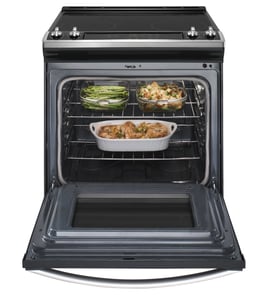
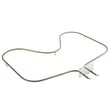


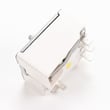


What causes a Kenmore oven to stop working?
On Kenmore electric range model 66595781000, an oven that “stops working” is usually caused by a power supply problem (tripped breaker or blown fuse), the controls being set incorrectly (including Oven Lockout or Delay Start), or a failed heating component such as the bake element. Check the basics first using the 66595781000 owner's manual.
- Verify the range is plugged into a properly grounded live outlet with the correct voltage.
- Check the home circuit breaker or household fuse for the range.
- Make sure the control knobs are pushed in before turning.
- Confirm Oven Lockout is not enabled.
- Cancel Delay Start, then set Bake again.
- If the cooktop works but the oven will not heat, inspect for a failed heating part.
| Symptom | Most likely cause | What to do next |
|---|---|---|
| Nothing works (no display, no heat) | No power to range (breaker/fuse/outlet) | Restore power; re-test controls |
| Cooktop works but oven won’t heat | Failed heating element or control setting issue | Re-set Bake; inspect element |
| Oven won’t start when you press keys | Electronic control not set correctly, lockout enabled | Clear lockout; reprogram settings |
| Self-clean won’t start | Door not fully closed, Start not pressed, delayed start set | Close door firmly; restart cycle |
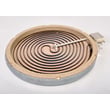
If the oven powers on but does not heat, the bake circuit is the first place we look. A visibly damaged or open bake element is a common failure on electric ranges.
- For no-bake or weak-bake symptoms, check the bake element WPW10308477.
- For broil not heating, the broil element is another common suspect.
- If temperatures are consistently too hot or too cool (but it still heats), the oven temperature sensor is a frequent cause.
Power and control settings can stop the oven instantly and cost nothing to correct. Confirming those items first helps you avoid replacing parts unnecessarily and gets your Kenmore range back to baking safely and consistently.
Last updated: January 2026
How do I tell what model Kenmore stove I have?
For a Kenmore range, the model number is printed on the model and serial number plate. On Kenmore model 66595781000, the manual directs you to find that plate using the “Parts and Features” diagram, then record the complete model number and serial number for parts and service.
Check these common locations first (they are typical for many Kenmore electric ranges):
- Inside the oven door opening, along the door frame (door jamb)
- Behind the storage drawer or warming drawer (on the frame)
- On the back panel near the upper vent area
- Along a side frame edge behind the lower access area
Kenmore ranges often use a 3-digit prefix followed by more digits. For this appliance, the model number format shown in the documentation is:
| What you need | Example for this range |
|---|---|
| Model number | 66595781000 (often shown as 665.95781000) |
| Serial number | A separate code on the same plate |
Use these quick checks so you capture the exact number needed for parts like a bake element, surface element, or oven temperature sensor:
- Copy every digit; do not stop at 665
- Include any dots only if they appear on the label (for example, 665.95781000)
- Take a clear photo before ordering parts or scheduling service
- Write down both the model and serial number; they are paired on the same plate
We use the full model number to match the correct wiring, control switch style, and oven components for your exact Kenmore range. Even small model-number differences can change which parts fit and how the range is serviced.
For the official label location diagram and model/serial details, use the 66595781000 owner's manual.
Last updated: January 2026
How to lift a Kenmore stove top?
On Kenmore electric range model 66595781000, the cooktop typically lifts from the front after you remove any parts that can hold it down (such as burner bowls or mounting screws). Always shut off power at the breaker first, then lift carefully and support the top so you do not strain wiring.
- Turn OFF the range at the circuit breaker (electric ranges can have 240V power present even with knobs off).
- Let all surface areas cool completely.
- Remove cookware and anything stored on the cooktop.
- Protect the finish with a towel where the cooktop may rest.
- Keep a container for screws so nothing gets lost.
- Remove the surface elements (coil-style) or lift off any removable cooktop pieces (depending on your configuration).
- Look along the front edge of the cooktop (under the lip) for retaining screws or clips; remove them if present.
- Grasp the cooktop at the front corners and lift up.
- If the cooktop has support rods or hinges, engage the support. If not, have a helper hold it up while you work.
- When lowering, make sure no wires are pinched; then reinstall screws/clips and any cooktop parts.
| Cooktop style | What usually comes off first | What usually holds the top down |
|---|---|---|
| Coil elements | Coil elements and drip pans (if equipped) | Front retaining screws/clips |
| Radiant glass | Nothing lifts from the top surface | Cooktop is typically secured from underneath; access is often from the back or by lifting the whole top assembly |
Lifting the cooktop the right way prevents cracked glass, bent hinges, and damaged wiring connections. It also makes diagnosing issues like a dead burner or loose terminal block much safer and faster.
- Use the exploded views and access notes in the 66595781000 owner's manual for your model’s exact cooktop access method.
- If you are lifting the top to troubleshoot a burner problem, the radiant surface element on range not working video is a good next step for common checks.
Last updated: January 2026
How many watts does a Kenmore oven use?
For Kenmore electric range model 66595781000, the oven heating system typically draws about 4,800 watts total when bake and broil outputs are combined; actual power use varies by which element is on and whether the convection fan is running. For your exact feature set and ratings, check the 66595781000 owner's manual.
Watts are the heating power rating, not what the oven uses all the time. Your range cycles elements on and off to hold temperature.
- Bake uses the lower bake element most of the time.
- Broil uses the upper broil element (often higher wattage than bake).
- Preheat can use more power because the element stays on longer.
- Convection adds a small load for the fan motor (the heater wattage is still the main draw).
- Self-clean (if equipped) is one of the highest-demand modes.
These are common ranges for many 240V electric ovens like the Kenmore 665 series.
| Oven function | Typical wattage range | Notes |
|---|---|---|
| Bake element | 2,000 to 3,500 W | Cycles to maintain set temp |
| Broil element | 3,000 to 4,500 W | Often runs at full power while broiling |
| Convection fan | 20 to 150 W | Small compared to heating elements |
Use these practical checks to understand what your kitchen circuit sees.
- Look for the rating label (model/serial plate) and compare to the manual’s electrical section.
- Confirm you are on a 240V range circuit (most are 40A or 50A).
- If the oven is slow to heat, inspect the bake element for blistering or breaks; a failed element can reduce heat output.
- If temperatures are off, the oven temperature sensor can cause cycling issues; see range oven temperature sensor WP8273340.
Knowing the wattage helps you confirm the correct breaker size, avoid nuisance trips, and diagnose heating problems (for example, a weak bake element can make preheat times much longer).
Last updated: January 2026