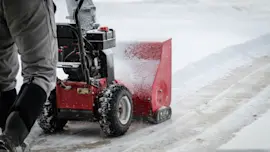
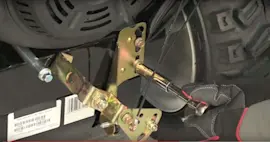
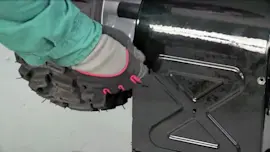
Owner’s manual
 View engine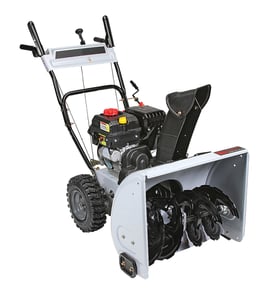



What is the typical lifespan of a gas snowblower?
For the Craftsman gas snow thrower model 2479854, a typical real-world lifespan is 10 to 15 years with regular maintenance and proper off-season storage. The operator guidance also cites an average useful life of 7 years or about 60 hours of operation, which is a safety and inspection benchmark.
What “lifespan” means for a snowblower
A snowblower’s life is usually limited by wear items (belts, skid shoes, shave plate, cables) and fuel-system issues from storage. Keeping wear parts in spec and storing it correctly is what most often separates a 7-year machine from a 15-year machine.
Big factors that change lifespan:
- Annual hours of use (light residential vs. heavy, long-driveway use)
- Storage habits (fuel left in carburetor vs. properly drained)
- Maintenance frequency (oil changes, inspections, lubrication)
- Operating conditions (wet heavy snow, gravel, ice chunks)
- Replacing worn parts with OEM-equivalent parts per the manual
Maintenance that most extends service life
Use the 2479854 owner's manual for the exact intervals and procedures for your unit.
- Change engine oil on schedule and before storage
- Run the machine briefly after use to clear snow and prevent freeze-up
- Inspect fuel line, tank, cap, and fittings for cracks or leaks
- Check that control levers engage and disengage correctly; adjust as needed
- Store in a clean, dry, well-ventilated area away from open flame or pilot lights
Lifespan benchmarks at a glance
| Benchmark | What it’s used for | Typical number |
|---|---|---|
| Average useful life | Safety and inspection guideline | 7 years or ~60 hours |
| Typical homeowner lifespan | Practical expectation with good upkeep | 10 to 15 years |
| Long-life outcome | With excellent maintenance and timely part replacement | 15 to 20 years |
Why it matters
Planning around lifespan helps you decide when to do preventive maintenance (oil change, lubrication, cable adjustments) versus when to refresh key wear parts. That keeps throwing performance strong and reduces mid-storm breakdowns.
Last updated: January 2026
Should I spray my snowblower with WD-40?
Yes. For a Craftsman snow thrower model 2479854, a light spray on the chute and auger housing can help snow slide instead of sticking, which reduces clogging. For storage, the manual specifically recommends rust-proofing metal parts with a light oil or silicone coating; follow the cleaning and storage steps in the 2479854 owner's manual.
Where spraying helps (and where it does not)
Use a light, even coat on slick surfaces that contact snow; avoid soaking areas that need grease or friction.
- Good targets: chute interior, discharge opening, auger housing interior
- Avoid: belts and pulleys, friction drive areas, brake surfaces, tires
- Use caution around: painted surfaces (wipe overspray), plastic parts, decals
- Never spray on a hot muffler or hot engine
Best time to apply
| When | Goal | What to do |
|---|---|---|
| Before a storm | Reduce sticking | Light coat on chute and housing; wipe excess |
| During use (if clogging) | Restore slick surface | Shut off engine, let moving parts stop, then reapply lightly |
| End of season storage | Rust prevention | Clean, dry, then apply light oil or silicone coating to metal parts |
Quick prep steps we recommend first
A spray works best after basic cleaning, which also helps prevent overheating and fire risk.
- Brush off packed snow and slush after use
- Clear debris from cooling fins, guards, and linkage areas
- Inspect fuel line, tank, cap, and fittings for cracks or leaks
- Lubricate pivot points and cable spring ends with light oil (once per season and before storage)
Why it matters
Snow sticking inside the chute is a common cause of poor throwing distance and clogging. A light coating helps, but proper cleaning, lubrication, and safe storage practices do more to protect the engine, controls, and auger system long-term.
Last updated: January 2026
How many HP is a 243cc snow blower?
A 243cc snowblower engine is typically in the 7 to 9 HP range in real-world output. On the Craftsman snow thrower model 2479854, engine power is best compared by cc rating and torque, because “HP” marketing labels on snowblowers are often not measured the same way.
Why 243cc does not equal a single HP number
Manufacturers do not publish a consistent, standardized “snowblower HP” rating across brands and model years. Two 243cc OHV engines can produce different horsepower depending on governor setting, carburetor tuning, and emissions calibration.
What we use instead:
- Engine displacement (cc) for rough size comparison
- Torque (if published) for working power
- Performance symptoms (bogging, stalling) to diagnose fuel or ignition issues
Quick reference: common snowblower engine size to typical HP
| Engine size (cc) | Typical HP range | Typical use |
|---|---|---|
| 179 to 208 | 5 to 7 | Light to moderate snow, smaller driveways |
| 212 to 249 | 7 to 9 | Most 2-stage residential snowblowers |
| 250 to 306 | 9 to 11 | Heavy snow, wider buckets, deeper drifts |
When “HP” claims look much higher
Some snowblower model names include numbers like “24”, “26”, or “28” that refer to clearing width (inches) or a series name, not true engine horsepower. For accurate specs and engine identification on model 2479854, use the 2479854 owner's manual.
If your 243cc snowblower feels underpowered
These checks restore power more often than replacing major parts:
- Drain old fuel; refill with fresh fuel (use stabilizer for storage)
- Check and replace the spark plug if fouled (common cause of misfire)
- Inspect the auger and impeller for packed snow or debris
- Verify auger control cable adjustment (slipping belt reduces throwing power)
- Change engine oil at the recommended interval
For step-by-step maintenance help, use how to check a snowblower spark plug video.
Why it matters
Matching a snowblower by “HP” alone can be misleading. Using cc and condition-based checks helps you choose the right machine and fix power loss faster, especially on a 2-stage Craftsman snow thrower like model 2479854.
Last updated: January 2026
How to tell if a snowblower auger belt is bad?
On the Craftsman snow thrower model 2479854, a bad auger drive belt shows up as an auger that hesitates, spins slowly, or will not turn under load. You can usually confirm it with a quick visual inspection for cracking, fraying, glazing, or a burnt rubber smell after removing the belt cover (see the 2479854 owner's manual).
Quick signs the auger belt is failing
- Auger hesitates when rotating, even after you adjust the auger control cable
- Auger stops when snow gets heavy (belt slips under load)
- Burning rubber smell or visible “glazed” shiny belt surface
- Cracks, frayed cords, missing chunks, or a stretched belt that sits loose
- Belt dust or black residue inside the belt cover area
Rule out a simple cable adjustment first
The manual notes that if the auger “hesitates,” you can increase cable tension by moving the control cable end to the upper hole in the control handle. If performance does not improve after that adjustment, belt replacement is the next step.
Basic check steps
- Shut the engine off and remove the key
- Disconnect the spark plug wire before putting hands near the auger or pulleys
- Inspect the belt through the belt cover area for wear and glazing
- Check that the belt is routed correctly and not riding off a pulley
What you will typically see: normal vs bad
| What you notice | Usually means | What to do next |
|---|---|---|
| Auger spins strong, belt looks matte and flexible | Belt likely OK | Check paddles, chute clogging, and cable tension |
| Auger hesitates, belt looks shiny or smells burnt | Belt slipping | Adjust cable; if unchanged, replace belt |
| Belt has cracks, fraying, or missing chunks | Belt worn out | Replace belt before it breaks |
| Auger will not turn and belt area is packed with debris | Jam or obstruction | Clear jam safely; recheck belt condition |
Why it matters
A slipping auger belt cannot transfer engine power to the auger pulley, so snow throwing performance drops fast. Continuing to run it can overheat the belt, increase wear on pulleys and idlers, and leave you with a no-auger situation mid-storm.
For belt access and routing details, follow the step-by-step procedure in the 2479854 owner's manual.
Last updated: January 2026