Owner’s manual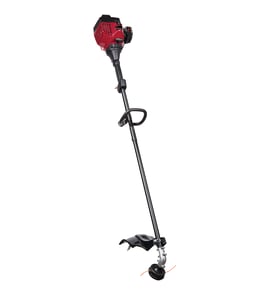


What size line does a Craftsman trimmer take?
For the Craftsman 316711970 gas line trimmer, the cutting line size depends on the trimmer head installed. Most Craftsman gas trimmers in this class commonly run 0.095-inch line, and some heads also support 0.110-inch fixed line; confirm the exact spec for your setup in the 316711970 owner's manual.
Quick way to confirm the correct line size
Check these spots first because they match what the trimmer head is designed to feed:
- The trimmer head cap label (often lists diameter in inches)
- The spool or spool housing markings
- The parts diagram and line spec in the 316711970 owner's manual
- The old line you removed (measure with calipers if possible)
- Whether your head is bump-feed (typically smaller) or fixed-line (often larger)
Common line sizes and what they are best for
Most gas line trimmers accept one of these diameters; using the right size prevents poor feed and excess vibration.
| Line diameter | Typical use | What you may notice if it’s wrong |
|---|---|---|
| 0.080 in | Light trimming | Breaks easily in heavy weeds |
| 0.095 in | General trimming and edging | Best balance of cut and feed |
| 0.105 to 0.110 in | Heavy weeds (often fixed-line heads) | Can jam or overload a bump head |
Why it matters
Line that is too thick can bind in the spool, stop feeding, and make the engine work harder. Line that is too thin wears fast and reduces cutting performance, especially in dense grass.
Helpful tip before you restring
If the trimmer is hard to start or bogs down while cutting, basic tune-up items can make line performance feel “wrong” even when the diameter is correct. A fresh spark plug 794-00082 and clean air filter often restore power and throttle response.
Last updated: February 2026
How to replace line on Craftsman gas trimmer?
To replace trimmer line on your Craftsman 316711970 gas line trimmer, we wind new line onto the bump head (or install pre-cut pieces, depending on the head style), then feed the ends through the eyelets and reassemble so the head bump-feeds smoothly.
Before you start
- Shut the engine off and let it cool completely.
- Disconnect the spark plug boot so the trimmer cannot start accidentally.
- Clean grass and debris off the debris shield and around the head.
- Use the correct line diameter for your head; most bump heads use line in the 0.080 to 0.095 inch range.
For model-specific diagrams and head details, use the 316711970 owner's manual.
Easy-wind bump head (common on Craftsman)
Many Craftsman heads use an “easy wind” design where you feed line through the head and twist the knob to wind both sides evenly.
- Align the arrows on the bump knob with the line-loading marks on the head.
- Cut a length of line (commonly 10 to 20 feet total).
- Feed the line through the eyelet until the ends are equal length.
- Turn the bump knob in the direction shown on the head to wind the line.
- Pull both ends to confirm they move freely, then trim to a practical length.
Two-piece (dual line) head (alternate style)
Some heads load two separate pieces of line.
- Remove the bump knob/spool cover.
- Pull out the spool and note the winding direction.
- Wind each line into its own channel so it does not overlap.
- Route the ends through the eyelets and reinstall the spool and cover.
Quick checks if it will not feed line
- Line is wound backwards (rewind in the correct direction).
- Line is fused from heat (replace with fresh line).
- Spool is overfilled (remove some line).
- Eyelets are packed with debris (clean them).
- Head is worn or cracked (replace the head assembly).
| Symptom | Most common cause | Fix |
|---|---|---|
| Line snaps often | Old, brittle line | Replace line; store line sealed |
| No bump feed | Overfilled spool | Remove line until spool turns freely |
| Uneven line lengths | Not centered when loading | Reload and center the line |
Why it matters
Correctly loaded line prevents tangles inside the spool, keeps bump feed reliable, and reduces clutch and drive shaft strain during trimming.
Last updated: February 2026
What size is the fuel line on a Craftsman trimmer?
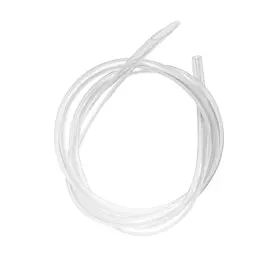
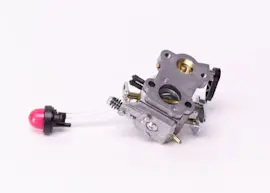
For the Craftsman gas line trimmer model 316711970, fuel line size is determined by matching the tubing’s inside diameter to the carburetor and primer fittings and the outside diameter to the tank grommet. Use the old line as your template and confirm routing in the 316711970 owner's manual.
How to identify the correct fuel line size
Use these steps to get an exact match for your trimmer’s fuel system:
- Remove the old line and cut a short sample from an undamaged section
- Measure ID and OD with a caliper (best) or compare to drill bits for a close gauge
- Match the ID to the fitting it slides onto (carburetor nipple or primer bulb nipple)
- Match the OD to the tank opening or grommet so it seals without fuel seepage
- Replace any line that is hard, swollen, sticky, or cracked
- Replace the in-tank fuel filter if it is restricted (common cause of hard starting)
Typical 2-cycle trimmer fuel line sizing (for reference)
Most 2-cycle trimmers use two different line sizes: a smaller return line and a larger supply line. Use this as a range check after you measure your original line.
| Line role | Common connection | Typical ID range | Typical OD range |
|---|---|---|---|
| Supply line | Tank filter to carburetor | 1/8 in to 3/16 in | 3/16 in to 1/4 in |
| Return line | Primer bulb return to tank | 3/32 in to 1/8 in | 1/8 in to 3/16 in |
Why it matters
If the fuel line ID is too large, it pulls air and the engine runs lean, surges, or stalls. If the OD is too small, it leaks at the tank grommet and the primer bulb will not fill consistently.
Quick tune-up items to check at the same time
Fuel line problems often show up alongside basic maintenance issues:
- Install a fresh plug such as spark plug 794-00082 if the old one is fouled
- Clean or replace the air filter such as mtd lawn and garden equipment engine air filter 753-05254
- Inspect the carburetor mounting area for damaged gaskets and loose fasteners
Last updated: February 2026