

How many square feet will a 36000 BTU air conditioner cool?
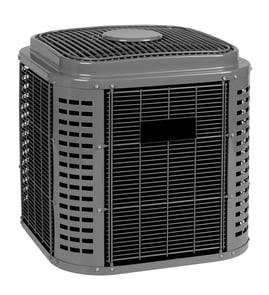
A 36,000 BTU (3-ton) air conditioner like the Carrier 40QAQ036300 typically cools about 1,200 to 1,800 square feet in an average, well-insulated home. The right size depends most on insulation, ceiling height, sun exposure, and your local climate.
Typical coverage for 36,000 BTU
Use this as a practical starting point for a split-system central air conditioner:
- 1,200 to 1,800 sq ft: common real-world range
- Closer to 1,200 sq ft: hot climates, lots of windows, poor insulation, high ceilings
- Closer to 1,800 sq ft: mild climates, good insulation, shaded home, standard 8 ft ceilings
- Add load for kitchens, west-facing rooms, and upstairs spaces
- Reduce load if you have newer windows, added attic insulation, or heavy shade
Quick sizing table (rule-of-thumb)
These ranges help you sanity-check sizing before you commit to parts or repairs.
| Home conditions | Approx. sq ft a 36,000 BTU unit can cool |
|---|---|
| Hot climate or weak insulation | 1,100 to 1,400 |
| Average insulation and layout | 1,200 to 1,800 |
| Mild climate and strong insulation | 1,600 to 2,000 |
Why the square-foot number can be misleading
Square footage alone does not capture the actual heat load. An oversized system can short-cycle (turn on and off too often), leaving humidity high and increasing wear on the compressor and contactor. An undersized system can run constantly and still not hold temperature.
What we recommend for the best answer
For the Carrier 40QAQ036300, we use these checks to dial in sizing:
- Confirm ceiling height (8 ft vs. vaulted makes a big difference)
- Note insulation level (attic and walls)
- Count large windows and sun exposure (especially west-facing)
- Consider occupancy and heat sources (cooking, electronics)
- Use a Manual J load calculation for a final sizing decision
If you are troubleshooting performance (not just sizing), start with basics like clean filters, open registers, and correct thermostat settings, then move to electrical checks using how to use a multimeter to test electrical parts video.
Last updated: February 2026
How to look up AC model number?
To look up your AC model number, we start by finding the model tag on the equipment and then use that exact number to search parts and diagrams. For Carrier split-system air conditioners like model 40QAQ036300, the model tag is usually on a metal plate or durable label.
Where to find the model number on a central AC
Check these common locations (use a flashlight and take a photo):
- Outdoor condenser unit: on the side panel near the refrigerant lines or electrical access panel
- Indoor air handler or furnace (if your system uses one): inside the front service panel or on the cabinet side
- Evaporator coil cabinet: on the coil door or cabinet exterior (often near the refrigerant connections)
- Electrical compartment cover: sometimes the data plate is adjacent to the wiring diagram
What to write down (so parts match)
Model tags often include multiple identifiers. Capture all of these:
- Model number (example: 40QAQ036300)
- Serial number (helps confirm production run)
- Voltage and phase (ex: 208/230V, 1PH)
- Capacity/tonnage (often shown as BTU rating)
Quick ID guide
| Label item | What it’s used for | Tip |
|---|---|---|
| Model number | Primary key for parts lookup | Copy it exactly, including dashes/spaces if shown |
| Serial number | Confirms age and revision | Photograph it; characters can be easy to misread |
| Electrical ratings | Confirms compatibility | Match voltage and phase before ordering |
Why it matters
Central air conditioner parts (like contactors, capacitors, fan motors, and control boards) can look similar but vary by electrical rating and revision. Using the exact model number prevents wrong-part returns and repeat repairs.
Next step: use the model number to search
If the tag is worn or hard to read, we use the most legible characters first and cross-check with the rest of the data plate. Our guide, how to find your appliance model number (and what it means for parts), shows what model tags look like and how to interpret them.
Last updated: February 2026
Is it hard to get Carrier parts?
Yes, Carrier parts can take more effort to source, especially for a specific split-system air conditioner model like 40QAQ036300. Availability depends on whether you need an OEM control, a model-specific electrical component, or a more universal item (like a capacitor), and whether the part is stocked or special-order.
What usually makes Carrier parts harder to get
- Model-specific components: Boards, sensors, and proprietary controls often require an exact match.
- Multiple part number revisions: The same function can have updated part numbers over time.
- Distribution and stocking: Some parts are stocked locally, others ship from regional warehouses.
- System matching requirements: Outdoor unit, indoor unit, and thermostat compatibility can limit substitutions.
- Seasonal demand: Lead times often increase during peak cooling season.
What we recommend before ordering
Use this checklist to avoid ordering the wrong part for your Carrier 40QAQ036300 system:
- Confirm the full model number from the rating plate (40QAQ036300).
- Write down the part number printed on the failed part (label or stamping).
- Take a clear photo of wiring connections before removal.
- If it is electrical, verify symptoms with a meter (voltage, continuity, capacitance).
- Match specs, not just appearance (microfarads, voltage rating, coil voltage, terminal style).
Common part types and how “hard” they are to source
| Part type | Typical sourcing difficulty | Notes |
|---|---|---|
| Capacitor, contactor, fuses | Low | Often spec-matched by rating. |
| Fan motor, blower motor | Medium | Shaft size, RPM, and mounting matter. |
| Control board, sensor, display | High | Usually needs exact OEM match. |
| Coil, compressor | High | Often special-order and labor-intensive. |
Why it matters
Central air conditioner parts are not one-size-fits-all. Getting the correct part the first time prevents repeat failures, wiring damage, nuisance trips, and compatibility issues across the split system.
For help confirming the right part category and improving your search accuracy by model number, use how to find your appliance model number (and what it means for parts).
Last updated: February 2026