Installation guide
 Owner’s manual
 Error Codes


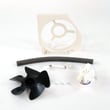
What are the disadvantages of a top mount fridge?
A top-mount refrigerator like the Frigidaire FRT17G5CSBA puts the freezer on top and the fresh-food section below; the main disadvantages are more bending to reach everyday items, fewer organization features than many bottom-freezer designs, and fewer built-in dispenser options.
Common drawbacks (what you’ll notice day to day)
- More bending for fresh food: produce drawers, deli items, and lower shelves sit below waist height.
- Less “eye-level” organization: many top-mounts have simpler bins and fewer slide-out features.
- Fewer dispenser configurations: top-mount models are less likely to include external water or ice dispensing.
- Door swing clearance matters: you need enough space for doors to open fully; door reversal is often possible.
- Temperature balance can feel different: cold air originates in the freezer and is routed to the refrigerator through an air passage.
What you can do to reduce the downsides
- Keep everyday items on the middle shelves to minimize bending.
- Use clear bins to group snacks, dairy, and condiments for faster access.
- Leave proper airflow space around the cabinet (tight installs can hurt performance).
- Level the refrigerator so doors close reliably and seals stay tight.
- If door swing is inconvenient, follow the door reversal steps in the FRT17G5CSBA owner’s manual.
Quick comparison: top-mount vs bottom-freezer
| Feature | Top-mount (like FRT17G5CSBA) | Bottom-freezer |
|---|---|---|
| Fresh-food access | Lower, more bending | Higher, easier access |
| Freezer access | Eye-level | Lower drawer/basket |
| Organization | Often simpler | Often more flexible |
| Dispenser options | Less common | More common |
Why it matters
Layout affects comfort and how consistently the doors stay closed. Good leveling and clearances help the refrigerator run efficiently and keep temperatures stable, which protects food quality.
Last updated: January 2026
Are top mount or bottom mount fridges better?
Top-mount and bottom-mount refrigerators are both good choices; the better option depends on how you use your kitchen. For a Frigidaire top-mount like model FRT17G5CSBA, you typically get a simpler layout and often lower operating cost, while a bottom-mount usually puts fresh food at eye level for easier daily access.
Quick comparison
| Feature | Top-mount (freezer on top) | Bottom-mount (freezer on bottom) |
|---|---|---|
| Everyday access | More bending for fresh food | Less bending for fresh food |
| Energy use | Often lower | Often slightly higher |
| Price and repairs | Often lower cost, simpler design | Often higher cost, more complex |
| Freezer access | Easier access | More bending for freezer |
When a top-mount is the better pick
A top-mount refrigerator is usually the better choice when you want straightforward reliability and value.
- You want a simpler, proven design with fewer features to maintain
- You prefer easier access to frozen foods
- You want strong airflow and consistent cooling for basic food storage
- You are replacing an older top-mount and want a similar fit and feel
- You want to keep installation simple (clearances, leveling, door swing)
For model-specific setup details like clearances, leveling, and door reversal, use the FRT17G5CSBA owner's manual.
When a bottom-mount is the better pick
A bottom-mount refrigerator is usually the better choice when fresh-food access is your top priority.
- You use the refrigerator section far more than the freezer
- You want shelves and crispers closer to eye level
- You store heavier items in the refrigerator and want less bending
- You prefer a drawer-style freezer for organizing bags and boxes
Why it matters
The “best” style is the one that matches your daily habits. If you open the refrigerator door dozens of times a day, bottom-mount convenience can win. If you want a simpler, efficient layout with fewer complications, a top-mount like the Frigidaire FRT17G5CSBA is often the better long-term value.
Last updated: January 2026
Is Frigidaire Professional high end?
Yes. Frigidaire Professional is Frigidaire’s higher-end lineup, positioned above standard Frigidaire models with more premium styling, finishes, and performance-focused features. For your Frigidaire FRT17G5CSBA top-mount refrigerator, the “Professional” label is a separate product line, not a required part or setting. See the FRT17G5CSBA owner's manual for the features and care guidance specific to your refrigerator.
What “high end” means for Frigidaire Professional
Frigidaire Professional is typically considered “high end” within the Frigidaire family because it emphasizes:
- Pro-style design cues and upgraded exterior finishes
- Feature sets aimed at cooking performance and convenience
- A step-up fit and finish compared with entry and mid-tier lines
- A value-oriented alternative to true luxury brands
How this relates to model FRT17G5CSBA
FRT17G5CSBA is a top-mount refrigerator model. Whether it is “high end” depends on its specific configuration and features, not the Professional branding.
Common “step-up” indicators on refrigerators include:
- Better temperature stability and airflow control
- Quieter fan and compressor operation
- More adjustable storage (bins, shelves, deli drawer, wine rack)
- Higher-quality door gaskets and door hardware
- Easier maintenance access (toe grille, condenser area)
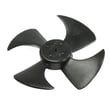
If you are comparing performance issues (warm fridge, frost, noise), the parts and diagnostics are model-specific. For example, airflow and cooling problems often involve the evaporator fan area; the refrigerator evaporator fan blade 5308000010 is one component used in that system.
Quick comparison: Frigidaire lines (typical positioning)
| Line | Typical positioning | What you usually get |
|---|---|---|
| Frigidaire | Mainstream | Core features, practical pricing |
| Frigidaire Gallery | Upper-mid | More features and styling upgrades |
| Frigidaire Professional | High end (brand tier) | Premium look, performance-focused features |
Why it matters
Knowing the product line helps set expectations for features, finishes, and repair approach. Even within a “high end” line, correct parts selection always depends on the exact model number (FRT17G5CSBA) and the instructions in the manual.
Last updated: January 2026
What is the most common problem with a Frigidaire refrigerator?
Cooling problems are the most common issue we see with Frigidaire refrigerators like model FRT17G5CSBA, usually showing up as warm fresh-food temps, a freezer that is not cold enough, or longer run times. In many cases, the cause is airflow or heat-release related (coils, fans, door sealing) rather than a major sealed-system failure.
Most common causes to check first
- Dirty condenser coils or blocked airflow around the toe grille area
- Evaporator fan not moving cold air through the refrigerator section
- Door gasket not sealing, causing warm air leaks and frost
- Controls set incorrectly or recently changed; allow about 24 hours for temperatures to stabilize
- Unit in a normal defrost cycle; wait about 20 minutes and recheck cooling
Quick troubleshooting steps (in order)
- Confirm power and settings: Make sure the plug is fully seated and the temperature control is not set to "0" (off). Use the guidance in the FRT17G5CSBA owner's manual.
- Give it time: After any control change, allow 24 hours for temperatures to stabilize.
- Listen for normal operation sounds: Gurgling, fan airflow, and occasional clicking can be normal during cooling and defrost.
- Check door sealing: Close a dollar bill in the door; steady resistance around the perimeter indicates a good seal.
- Inspect airflow: If the freezer is cold but the refrigerator is warm, suspect an airflow issue such as a stuck damper or fan problem.
Symptoms and likely causes
| What you notice | Most likely cause | What to check next |
|---|---|---|
| Freezer cold, fridge warm | Airflow problem | Damper, evaporator fan, frost buildup |
| Both sections warm | Heat not being removed | Condenser coils, condenser fan, power/control setting |
| Frost/ice around door | Air leak | Door gasket condition and alignment |
Parts that commonly relate to cooling complaints
If troubleshooting points to a specific failure, these model-compatible parts are commonly involved:
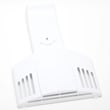
- Refrigerator air damper 241542001 (controls cold-air flow into the fresh-food section)
- Refrigerator defrost bi-metal thermostat 5303918202 (helps regulate defrost to prevent heavy frost)
- Refrigerator evaporator fan blade 5308000010 (moves air across the evaporator)
Why it matters
Most “not cooling” complaints are caused by airflow restrictions or poor heat exchange. Fixing those issues early helps protect the compressor and keeps temperatures stable for food safety.
Last updated: January 2026