Installation guide
 Owner’s manual



How to tell the tonnage of a carrier AC unit?
For Carrier model 25HNA636A0030020, you can tell tonnage by finding the unit size code in the model number: “36” typically means 36,000 BTU/hr, which equals 3 tons (36,000 ÷ 12,000). Confirm on the outdoor unit rating plate and in the installation guide.
- Locate the rating plate (data plate) on the outdoor unit cabinet.
- Write down the full model number exactly as shown.
- Look for the two-digit capacity code (commonly 24, 30, 36, 42, 48, 60).
- Convert to tons using the chart below.
- 24 = 24,000 BTU/hr = 2.0 tons
- 30 = 30,000 BTU/hr = 2.5 tons
- 36 = 36,000 BTU/hr = 3.0 tons
- 42 = 42,000 BTU/hr = 3.5 tons
- 48 = 48,000 BTU/hr = 4.0 tons
- 60 = 60,000 BTU/hr = 5.0 tons
| Capacity code | Approx. BTU/hr | Tons |
|---|---|---|
| 24 | 24,000 | 2.0 |
| 36 | 36,000 | 3.0 |
| 48 | 48,000 | 4.0 |
| 60 | 60,000 | 5.0 |
Correct tonnage helps you match the outdoor unit to the indoor coil/air handler, refrigerant line sizing, and airflow setup. On 25HNA6 family units, the installation information is organized by unit size (for example, 25HNA636), so identifying “36” keeps you in the right spec row.
The installation guide groups specifications by unit size (including 25HNA636). When you are verifying your system setup, also check:
- Refrigerant line connection sizes and recommended tubing diameters
- Required clearances for airflow and service access
- Operating ambient limits for cooling and heating modes
Last updated: February 2026
What is the life expectancy of a carrier air conditioner?
Most Carrier central air conditioners and heat pumps like model 25HNA636A0030020 typically last 15 to 20 years with normal use and consistent maintenance. Keeping airflow unrestricted and staying on top of filter and coil care helps protect major components and extend service life; see the owner's manual for routine care details.
A central AC or heat pump usually wears out faster when it runs hot, runs dirty, or runs with restricted airflow.
- Air filter condition: a clogged or misinstalled indoor filter increases operating cost and shortens unit life.
- Airflow restrictions indoors: blocked floor, wall, or ceiling vents reduce efficiency and life span.
- Outdoor unit clearance and cleanliness: debris buildup and blocked airflow strain the system.
- Coastal exposure: salt air accelerates corrosion; outdoor coil washing about every 3 months is commonly needed in coastal areas.
- Electrical and control wear: frequent cycling and arcing can stress electrical parts over time.
Use this as a simple baseline for a Carrier system like 25HNA636A0030020.
| Task | Typical frequency | Why it matters |
|---|---|---|
| Replace or clean indoor air filter | 1 to 3 months | Protects airflow, efficiency, and compressor life |
| Keep outdoor coil and cabinet clear of leaves and grass | Monthly in season | Prevents overheating and high pressure |
| Maintain outdoor clearance (about 12 inches minimum from tall grass/shrubs) | Ongoing | Keeps airflow unrestricted |
| Check condensate drain flow during cooling season | Occasionally | Helps prevent water issues and indoor coil problems |
These symptoms usually mean the system is wearing out or has a costly underlying issue.
- Rising energy bills with no change in thermostat settings
- Frequent service calls or repeated electrical failures
- Uneven cooling or long run times to reach set temperature
- Unusual noises from the outdoor unit (buzzing, chattering, grinding)
- Corrosion damage, especially in coastal environments
A well-maintained system can often reach the upper end of the 15 to 20 year range, while restricted airflow and dirty coils can shorten life by forcing the compressor and fan motor to work harder. Following the routine care steps in the owner's manual helps you avoid preventable wear.
Last updated: February 2026
Is it hard to get Carrier parts?
For Carrier model 25HNA636A0030020, getting the right replacement part is usually straightforward when you match the model and serial number to the exact component you need. The main challenge is avoiding “close enough” substitutions; using the correct part listing and documentation prevents delays and wrong-part returns.
- Confirm the model number 25HNA636A0030020 from the unit rating plate.
- Record the serial number too; it helps ensure the correct revision of parts.
- Use the exploded parts list for this model to identify the exact component name.
- Cross-check wiring and component location using the owner's manual.
- If you are replacing an electrical component, shut off power at the disconnect and breaker before opening the cabinet.
These are examples of parts we commonly see replaced on outdoor heat pump and central AC equipment; availability varies by component:
| Part type | What it affects | Common symptom when failing |
|---|---|---|
| Contactor | Starts/stops the outdoor unit | Outdoor unit will not run, clicking/buzzing |
| Run capacitor | Helps fan or compressor start/run | Humming, hard starting, fan not spinning |
| Control board | System logic and safety controls | Intermittent operation, no response |
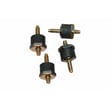
| Compressor grommet | Vibration isolation | Excess vibration or rattling |
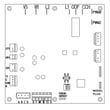
If your symptoms point to a start/stop issue, a common repair is replacing the circ pcb HK38EA023 or a contactor, depending on diagnosis.
- HVAC parts must match electrical ratings and system design (wrong parts can cause repeat failures).
- Some repairs require refrigerant handling and sealed-system work; the installation guidance emphasizes proper evacuation and recharging practices.
- Model variations over time can change which part revision fits, even within the same product family.
Using the correct Carrier 25HNA636A0030020 part helps protect the compressor and controls, reduces nuisance shutdowns, and keeps the system operating efficiently with fewer repeat service calls.
Last updated: February 2026
How many sq ft will a 2.5 ton AC unit cool?
A 2.5-ton central air conditioner (about 30,000 BTU/hr) typically cools around 1,200 to 1,500 sq ft in an average, well-insulated home. For your Carrier 25HNA636A0030020 heat pump system, the real coverage depends on your home’s heat gain, ductwork, airflow setup, and local climate; we use the sizing guidance in the installation guide as the baseline for proper setup.
These ranges assume average ceiling height (about 8 ft), decent insulation, and normal sun exposure.
- Cooler or mild climates: about 1,400 to 1,800 sq ft
- Mixed climates: about 1,200 to 1,500 sq ft
- Hot or very sunny homes: about 1,000 to 1,300 sq ft
- Poor insulation, lots of glass, high ceilings: expect the lower end of the range
- Tight, well-sealed homes with good shade: expect the higher end of the range
Square footage is only a shortcut. Actual sizing is driven by heat gain and airflow.
- Insulation level and air leaks (attic, crawlspace, doors, windows)
- Window area, orientation, and shading
- Ceiling height and open floor plans
- Duct sizing, duct leakage, and return air path
- Thermostat settings and humidity targets
Most systems target 350 to 400 CFM per ton of cooling airflow. For a 2.5-ton system, that is typically 875 to 1,000 CFM total airflow.
| System size | Typical airflow at 350 CFM/ton | Typical airflow at 400 CFM/ton |
|---|---|---|
| 2.5 ton | 875 CFM | 1,000 CFM |
If airflow is low, the home can feel warm and humid even when the outdoor unit runs.
- Replace or clean the air filter and make sure supply and return vents are open
- Confirm the indoor blower speed and airflow settings match the equipment
- Check the outdoor coil for dirt and debris restricting airflow
- Have a technician verify refrigerant charge under proper conditions
- Use a room-by-room load calculation (Manual J) before upsizing
An oversized unit can short-cycle and leave humidity high; an undersized unit can run constantly and still miss the set temperature. Correct sizing protects comfort, efficiency, and compressor life.
Last updated: February 2026
What AC parts are most commonly replaced?
For the Carrier 25HNA636A0030020 heat pump (central air conditioner system), the parts we most often see replaced are electrical start and control components plus airflow-related items. These repairs commonly address no-start, short-cycling, nuisance lockouts, and poor cooling or heating performance.
- Contactor: switches high-voltage power to the compressor and outdoor fan when there is a call.
- Run capacitor: helps the outdoor fan motor (and sometimes compressor circuits) start and run efficiently.
- Control board: manages safeties and staging; a failed board can trigger fault codes and lockouts.
- Outdoor fan-related parts: poor outdoor airflow can contribute to high-pressure trips.
- Sensors and wiring connections: out-of-range readings or loose connections can cause intermittent faults.
The service information for this model family highlights checks that often lead to part replacement.
| Fault or symptom | What to check first | Parts commonly involved |
|---|---|---|
| High-pressure switch trip or lockout | Refrigerant charge, outdoor fan operation, outdoor coil airflow restrictions | Fan-related parts, electrical controls |
| Low-pressure switch trip or lockout | Refrigerant charge, indoor airflow (cooling), outdoor fan operation (heating) | Airflow-related items, controls, sensors |
| Control fault | Fault code indication, wiring integrity | Control board |
| Brown-out protection events | Verify line voltage and connections | Contactor, control components |
When troubleshooting common problems, these parts listed for the 25HNA636A0030020 are frequent “first look” replacements:
Replacing the correct start or control part restores safe operation and helps prevent repeat lockouts. Airflow and electrical issues can cascade into pressure trips, overheating, and intermittent shutdowns.
- Shut off power at the disconnect and breaker before opening the outdoor unit.
- Inspect wiring connections for looseness, heat damage, or corrosion.
- Confirm airflow: clean outdoor coil, verify the outdoor fan runs, and replace indoor air filters.
- Use the diagnostic steps and fault-code tables in the installation guide.
Last updated: February 2026