Owner’s manual
 Error Codes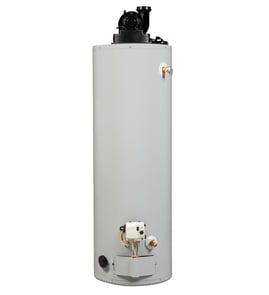



How do I read my water heater model number?
Your Kenmore gas water heater model number is printed on the model rating plate on the front of the tank. For model 153334530, you only need the MODEL NO. line (and the serial number if you are matching parts); you can ignore most other ratings like BTU details.
Where to find the model number on the heater
Look for a label or metal plate on the front of the water heater. On this Kenmore HydroSense style unit, the rating plate is typically easy to spot once the outer door area is accessible.
- Check the front of the tank, not the vent pipe or draft hood
- Look for wording like MODEL NO. and SERIAL NO.
- Write the model number exactly as shown (numbers and punctuation)
- Take a clear photo of the plate before ordering parts
- Use the serial number when you need the manufacturing date or production run info
What to copy from the rating plate (and what to ignore)
For parts lookup and troubleshooting, these are the fields that matter most.
| Rating plate item | Use it for | Keep it? |
|---|---|---|
| Model number (MODEL NO.) | Matching the correct parts list | Yes |
| Serial number (SERIAL NO.) | Identifying production run details | Yes |
| Capacity (gallons) | Confirming tank size | Helpful |
| Gas type and BTU input | Setup and service checks | Usually no for parts |
| Standards listings (ANSI/CSA) | Certification info | No |
Why it matters
Kenmore water heater parts can vary by gallon size and burner or gas valve configuration. Using the exact model number helps you match the correct components the first time, such as a gas valve 100110941 or a water heater pilot assembly 100110946.
Manual tip for this model
The 153334530 owner's manual shows the water heater diagram and identifies the rating plate location and key components, which helps when you are confirming the model before ordering parts.
Last updated: February 2026
What is the average labor cost to install a 50 gallon gas water heater?
For a 50-gallon gas water heater installation, average labor commonly runs about $400 to $1,000 in many U.S. markets. For Kenmore model 153334530, labor can land higher when the installer must modify venting, add a sediment trap and shutoff valve, or bring the setup up to local code; see the owner's manual.
What drives labor cost up (and what the installer is actually doing)
Labor is mostly about time, code-required upgrades, and how much rework is needed around gas, venting, and water piping.
- Reworking vent pipe size, routing, or clearances for safe draft and combustion
- Adding or relocating a manual gas shutoff valve and a drip leg (sediment trap)
- Replacing corroded water connections or adding flexible connectors
- Installing a drain pan, expansion tank, or seismic strapping where required
- Leak testing gas piping with a soapy water solution (not an open flame)
- Hauling away the old tank and disposing of it
Typical labor ranges by job complexity
These ranges reflect labor only; parts, permits, and materials are separate.
| Installation type | What it usually includes | Typical labor range |
|---|---|---|
| Straight swap | Same location, minimal piping changes | $400 to $700 |
| Moderate | Some water line and vent adjustments | $700 to $1,000 |
| Complex | Venting changes, gas line work, code upgrades | $1,000+ |
Model-specific details that can affect install scope
Kenmore 153334530 is a gas unit, so installers focus heavily on safe combustion air and venting, plus correct gas piping practices.
- Proper venting and combustion air are critical to prevent carbon monoxide hazards
- Gas piping should include a shutoff valve and drip leg ahead of the gas control valve
- If installed above 7,700 ft, the manual calls for a high-altitude orifice and input reduction guidance
Why it matters
A low labor quote can mean corners get cut on venting, gas piping, or required safety items. Paying for a correct install helps prevent nuisance shutdowns, poor recovery, and unsafe operation.
Last updated: February 2026
How many years do gas hot water heaters last?
Most gas water heaters last 8 to 12 years. For your Kenmore 153334530 gas water heater, regular maintenance (especially checking the anode rod and flushing sediment) is what most often determines whether you land closer to 8 years or closer to 12. See the maintenance schedule in the owner's manual.
Typical lifespan and what changes it
A gas water heater’s service life is mainly affected by water chemistry, how hard the unit works, and how well the tank is protected from corrosion.
- Water quality and conductivity: high conductivity water can consume the anode rod faster
- Maintenance habits: periodic tank draining helps reduce sediment buildup
- Temperature settings: higher settings increase stress and raise scald risk
- Usage patterns: heavy daily demand shortens life compared to light use
- Venting and combustion conditions: poor draft can cause performance issues
Maintenance that helps you reach the high end of the range
The manual notes that replacing a depleted anode rod can extend water heater life, and that anode inspection should be done at least annually after the warranty period.
- Inspect the anode rod and replace it when heavily corroded
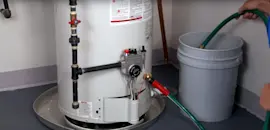
- Drain and flush the tank periodically to remove sediment
- Keep the burner area clean and ensure proper airflow
- Watch for signs of condensation versus true leaks (condensation can occur during warm-up)
- Keep water temperature at a safe, practical setting (water over 125°F can scald quickly)
Common life-extending parts for this model
| What it protects or fixes | Part you may need | When it matters |
|---|---|---|
| Tank corrosion protection | Water heater anode rod 100108660 | Faster wear in aggressive water; helps extend tank life |
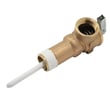
| Temperature and pressure safety | Wheelers water heater temperature and pressure relief valve 100108455 | Replace if leaking, corroded, or not operating correctly |
Why it matters
A gas water heater usually fails from tank corrosion or sediment-related overheating. Staying ahead of anode rod wear and sediment buildup is the most practical way to avoid an early replacement and keep hot water reliable.
Last updated: February 2026
What are the parts on a gas water heater?
A Kenmore 153334530 gas water heater is built around the tank and burner system, with safety and control parts that manage gas flow, ignition, venting, and water temperature. Your owner's manual shows the full component layout and the key service parts list.
Main parts you will typically find
These are the most common components called out for gas models like the Kenmore 153334530:
- Tank (stores and heats water)
- Gas control valve/thermostat (controls gas flow and water temperature)
- Pilot and main burner (ignites and heats the tank)
- Draft hood and vent/flue (moves exhaust gases safely out)
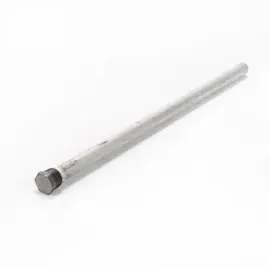
- Anode rod (helps protect the tank from corrosion)
- Dip tube (directs incoming cold water to the bottom of the tank)
- Drain valve (used for draining and flushing sediment)
- Temperature and pressure (T&P) relief valve (critical safety valve)
Parts on this model that customers replace most often
For the Kenmore 153334530, these parts are commonly involved in maintenance or “no heat” and performance issues:
- Water heater anode rod 100108660 (corrosion protection)
- Gas valve 100110941 (gas control valve assembly)
- Water heater pilot assembly 100110946 (pilot ignition and flame sensing)
- Water heater burner assembly 100110943 (main burner components)
- Wheelers water heater temperature and pressure relief valve 100108455 (safety pressure relief)
Quick “what it does” reference
| Part | What it does | Common symptom when it fails |
|---|---|---|
| Gas control valve/thermostat | Regulates gas and temperature | No hot water, pilot will not stay lit |
| Pilot assembly | Lights burner and proves flame | Pilot will not light or keeps going out |
| Burner assembly | Produces heat under the tank | Weak heating, rumbling, soot |
| Draft hood/flue | Vents combustion gases | Poor draft, shutdowns, odor near heater |
| Anode rod | Reduces tank corrosion | Rusty water, shortened tank life |
Why it matters
Knowing the major parts helps you troubleshoot safely and order the right replacement. For example, the manual notes the high-temperature shutoff is built into the gas control valve and is non-resettable; when it trips, the gas control valve is replaced.
Last updated: February 2026
What is the most common problem with gas water heaters?
The most common gas water heater problem is ignition trouble, usually a pilot that will not stay lit or a burner that will not fire. On Kenmore model 153334530, pilot outages are often tied to airflow or venting issues, condensation dripping onto the burner, or a failing gas control. See the safety and troubleshooting steps in the 153334530 owner's manual.
Most common symptoms and what they usually point to
- Pilot goes out: condensation dripping on the burner, restricted combustion air, dirty pilot, or gas control issues
- No hot water or not enough hot water: thermostat set too low, heater undersized for demand, low gas pressure, or a control/sensor problem
- “Frying/sizzling” noise: condensation dripping onto hot surfaces (common after a cold refill)
- Rumbling/popping: sediment or calcium buildup in the bottom of the tank
- Smoke/odor at first start-up: normal burn-off of oils on metal parts (should fade quickly)
Quick checks we recommend first (safe, no disassembly)
- Confirm venting draft: with the burner firing, the flame should be drawn into the draft hood; if not, shut the heater off and correct the air supply/venting.
- Look for condensation vs. a true leak: after a cold fill, condensation can mimic a leak; it typically clears after 1 to 2 hours once the tank warms.
- Inspect the venting system at least yearly: check for obstructions, deterioration, and signs of sooting.
- Check for blocked combustion air openings: clogged intake screens or blocked flame arrestor openings can cause poor combustion and pilot problems.
Common causes and the parts that are often involved
| Problem you see | Common cause | Part that may be involved (if replacement is needed) |
|---|---|---|
| Pilot will not stay lit | Dirty pilot, restricted air, failing control | Water heater pilot assembly 100110946, gas valve 100110941 |
| Burner will not fire or burns poorly | Dirty burner/orifice, airflow issues | Water heater burner 100109206, water heater burner orifice, #33 100109266 |
| Poor draft or venting symptoms | Venting/draft hood issue | Draft hood 100109289 |
Why it matters
Pilot outages, poor combustion, and venting problems can create unsafe operating conditions and also cause nuisance shutdowns. Condensation and sediment issues reduce efficiency and can shorten tank life if ignored.
Helpful troubleshooting resource
If your heater uses status lights or diagnostic codes, use our Kenmore gas water heater error codes guide to match the code to the most likely cause.
Last updated: February 2026