Installation guide
 Owner’s manual
 Error Codes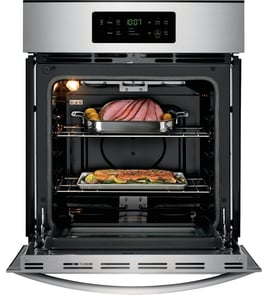


What are the parts of an electric oven?
An electric oven like the Kenmore Elite 79048089000 is built around heating elements, temperature sensing, airflow (fans), lighting, and controls. These parts work together to create and regulate heat for baking, broiling, and convection cooking; your owner's manual shows the features and component locations for your exact oven.
- Bake element (bottom heat source)
- Broil element (top heat source)
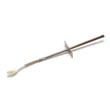
- Oven temperature sensor (tells the control board the actual oven temperature)
- Control panel / electronic control (sets modes, times, and temperature)
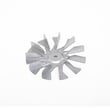
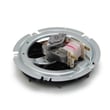
- Convection fan and fan blade (circulates hot air on convection models)
- Oven light and lens/cover (interior visibility)
- Door hinges, handle, and trim (door alignment, sealing, and safe operation)
These are common service parts we list for this model:
| Oven function | Example part on this model | What it affects |
|---|---|---|
| Temperature regulation | Range oven temperature sensor 5304504897 | Inaccurate temps, long preheat, error codes |
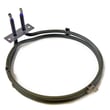
| Baking heat | Oven element 318601604 | No bake heat, uneven baking |
| Broiling heat | Oven element 318255807 | Weak or no broil |
| Convection airflow | Range convection fan blade 318398302 | Noisy fan, poor convection performance |
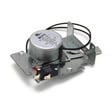
| Cooling electronics | Kenmore pro range oven cooling fan assembly 318575603 | Hot control area, fan runs after cooking |
When one key component fails, symptoms often overlap. For example, a bad sensor can mimic a weak bake element because the oven may shut heat off too early. A failing convection or cooling fan can cause uneven cooking or overheating around the control area.
- No heat in bake or broil: check for a tripped breaker, then inspect elements for visible damage.
- Oven temperature is off: test the sensor resistance with a meter and compare to typical sensor specs.
- Convection is loud or weak: check the fan blade for looseness or rubbing.
- Fan keeps running after shutoff: many models run a cooling fan after high-heat use; this is normal.
Last updated: February 2026
Where can I find my Kenmore 79048089000 Elite oven model number?
On the Kenmore Elite 79048089000 wall oven, the model and serial number plate is located along the interior side trim and is visible when you open the oven door. Use the exact model number from that plate when ordering parts or looking up specifications in the installation guide.
- Open the oven door fully and look along the inside side trim (left or right side).
- Find the serial plate label; it lists the model number and serial number.
- Write down the full model number (79048089000) exactly as shown.
- Record the serial number and any lot number or letter shown on the same plate.
- Keep the information with your appliance records for future repairs.
The model number is the key to matching the correct Kenmore parts and diagrams for your exact wall oven configuration.
| You need to do this | Use this from the serial plate |
|---|---|
| Order replacement parts | Model number (79048089000) |
| Confirm correct fit | Model number plus serial/lot info |
| Troubleshoot heating issues | Model number to match the right wiring and component layout |
Kenmore wall ovens can look similar across multiple model series, but parts like the oven temperature sensor, bake element, or wire harness can vary by model. Using the model number from the serial plate prevents ordering the wrong part and avoids installation delays.
Last updated: February 2026
Why is my Kenmore 79048089000 Elite oven not working?
If your Kenmore Elite 79048089000 electric wall oven is completely dead or will not heat, the most common causes are a power supply problem (tripped breaker, loose junction-box connection) or a failed heating or sensing component. Start with power and wiring checks, then test the bake/broil circuit and temperature sensor.
- Confirm the oven is getting full power: wall ovens typically require a dedicated 240V circuit; reset both sides of the double breaker.
- If the display is blank, check for a loose or burned connection at the home junction box (power must be OFF at the breaker).
- If the oven was stored or shipped in cold conditions, allow it to sit at the installed location for at least 3 hours before turning power on (cold power-up can damage controls).
- If the oven heats but seems erratic, avoid opening the door repeatedly; some convection fans stop when the door opens.
- Review the “Before you call for service” checklist in the installation guide.
When power is correct but the oven will not heat or heats incorrectly, these parts are frequent culprits:
- Bake element: look for blisters, cracks, or a break; test for continuity.
- Broil element: same visual and continuity checks.
- Oven temperature sensor: if it reads out of range, the control may prevent proper heating.
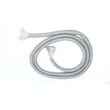
- Wiring and terminals: overheated connections can stop power from reaching the elements.
Helpful model-matched parts from our list include:
- Range oven temperature sensor 5304504897
- Oven element 318601604
- Oven element 318255807
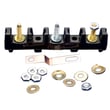
- Terminal block 5304409888
| What you notice | Most likely causes | Best next step |
|---|---|---|
| No display, no heat | Breaker tripped, junction-box wiring issue, terminal connection failure | Verify breaker, then inspect wiring and terminal block 5304409888 |
| Display works, no heat | Failed bake/broil element, wiring issue | Continuity test oven element 318601604 and oven element 318255807 |
| Temperature way off | Sensor out of spec, airflow issues | Test/replace range oven temperature sensor 5304504897 |
A wall oven that is not working is often a power delivery issue first, then a heating or sensing issue second. Checking the electrical supply and connections up front prevents unnecessary part replacement and helps protect the control board from damage.
Last updated: February 2026