Error Codes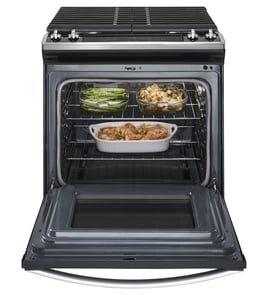

Is a 48-inch range worth it?
A 48-inch range like the Viking VGIS48 is worth it when you regularly cook large meals, want more burners for multitasking, or need extra oven capacity for entertaining. If you mostly cook for 1 to 3 people and rarely use multiple pans at once, a smaller range is typically the better value.
- You often run 3 to 6 burners at the same time (sauces, sides, searing, boiling).
- You bake and roast together and want more usable oven space.
- You entertain frequently and cook “all at once” meals.
- You want a pro-style layout with more cooking zones and flexibility.
- Your kitchen has the clearance, ventilation, and gas supply to support a larger unit.
A 48-inch gas range brings more capability, but it also raises the bar on installation and upkeep.
- Higher purchase and repair costs (more components, more burners, more controls).
- More cleaning time (larger cooktop surface and more grates).
- Ventilation needs are usually greater for high-output burners.
- Fit matters; you need accurate cabinet cutout and door-swing clearance.
| If this sounds like you | A 48-inch range is usually worth it | A smaller range is usually better |
|---|---|---|
| Cook most nights, multiple dishes at once | Yes | No |
| Entertain often | Yes | No |
| Limited kitchen space or ventilation | No | Yes |
| Rarely use more than 2 burners | No | Yes |
Choosing the right size affects daily cooking flow, kitchen layout, and long-term ownership cost. If you size up to a 48-inch range, you also want confidence that common wear parts are available, such as an range oven temperature knob PB010099 or an range surface burner igniter switch PA020011.
Last updated: February 2026
What are common problems with Viking ranges?
Common problems on the Viking VGIS48 gas range include surface burners that click but do not light, weak or uneven flames, oven temperature that runs hot or cold, and an oven that will not heat or stays in preheat too long. These issues often trace back to ignition parts, gas valves, or temperature controls.
- Burner keeps clicking: dirty burner ports, moisture, or a failing igniter switch
- Burner will not light: ignition circuit issue, gas supply issue, or a bad spark module
- Uneven flame or low flame: clogged burner, regulator issue, or incorrect air shutter setting
- Oven not heating: gas valve problem, thermostat/control issue, or ignition failure
- Oven temperature inaccurate: control thermostat drifting out of calibration
- Make sure burner caps are seated correctly and ports are clear of spills.
- Dry the cooktop area if it was recently cleaned; moisture can cause constant sparking.
- Confirm other gas appliances in the home are working normally.
- If the igniters click on multiple burners at once, suspect the igniter switch circuit.
- If you smell gas or suspect a leak, shut off the gas supply and stop using the range.
| Symptom | Common part involved | Example part on this model page |
|---|---|---|
| Clicking but no ignition | Surface burner igniter switch | Viking range range surface burner igniter switch PA020011 |
| No spark or weak spark | Spark module | Viking range spark module PB050012 |
| Oven will not heat | Oven gas valve | Viking range oven gas valve PB010084 |
| Oven temp off | Oven control thermostat | Viking range range oven control thermostat PB010035 |
Ignition and temperature problems are more than an inconvenience; they affect cooking results and can create unsafe operating conditions. Fixing the root cause (switches, spark module, gas valve, thermostat) prevents repeat failures and reduces wear on other components.
Last updated: February 2026
What's the difference between a gas range and a gas oven?
A gas range is the full Viking VGIS48 cooking appliance that combines a gas cooktop (surface burners) and one or more oven cavities in a single unit; a gas oven is just the enclosed baking compartment that heats with gas for baking and roasting.
- Gas range (or stove): One appliance that includes a cooktop plus an oven below.
- Gas oven: The enclosed cavity where you bake, roast, and broil.
- Gas cooktop: The top surface with burners and grates; it does not include an oven.
- Surface burner system: Burner heads, igniters, and switches that light the flame.
- Oven heat system: Gas valve, thermostat/control, and burner(s) that regulate oven temperature.
Here’s how the parts and functions typically split on a Viking gas range like model VGIS48:
| Feature | Gas range (VGIS48) | Gas oven (within the range) |
|---|---|---|
| What it includes | Cooktop + oven(s) in one chassis | Only the oven cavity and its heating controls |
| Main cooking styles | Boil, sauté, simmer, bake, broil | Bake, roast, broil |
| Common service areas | Ignition, knobs, burner performance | Temperature accuracy, ignition, door sealing |
Using the right term helps you match symptoms to the right system and order the correct replacement part.
- If burners won’t click or light, you usually look at the cooktop ignition side, such as a range surface burner igniter switch PA020011 or a spark module.
- If the oven won’t heat or won’t hold temperature, you typically look at oven controls and gas delivery, such as an oven gas valve PB010084 or a control thermostat.
- If the oven door won’t close or drops, you usually look at door hardware like a range oven door hinge PC020003.
- “My range won’t light” often means the cooktop burners are not igniting.
- “My oven won’t heat” means the bake/broil system in the oven cavity is not operating.
- “My stove is acting up” could mean either; narrowing it down saves time.
Last updated: February 2026
Which is cheaper to run, gas or electric range?
Gas is cheaper to run than electric for most households, including with a Viking VGIS48 gas range, because natural gas usually costs less per unit of heat than electricity. Your actual cost comes down to local utility rates and how long you run the oven and surface burners.
- Your local price per therm (gas) versus price per kWh (electric)
- How often you use the oven (bake and broil use more energy than quick stovetop cooking)
- Preheat time and how long you cook at high temperatures
- Cookware fit (pan size matched to burner reduces wasted heat)
- Burner condition (a steady, even flame heats faster and wastes less)
| Factor | Gas range | Electric range |
|---|---|---|
| Typical energy cost | Lower per heat unit | Higher per heat unit |
| Heat response | Fast changes | More gradual changes |
| Biggest cost driver | Gas rate + oven run time | kWh rate + oven run time |
- Use the smallest burner that fully supports the pan.
- Keep burner ports clear so the flame stays even.
- Avoid opening the oven door during baking.
- Turn the oven off a few minutes early and use residual heat.
- If ignition is inconsistent (extra clicking, delayed lighting), restore normal operation so you are not wasting gas during repeated lighting attempts; parts used in the ignition circuit for this model include the range surface burner igniter switch PA020011 and the spark module PB050012.
Lower operating cost usually comes from efficient cooking habits and a properly working ignition and burner system. When the range lights quickly and burns evenly, you spend less time preheating and less fuel getting to temperature.
Last updated: February 2026