Error Codes


What is the average lifespan of a Kenmore washer?
A Kenmore washer typically lasts 10 to 15 years. For your Kenmore model 11016502690, lifespan depends most on load size, how often it runs, and whether wear items (like the drive system and drain pump) are replaced when symptoms first show up.
- Overloading (stresses the motor, coupling, clutch, and basket drive)
- Out-of-balance loads (wears suspension and drive components)
- Poor draining (overheats the pump and can leave water in the tub)
- Hard water and detergent buildup (can contribute to odors and residue)
- Delayed repairs after new noises, burning smells, or weak spin
If your washer still fills and drains but struggles to agitate or spin, the fix is often a mechanical wear part.
| Symptom | What it often points to | Example part for this model |
|---|---|---|
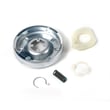
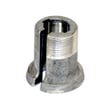
| Motor runs but tub will not agitate/spin | Worn motor-to-transmission coupling | Coupling 285753A |
| Weak spin, burning smell, or slipping | Worn clutch or basket drive wear | Clutch 285785 |
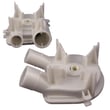
| Won’t drain or drains slowly | Failing or jammed drain pump | Washer drain pump WP3363394 |
| Loud banging, tub off-center | Worn suspension support parts | Washer suspension spring WP63907 |
- Keep loads evenly distributed; wash bulky items with a few towels for balance
- Use the right amount of HE detergent (too much increases residue and strain)
- Check pockets; coins and debris commonly damage pumps
- Inspect hoses and connections periodically for leaks and vibration wear
- Address new noises early; a small drive issue can turn into a bigger repair
Washer life is usually limited by a few high-wear components in the drive and drain systems. Replacing a worn coupling, clutch, or drain pump at the first sign of trouble often restores normal washing and helps you avoid secondary damage.
Last updated: February 2026
How to unclog drain hose on Kenmore washer?
To unclog the drain hose on your Kenmore washer model 11016502690, we unplug the washer, remove as much water as possible, then clear blockages from the drain hose and the pump inlet. Most “won’t drain” clogs are lint, coins, or small socks lodged at the pump or hose connection.
- Unplug the washer before servicing.
- Turn off both water supply valves.
- Keep towels and a shallow pan ready; draining work is messy.
- If the washer is full of water, bail out water first to prevent flooding.
- Remove standing water: Scoop/bail into a bucket, or use a wet/dry vac at the end of the drain hose.
- Access the pump and hoses: On most Kenmore top-load designs, we tilt the washer back or remove the cabinet/front access to reach the drain pump.
- Check the drain hose (external):
- Disconnect the hose from the standpipe or sink.
- Run water through it; if flow is weak, push out debris with a small drain snake.
- Check the pump inlet (most common clog point):
- Remove the hose from the tub-to-pump connection.
- Pull out debris from the hose and pump port.
- Inspect the pump impeller: Spin it by hand; it should turn with slight resistance and no grinding.
- Reconnect clamps securely, restore power, then run a Drain/Spin to confirm strong discharge.
- Kinked or crushed drain hose behind the washer
- Standpipe too low or sealed too tightly (can cause siphoning or slow drain)
- Weak or jammed pump (consider replacing the washer drain pump WP3363394)
- Suds overload from too much detergent (can slow draining)
| Symptom | Most likely cause | What we do next |
|---|---|---|
| Hums but no drain | Pump jam or clog | Clear pump inlet; inspect impeller |
| Drains slowly | Partial clog or kink | Flush hose; straighten routing |
| Drains, then refills | Siphoning | Raise hose height; ensure air gap |
A restricted drain hose or clogged pump makes the washer stop mid-cycle, leave clothes soaking wet, and can strain the drive system over time. Clearing the drain path restores normal spin and helps prevent repeat “no drain” problems.
Last updated: February 2026
How to hard reset kenmore washer?
To hard reset your Kenmore washer model 11016502690, we recommend a simple power reset first: unplug the washer (or switch off the breaker) for 2 minutes, then restore power and try a normal cycle. This clears many control glitches without replacing parts.
- Press Pause/Cancel once (if the washer is responsive)
- Unplug the washer from the outlet (or turn OFF the breaker)
- Wait 2 minutes
- Plug back in (or turn breaker ON)
- Wait 30 seconds
- Select a Rinse/Spin or Drain/Spin cycle and press Start
A “hard reset” will not fix a mechanical failure. These checks isolate common causes on this style of Kenmore top-load washer:
- Will not drain or stops mid-cycle: check for a clogged pump or jammed impeller; the washer drain pump WP3363394 is a common fix.
- Motor runs but washer will not agitate/spin: inspect the motor-to-transmission coupler; the coupling 285753A is a frequent wear item.
- Spins weakly or slips under load: a worn clutch can cause slow or no spin; consider the clutch 285785.
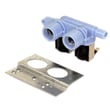
- Overfills or fills incorrectly: a water-level sensing issue can involve the pressure system; the washer water-level switch W10820051 is the control part that manages fill level.
| What you’re seeing | Reset helps? | What to do next |
|---|---|---|
| Random flashing, cycle won’t start after a power flicker | Yes | Power reset, then try Drain/Spin |
| Washer won’t drain, water left in tub | Sometimes | Check pump/hoses; inspect pump for blockage |
| Loud grinding, burning smell, repeated slipping in spin | No | Inspect drive components (coupler, clutch, gearcase) |
| Consistent overfill/underfill | Sometimes | Check water-level system and switch |
Resetting restores the control to a known “start” state, which prevents unnecessary part replacement. If symptoms return immediately after a reset, the problem is usually in a component such as the drain pump, coupling, clutch, or water-level switch.
Last updated: February 2026
What is the most expensive part to replace on a washing machine?
On most washers (including Kenmore model 11016502690), the most expensive repair is usually the transmission/gear case or the tub bearing and seal job, because parts are costly and labor is high. A drive motor can also be one of the pricier single parts.
These are common high-cost items for this style of washer, and several are available for model 11016502690:
- Gear case/transmission related: actuator 3360629 is a high-dollar drivetrain component
- Bearing and seal work: washer bearing and seal kit 285203 (labor is usually the bigger cost than the kit)
- Drive motor: washer drive motor WP661600
- Basket drive components: basketdriv W10820043 (often replaced when spin issues are severe)
High-cost washer repairs usually share one or more of these factors:
- The part is a major drivetrain component (gear case, basket drive, motor)
- The repair requires major teardown (tub removal, bearing/seal service)
- Extra “while you’re in there” parts are needed (gaskets, couplers, springs)
- Rust, seized fasteners, or leaks increase labor time
| Item type | Example on 11016502690 | Why it gets expensive |
|---|---|---|
| Expensive part | Drive motor | Higher part price, moderate labor |
| Expensive repair | Bearings and seals | Lower part cost, high labor/teardown |
| Expensive assembly | Gear case related | High part price, significant labor |
We recommend ruling out simpler failures first, because they can mimic “major” problems:
- Won’t spin or weak spin: inspect the coupling 285753A and clutch 285785
- Won’t drain: check the washer drain pump WP3363394 and drain path
- Leaks at the tub: replace the washer tub gasket W10814296 before assuming bearings are bad
- Excessive shaking: inspect washer suspension spring WP63907 and suspension pad 285744
On an older washer, a gear case or bearing/seal repair can approach the value of the machine. Confirming the failure first helps you avoid replacing a high-cost assembly when a lower-cost part (like a coupling, clutch, or pump) is the real cause.
Last updated: February 2026