Installation guide
 Owner’s manual
 Error Codes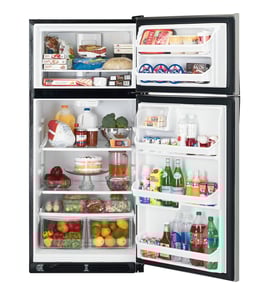



Is top mounted refrigerator better than bottom mounted?
A top-mount refrigerator like the Frigidaire FFTR1814LWG is “better” when you want lower upfront cost, strong energy efficiency, and easy access to the freezer. A bottom-mount is “better” when you want fresh-food items at eye level and less bending for everyday use.
Quick comparison (what changes day to day)
| Feature | Top-mount (freezer on top) | Bottom-mount (freezer on bottom) |
|---|---|---|
| Most-used section | Fresh food (lower) | Fresh food (upper) |
| Bending to reach produce | More | Less |
| Freezer access | Easier | Harder (often drawers) |
| Typical price | Lower | Higher |
| Organization style | Simpler shelves/bins | More drawers, more zones |
When a top-mount is the better choice
- You use the freezer often (frozen meals, bulk items)
- You want a simpler layout with fewer moving parts
- You prefer a typically lower purchase price
- You want strong efficiency for the size
- You have tighter kitchen space and want a straightforward door swing
When a bottom-mount is the better choice
- You cook frequently and want fresh food at eye level
- You want less bending for crisper drawers and shelves
- You like pull-out freezer drawers for organization
- You store lots of produce and refrigerated items
What to check before deciding (applies to FFTR1814LWG)
Use the clearances and leveling guidance in the FFTR1814LWG installation guide to make sure the refrigerator fits and seals correctly.
- Leave space for airflow (sides/top and back clearances)
- Level the cabinet so doors seal on all sides
- Confirm the freezer door is level across the top
- Set controls and wait 24 hours between adjustments
Why it matters
The “best” style is the one that matches how you reach for food every day. Layout affects comfort (bending vs. eye level), how well you stay organized, and even door sealing and temperature stability when the unit is installed and leveled correctly.
Last updated: January 2026
What is the upper part of a fridge called?
On the Frigidaire FFTR1814LWG top-mount refrigerator, the upper section is the freezer compartment. It’s the colder space designed to keep foods frozen, and it often houses the ice maker (if equipped) and freezer temperature control settings.
What you’ll typically find in the upper (freezer) compartment
- Freezer shelves or wire shelf for organizing frozen foods
- Ice maker area (some models) and a signal arm or on/off control
- Freezer air vents that circulate cold air to the fresh food section
- Door bins for smaller frozen items
- A freezer door gasket that seals in cold air
Freezer vs. refrigerator section: quick comparison
| Section | Main purpose | Typical temperature target |
|---|---|---|
| Upper freezer compartment | Long-term frozen storage | 0°F |
| Lower fresh food compartment | Everyday refrigerated storage | 37°F |
Why it matters
Knowing the upper section is the freezer helps when you’re troubleshooting cooling issues (for example, freezer cold but refrigerator warm), setting controls, or ordering the right door and sealing parts for your FFTR1814LWG.
Related parts customers commonly replace
If the freezer isn’t sealing well or you see frost buildup, these model-matched parts are often involved:
- Frigidaire refrigerator freezer door gasket, 18 x 30 inches, white 241872503 (freezer door seal)
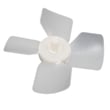
- Refrigerator evaporator fan blade 5308000010 (moves cold air through the freezer and into the refrigerator)
Where to confirm controls and features for your exact configuration
Control locations and ice maker details can vary by configuration; we recommend checking the FFTR1814LWG installation guide for setup and final check items, and your use and care information for control settings.
Last updated: January 2026
What is the most common problem with a Frigidaire refrigerator?
Cooling problems are the most common issue we see with Frigidaire refrigerators, including the Frigidaire FFTR1814LWG. Typical symptoms are warm fresh food, weak freezer performance, or temperature swings caused by airflow restrictions, dirty condenser coils, door seal leaks, or a failing evaporator fan.
Most common symptoms customers notice
- Refrigerator section is warm but freezer seems OK
- Freezer is warm and ice cream is soft
- Unit runs constantly or cycles too often
- Frost buildup on the freezer back wall
- Water puddles inside or under the refrigerator
Quick checks that fix many “not cooling” complaints
Start with these basics before replacing parts:
- Confirm the controls are set correctly; after changing settings, wait 24 hours before making more adjustments (normal range is often 3 to 5 on models with an LED display).
- Make sure doors seal fully on all sides; the installation checklist calls out verifying the door seals completely to the cabinet.
- Verify the refrigerator is level and tilted about 1/4 inch (6 mm) front to back; poor leveling can affect door closing and sealing.
- Clean dust from the condenser area to restore airflow.
- Avoid overpacking; blocked vents reduce cold air circulation.
Common causes and what they usually point to
| What you observe | Most likely cause | What to do next |
|---|---|---|
| Warm fridge, freezer OK | Airflow issue or evaporator fan problem | Check vents, listen for fan, inspect for frost |
| Frost sheet on freezer panel | Defrost system issue | Check defrost heater and defrost thermostat |
| Moisture, sweating, warm spots | Door not sealing | Inspect gasket for gaps and warping |
| Noises plus poor cooling | Fan or airflow restriction | Inspect fan blade and fan motor |
Parts that are often involved
If troubleshooting points to a failed component, these model-related parts are commonly involved:
- Refrigerator gasket 242193213 (door seal leaks and moisture)
- Refrigerator evaporator fan motor 241854301 (weak or no airflow)
- Refrigerator defrost heater 242044008 (frost buildup from defrost failure)
Why it matters
Cooling issues usually get worse over time. A small door leak or airflow restriction can lead to longer run times, higher energy use, frost buildup, and food spoilage.
For model-specific operating guidance (including control settings, normal sounds, and door removal notes), use the FFTR1814LWG owner's manual.
Last updated: January 2026
Is FFTR1814LWG garage ready?
Frigidaire FFTR1814LWG is commonly installed in garages, but “garage ready” depends on the ambient temperature range Frigidaire specifies for your exact unit. Use the recommended location and clearance requirements in the FFTR1814LWG installation guide and confirm the operating range in the FFTR1814LWG owner’s manual.
How to decide if your garage is a good fit
We use two practical checks: temperature and installation conditions.
- Compare your garage’s seasonal low and high temperatures to the operating range listed in the manual
- Keep required airflow clearances around the cabinet (do not enclose it tightly)
- Level the refrigerator so doors close and seal correctly
- Use a dedicated, properly grounded outlet (avoid extension cords)
- If your model has an ice maker connection, verify the water line is protected from freezing
Installation clearances and setup basics (from the install guide)
The installation guide calls out clearances for proper air circulation.
| Location | Typical clearance noted for this model’s install guide |
|---|---|
| Sides and top | 3/8 inch |
| Back | 1 inch |
Why it matters
In a garage, temperature swings and restricted airflow can cause longer run times, temperature instability, and door-seal problems. Following the installation clearances and leveling steps helps the FFTR1814LWG cool consistently and avoid warm refrigerator or warm freezer complaints.
Last updated: January 2026