Owner’s manual
 Error Codes



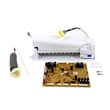
What are the dimensions of the Samsung RF28JBEDBSR?
The Samsung RF28JBEDBSR refrigerator is 35 3/4 inches wide. Depending on whether hinges, doors, and handles are installed, overall height and depth vary; use the configuration that matches how your refrigerator will sit in the opening. For the exact spec table, check the RF28JBEDBSR owner's manual.
Use these common measurement sets when planning a cabinet opening, doorway clearance, or a tight kitchen corner:
- With hinges, handles, and doors (W x H x D): 35 3/4" x 70" x 36 1/2"
- Without hinges and door (W x H x D): 35 3/4" x 68 7/8" x 29 3/8"
- With hinge and door, no handle (W x H x D): 35 3/4" x 70" x 34"
- Weight: 390.2 lb
We recommend measuring the space and the path into the kitchen before you commit to an install.
- Measure the cabinet opening width at the front and back
- Measure height to the lowest obstruction (cabinet trim, soffit, light rail)
- Measure depth to the wall and note baseboards that push the cabinet forward
- Measure doorways and hallways on the delivery path (including turns)
- Plan extra room for door swing and for airflow behind the refrigerator
| Setup you’re planning for | Use this depth | Why it’s different |
|---|---|---|
| Installed and used daily (handles on) | 36 1/2" | Handles add depth |
| Installed but handles removed | 34" | Shallower front profile |
| Cabinet fit check (doors/hinges off) | 29 3/8" | Shows the cabinet box size |
Choosing the wrong configuration can leave you short on clearance for door swing, water line routing, or ventilation. Using the correct “with handles” or “no handles” depth prevents last-minute install surprises.
Last updated: February 2026
Why is my Samsung bottom freezer icing up?
On a Samsung RF28JBEDBSR bottom-mount refrigerator, bottom-freezer ice buildup is usually caused by warm, humid air leaking past the door gasket or by a defrost drain that is restricted so meltwater refreezes on the freezer floor. Fixing the air leak or restoring proper drainage stops the icing.
- Make sure the freezer door closes fully and is not blocked by baskets, bags, or an overfilled drawer.
- Inspect the door gasket for gaps, tears, or areas that look flattened.
- Look for a sheet of ice on the freezer floor (often points to a drain issue).
- Confirm the freezer temperature is set around 0°F (too warm increases moisture and frost).
- Check for heavy frost on the back freezer panel (can indicate a defrost system problem).
| What you see | Most likely cause | What to do next |
|---|---|---|
| Ice only on the freezer bottom | Defrost drain restricted; water refreezes | Defrost the ice, then clear the drain path and drain trough |
| Frost around the door edge | Door not sealing; humid air entering | Clean gasket and sealing surfaces; correct drawer alignment |
| Heavy frost behind rear panel | Defrost problem or airflow issue | Defrost fully; then check sensors and defrost components |
If you find symptoms beyond a simple door-seal or drain clearing, these model-matched parts are commonly involved in icing and frost complaints:
- Refrigerator temperature sensor DA32-10104N (helps regulate cooling and defrost timing)
- Refrigerator protector DA47-00243C (defrost safety device used in the defrost circuit)
- Refrigerator drain cap DA67-01301A (drain-area component; issues here can contribute to refreezing)
Bottom-freezer icing reduces airflow, makes drawers hard to open, and can lead to temperature swings that affect food quality. Addressing the door seal and defrost drainage early prevents repeat ice buildup and strain on the cooling system.
For step-by-step troubleshooting that matches common Samsung ice-maker and moisture issues, use why your Samsung fridge stopped making ice and how to fix it. For model-specific component locations and disassembly guidance, use the owner's manual.
Last updated: February 2026
How to defrost Samsung RF28JBEDBSR?
To defrost a Samsung RF28JBEDBSR, we typically use the refrigerator’s forced defrost mode from the control panel, then let the unit melt any frost/ice buildup and drain it safely. For the exact button sequence and display cues for your control style, follow the steps in the RF28JBEDBSR owner's manual.
- Forced defrost (recommended for heavy frost): Uses the control panel to run a defrost cycle.
- Power off and doors open: Unplug the refrigerator and leave doors open; place towels to catch water.
- Targeted manual melt (carefully): Use warm towels on iced-over surfaces; never chip ice with sharp tools.
Most Samsung bottom-mount and French door models will:
- Beep or change the display when the mode is accepted
- Run fans and heaters in a specific pattern
- Produce water as frost melts (especially around the evaporator area)
- Return to normal cooling after the cycle ends or after you exit the mode
We often see forced defrost started by pressing and holding Power Freeze and Fridge together for about 8 seconds, then selecting a defrost option on the display. Use the RF28JBEDBSR owner's manual to match the exact steps to your control panel.
- Move perishables to a cooler if doors will be open for long
- Put towels in the fresh food section and on the floor near the front
- Empty the ice bin if the ice maker area is iced up
- Keep the freezer drawer closed unless you are defrosting the freezer section
Frost buildup often points to an airflow or defrost-system issue. These parts are commonly involved on this model:
| Symptom | Common area to check | Example part for this model |
|---|---|---|
| Frost on rear panel, warm fridge | Evaporator area, sensors | Refrigerator temperature sensor DA32-10104N |
| Ice clumps, dispenser issues | Ice room, chute seal | Refrigerator dispenser ice chute cap and gasket assembly DA97-12594A |
| Warm temps, noisy back area | Condenser coil and fan | Refrigerator condenser coil and fan motor assembly DA97-15978B |
Defrosting clears blocked airflow so the evaporator can absorb heat properly. If frost returns quickly, fixing the underlying cause (sensor, airflow restriction, or a failing defrost component) prevents repeat warm-temperature and ice-maker problems.
Last updated: February 2026