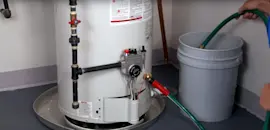
Owner’s manual
 Error Codes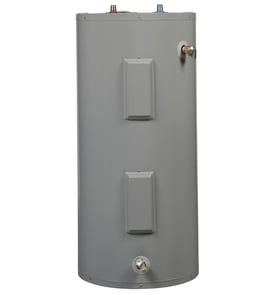



How do I read my water heater model number?
For Kenmore electric water heater model 153327466, the model number is printed on the model rating plate on the front of the tank, located above the lower access panel. Match that exact number when ordering parts or looking up specifications in the owner's manual.
Where to find the model number on the tank
Look for a rectangular rating plate (sticker or metal tag) on the front of the water heater.
- Turn off power at the breaker before opening any access panels
- Locate the lower access panel on the front of the tank
- Look above that lower access panel for the model rating plate
- Find the line labeled Model number (for this unit: 153.327466 or 153327466)
- Also note the serial number if you are checking age or warranty paperwork
What to write down (and what to ignore)
When we help you identify parts, the model number is the key. Other rating-plate details are useful, but they are not what we use to match parts.
| Rating plate item | Use it for | Needed for parts lookup? |
|---|---|---|
| Model number | Correct parts list and diagrams | Yes |
| Serial number | Age and warranty documentation | Sometimes |
| Voltage/wattage | Electrical troubleshooting | Sometimes |
| Tank capacity | Confirming size | Sometimes |
Why it matters
Kenmore water heaters often share similar-looking tanks across multiple sizes (30, 40, 50 gallon). Using the exact model number prevents ordering the wrong heating element, thermostat, or anode rod.
Common parts that depend on the exact model
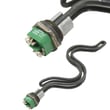
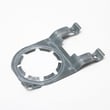
Once you confirm the model number, you can match the correct replacement part from the list for this model, such as:
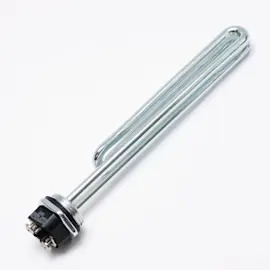
- Element 100108346 (heating element)
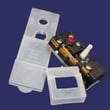
- Thermostat 100108683 (upper thermostat)
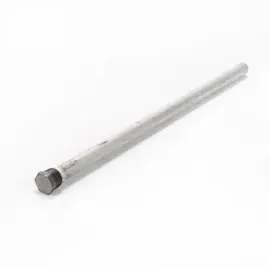
- Anode rod 100108660 (corrosion protection)
Last updated: February 2026
Is it worth replacing the anode rod in a water heater?
Yes. Replacing the anode rod in your Kenmore 153327466 electric water heater is worth it because the anode protects the tank from corrosion; keeping a working anode helps prevent premature tank failure and can also help address “rotten egg” odor caused by an anode and water-chemistry reaction (per the owner's manual).
Why the anode rod matters
The anode rod is a sacrificial metal rod designed to corrode instead of the steel tank. If you remove it and leave the tank unprotected, the tank corrodes faster.
Common benefits of replacing the anode rod:
- Extends tank life by slowing internal corrosion
- Helps reduce the risk of rust-colored hot water and leaks
- Can reduce sulfur or “rotten egg” smell in some homes (after proper treatment)
- Costs far less than replacing the entire water heater
- Keeps the water heater protected as designed
When replacement is the right move
Replace the anode rod when inspection shows heavy wear (for example, the core wire is exposed or the rod is mostly gone). Many households check it every 3 to 5 years; hard water and high usage can shorten that interval.
Quick decision guide
| What you notice | Likely anode condition | What we recommend |
|---|---|---|
| No issues; heater is mid-life | Partially used | Inspect and plan replacement on a schedule |
| Rotten egg smell from hot water | Anode reacting with water chemistry | Replace anode, then sanitize tank and hot lines |
| Rusty hot water or frequent sediment issues | Anode may be depleted | Inspect anode and service tank |
| Tank is leaking | Tank failure | Replacing an anode will not stop a leak |
Parts that commonly apply to this job
For this model, we list multiple anode options. Match by model and configuration before ordering.
Important safety and service notes
Working on a water heater involves electricity and hot water pressure.
- Turn off power at the breaker before opening access panels
- Let water cool and relieve pressure before loosening fittings
- Use a properly rated Teflon tape or thread sealant where required
- If odor is the issue, follow the manual’s guidance for chlorination treatment
Why it matters (cost and reliability)
An anode rod is a wear item; replacing it is one of the most effective maintenance steps for preventing corrosion-related tank failure. That is why anode replacement is typically a high-value repair compared with major component replacement.
Last updated: February 2026
What is the average lifespan of an electric hot water tank?
Most electric tank-style water heaters last 10 to 15 years in typical home use. For Kenmore model 153327466, regular maintenance like periodic draining to remove sediment and keeping the tank protected with a working anode rod helps you get the full expected service life (see the owner's manual).
Typical lifespan and what affects it
Key factors that shorten or extend life on an electric hot water tank include:
- Water quality: hard water speeds up scale and sediment buildup
- Maintenance: periodic draining and sediment cleaning reduces stress on the tank and elements
- Anode rod condition: a depleted anode lets the tank corrode faster
- Temperature setting: higher temps increase wear and scale formation
- Usage level: heavy daily demand increases cycling and component wear
Maintenance that helps you reach 10 to 15 years
The manual for this model calls out periodic draining and sediment removal as needed. Use these habits to extend lifespan:
- Drain a few gallons from the tank periodically to reduce sediment
- If shutting down in freezing conditions, drain the heater fully
- Keep access panels and insulation properly installed after service
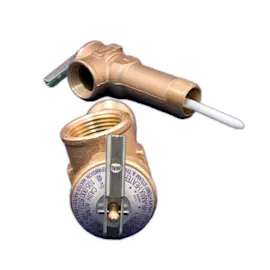
- Never plug the temperature-pressure relief valve discharge
- If you notice rumbling, clean or replace heating elements as needed
Common “wear” parts that impact performance
These parts do not set the tank’s lifespan by themselves, but replacing them when they fail can keep hot water consistent:
| Symptom | Common cause | Part examples for model 153327466 |
|---|---|---|
| Not enough hot water | Failed element or thermostat | Element 100108346, thermostat 100108683 |
| Slow recovery | Scale on element | Element 100093526 |
| Rotten egg smell | Anode reaction with water | Anode rod 100108660 |
Why it matters
Once a tank is near the end of its expected life, small issues (sediment, element failure, thermostat problems) can turn into bigger reliability problems. Staying ahead of sediment and anode wear helps protect the tank itself, which is the part you cannot “repair” if it starts leaking.
Last updated: February 2026
What is usually the most common water heater problem?
The most common water heater problem is reduced hot water performance caused by sediment buildup and normal wear of key components. On a Kenmore 153327466 electric water heater, the most frequent trouble spots are heating elements, thermostats, and leaks at element gaskets or fittings; these issues show up as no hot water, rumbling noises, or water on the floor.
Most common symptoms and what they usually mean
- Not enough or no hot water: power supply issue, tripped high-limit, failed thermostat, or failed heating element
- Rumbling or popping sounds: sediment and normal expansion or contraction during heat-up and cool-down
- Water on the floor: condensation, loose connections, a leaking drain valve, or a temperature-pressure relief valve opening
- Leak at an element: gasket shifted, damaged, or element not tightened correctly
- “Rotten egg” smell: anode rod reaction with certain water conditions (hydrogen sulfide odor)
Quick checks we recommend first (electric models)
- Confirm the breaker/disconnect is ON and fuses are not blown.
- Verify the cold water supply valve is open and piping is connected correctly.
- Check thermostat settings for the desired temperature.
- If you had very hot water and then none, reset the high-limit only after inspecting for the cause.
- If you see water, inspect the source before assuming the tank is bad (connections, drain valve, relief valve, condensation).
Common parts involved (and when to suspect them)
| Symptom | Most likely part area | Example part on this model |
|---|---|---|
| No hot water or slow recovery | Heating circuit | Element 100108346 or thermostat 100108683 |
| Water leaking at element opening | Seal at element | Water heater heating element gasket 100108379 |
| Smelly hot water | Corrosion protection | Anode rod 100108660 |
Why it matters
Catching the common problems early helps prevent bigger failures. Sediment and loose connections reduce efficiency and can create noise; leaks can damage flooring; and a worn element or thermostat can stop hot water production entirely.
For model-specific troubleshooting steps and safety notes (including guidance about unusual “air” sounds at faucets after long periods of non-use), follow the owner's manual.
Last updated: February 2026