 Error Codes



Do you remove styrofoam from a Frigidaire refrigerator?
In a Frigidaire GRMC2273CD00 bottom-mount refrigerator, we leave any Styrofoam that’s installed as an air baffle or duct in place because it helps direct cold airflow for proper cooling. Only remove loose packing blocks that were used strictly for shipping and are not attached to an air channel.
How to tell “packing foam” from an airflow part
Look for these quick clues before removing anything:
- Location: Foam in or near a rear vent, tower vent, or air channel is usually functional.
- Fit: A functional baffle fits tightly and looks “designed in”, not randomly wedged.
- Attachment: Tabs, grooves, tape, or screws usually indicate it’s part of the airflow system.
- Shape: Molded foam with a smooth, formed profile is often an air duct/baffle.
- Labeling: Shipping foam may have obvious “remove” tags or be blocking shelves/drawers.
Safe steps if you’re unsure
- Unplug the refrigerator.
- Take a photo of the foam and surrounding venting before touching it.
- Gently check whether it’s seated in a channel (do not force it out).
- If it’s loose and clearly only protecting a shelf/bin, remove it.
- If cooling seems uneven after removal, reinstall it the same way.
Why it matters
That foam often acts like an air guide; removing it can reduce airflow to the fresh food section, cause warm spots, or increase frost issues because the evaporator fan and vents rely on controlled air paths.
Parts that are commonly involved when airflow or temperatures are off
If you’re chasing a cooling complaint (warm fridge, freezing spots, or inconsistent temps), these model-matched parts are common suspects:
| Symptom | Common check | Model-matched part example |
|---|---|---|
| Warm fresh food section | Airflow restriction, fan not running | Fan assembly 5304524796 |
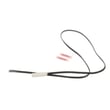
| Temps swing up/down | Sensor reading inaccurate | Refrigerator temperature sensor 5303918775 |
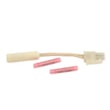
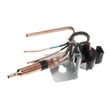
| Frost buildup affecting airflow | Defrost control components | Refrigerator defrost bi-metal thermostat and wire harness assembly 5303918851 |
For additional troubleshooting steps, we recommend starting with how to fix your evaporator cooling fan.
Last updated: February 2026
What is the most common problem with Frigidaire refrigerators?
The most common Frigidaire refrigerator problem is a cooling complaint caused by poor airflow or incorrect temperature sensing; the fresh-food section warms up, temperatures swing, or the freezer cools unevenly. On model GRMC2273CD00, the first places we check are the evaporator fan area, the temperature sensor, and the defrost system.
Most common symptoms
- Refrigerator section is warm but freezer seems OK
- Freezer temperature rises and ice cream gets soft
- Loud buzzing or rattling from the freezer (fan noise)
- Frost or ice buildup on the freezer back wall
- Ice maker slows down or stops making ice
Top causes to check first
- Evaporator airflow issue: A weak or blocked fan cannot move cold air; a common repair is the refrigerator freezer evaporator cover and fan assembly 5304523067.
- Temperature sensing issue: A drifting sensor can misread cabinet temperature; check the refrigerator temperature sensor 5303918775.
- Defrost system issue: Frosted-over evaporator coils restrict airflow; inspect the refrigerator defrost bi-metal thermostat and wire harness assembly 5303918851.
- Water and ice maker supply issue: Low ice production can point to a valve or supply problem; use how to diagnose a faulty refrigerator water inlet valve.
Quick checks before replacing parts
- Keep interior vents clear of food packages.
- Clean condenser coils and confirm the condenser fan area is unobstructed.
- Listen for the evaporator fan with the door switch held closed.
- Check for heavy frost on the freezer back panel.
What you see vs. what it usually means
| What you observe | Most likely area | Common next step |
|---|---|---|
| Fridge warm, freezer cold | Evaporator airflow | Inspect fan, cover, ice blockage |
| Temps swing up and down | Temperature sensing | Test/replace sensor |
| Frost blanket on freezer panel | Defrost system | Check defrost thermostat, wiring |
| No ice or slow ice | Water supply/valve | Verify supply, diagnose inlet valve |
Why it matters
Airflow and temperature control problems make food spoil faster and force longer compressor run times; fixing the fan, sensor, or defrost issue restores stable temperatures and normal ice production.
Last updated: February 2026
Why is my refrigerator leaking from the bottom?
On a Frigidaire GRMC2273CD00 bottom-mount refrigerator, leaking from the bottom is most often caused by a clogged or frozen defrost drain that sends meltwater onto the floor instead of into the drain pan. Less commonly, a water supply leak (inlet valve or tubing) drips down and shows up at the base.
Quick checks we recommend (start here)
- Look for a sheet of ice or standing water on the freezer floor; that points to a defrost drain issue.
- Check whether the leak happens only after using the dispenser or ice maker; that points to the water system.
- Inspect the drain pan underneath for overflow, cracks, or being out of position.
- Make sure the refrigerator is level; a tilt can cause water to miss the pan.
- Look for water tracks on the back wall or under the crisper area.
Fix a clogged or frozen defrost drain
- Unplug the refrigerator.
- Remove the freezer bottom bin/drawer and look for ice buildup on the freezer floor.
- Melt ice with warm (not boiling) water and towels.
- Flush the drain opening with warm water until it flows freely to the drain pan.
Why this matters
A blocked defrost drain forces normal defrost water to escape into the cabinet and onto the floor, and it can also lead to recurring ice buildup and poor cooling.
If the leak is tied to ice maker or water dispenser use
A slow drip can come from the inlet valve, fittings, or a valve that is not closing fully. Use our DIY steps in how to diagnose a faulty refrigerator water inlet valve to confirm.
If you determine the valve is leaking or not shutting off, the correct replacement depends on which valve version your unit uses; common options listed for this model include refrigeration appliance water inlet valve 5304536607 and refrigeration appliance water inlet valve 5304529544.
Symptom-to-likely-cause guide
| What you see | Most likely cause | What to do next |
|---|---|---|
| Water/ice on freezer floor | Clogged/frozen defrost drain | Thaw and flush the drain |
| Leak after dispensing water | Water line/valve seep | Inspect fittings; test inlet valve |
| Water under crisper area | Drain issue or internal leak path | Check for water tracks; flush drain |
| Pan full/overflowing | Pan out of place or heavy defrost | Re-seat and clean the drain pan |
Last updated: February 2026





