Error Codes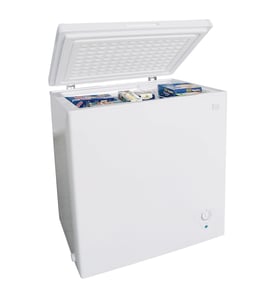




Where is the model number on a Kenmore chest freezer?
On a Kenmore chest freezer like model 1985815170, the model number is usually on a rating label inside the cabinet near the top rim, or on an exterior panel (often a side or the back). We use that model number to match the correct parts list.
Common places to check
- Inside the freezer on a side wall, just below the lid opening
- Along the upper rim (the lip) of the cabinet under the lid
- On the back panel near the power cord entry
- On an exterior side panel near the rear corner
- Near the hinge area (inside or just under the lid)
What the label looks like
Most Kenmore freezer ID labels include a few key fields. Look for:
| Label field | What it means | Why you need it |
|---|---|---|
| Model | The full model number (example: 1985815170) | Identifies the exact parts breakdown |
| Serial | A unique unit identifier | Helps with production date and revisions |
| Electrical | Volts/amps/Hz | Useful for diagnosing power issues |
Tips to find it faster
- Use a flashlight and check the cabinet rim first; it is the most common spot on chest freezers.
- Wipe frost or condensation off the surface; labels can be hard to read when damp.
- If the label is damaged, check the back and both sides; Kenmore often places a duplicate label externally.
- Write the model number down exactly as shown; even one digit changes the parts match.
Why it matters
Kenmore chest freezers can use different hinges, lid seals, screws, and insulation depending on the exact model and production run. Using the correct model number helps us match the right replacement parts and diagrams the first time.
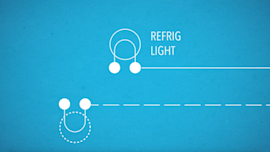
If you are troubleshooting a display or beeping issue after you find the model information, use our Kenmore electronic control module freezer error codes to narrow down the cause.
Last updated: February 2026
Do chest freezers have coils to clean?
Yes, many chest freezers have condenser coils, but not all coils are exposed or meant to be cleaned. On your Kenmore 1985815170 chest freezer, check the compressor area; if you see dusty tubing or a finned coil, cleaning it helps cooling performance and energy use.
How to tell if your freezer has coils you should clean
Look around the compressor compartment (usually behind a lower rear cover or underneath):
- Exposed finned coil or tubing with dust buildup: clean it
- Completely enclosed compressor area with no visible coil: routine coil cleaning usually is not needed
- Warm cabinet sides: some designs use hidden condenser tubing in the walls; there is nothing to brush off
How to clean condenser coils safely
- Unplug the freezer.
- Move it out enough to access the compressor area.
- Vacuum loose dust first.
- Use a soft coil brush to loosen packed lint, then vacuum again.
- Reinstall any cover and restore power.
What to avoid
- Do not use water or degreaser near electrical parts.
- Do not bend or crush thin fins or copper/aluminum tubing.
- Do not pry on sealed-system lines.
When coil cleaning matters most
Coil cleaning is most helpful when you notice any of the following:
- Freezer runs longer than normal
- Cabinet feels hotter than usual around the compressor area
- Frost or temperature issues after airflow and door sealing checks
- Dust, pet hair, or garage debris buildup around the unit
Quick troubleshooting guide
| Symptom | Coil cleaning likely helps? | Also check |
|---|---|---|
| Runs constantly | Often | Lid gasket seal, airflow around freezer |
| Not cold enough | Sometimes | Temperature setting, blocked vents, heavy frost |
| Loud buzzing/clicking | Sometimes | Start relay and compressor area ventilation |
Why it matters
Dirty condenser coils trap heat, so the compressor has to work harder. Keeping the condenser area clean can improve cooling consistency and reduce wear on the compressor over time.
For more freezer troubleshooting and common fixes, use our freezer category landing page.
Last updated: February 2026
Who makes Kenmore chest freezers?
Kenmore is a brand, not a single manufacturer; Kenmore chest freezers (including model 1985815170) have been produced for Sears by different appliance manufacturers over time. The exact maker can vary by model and production run, so the most reliable way to identify yours is by checking the model and serial information on the freezer’s rating label.
How to identify who built your specific Kenmore 1985815170
Use these quick checks to narrow it down accurately:
- Find the rating label (often inside the cabinet wall or on the back exterior)
- Write down the serial number and any source/manufacturer code shown
- Look for a prefix or format clue in the model or serial (some formats map to specific factories)
- Compare the freezer’s control style (mechanical dial vs. electronic module) and interior layout
- Use the parts list for your model to match components and hardware used on your unit
If you’re troubleshooting an electronic display or beeping issue, our error-code references can help you interpret what the control is reporting: Kenmore electronic control module freezer error codes.
Common Kenmore manufacturing partners (what “Kenmore-made” usually means)
Kenmore has historically sourced appliances from multiple major manufacturers. Here’s how to think about it:
| What you see on the freezer | What it usually indicates | What to do next |
|---|---|---|
| Kenmore badge on lid/cabinet | Brand identity | Use model/serial to identify the builder |
| Rating label with factory code | Actual manufacturer | Match code to builder and parts |
| Parts list matches certain component families | Shared design platform | Order parts by model number |
Why it matters
Knowing the builder helps when you’re diagnosing issues (controls, defrost system, compressor start components) and when you’re selecting compatible replacement parts. Even small differences in insulation panels, sealers, or fasteners can affect fit.
Parts tip
For cabinet and liner sealing repairs, we commonly see customers use items like cement WP279368 or sealer 212643 when appropriate for the job and surface.
Last updated: February 2026
What can cause a chest freezer to stop working?
A Kenmore chest freezer model 1985815170 can stop working because it is not getting power, the temperature control or electronic control is not operating correctly, airflow is restricted by heavy frost or overpacking, or the compressor start components fail. Start with power and temperature checks, then move to cooling-system symptoms.
Quick checks we recommend first
- Confirm the outlet has power (try a lamp) and reset any tripped breaker.
- Make sure the control is set cold enough; wait 24 hours after changes.
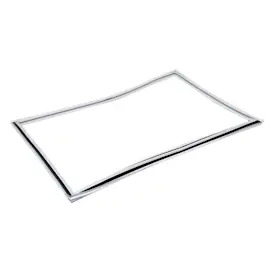
- Check the lid closes fully; look for gaps, torn gasket areas, or heavy frost at the rim.
- Verify the freezer is not overpacked; leave space for air circulation.
- Listen for the compressor: steady hum (running) vs. repeated clicking (start problem).
Common causes and what you will notice
| Likely cause | What you may notice | What to do next |
|---|---|---|
| No power or bad cord/outlet | No lights, no sound | Restore power; test outlet and breaker |
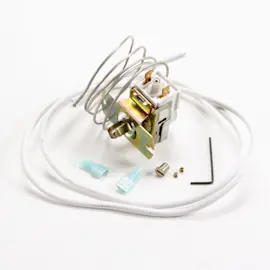
| Control issue (thermostat or electronic control) | Runs too warm or not at all | If you have a display, check for codes using Kenmore electronic control module freezer error codes |
| Frost buildup restricting airflow | Frost/ice, warmer temps, longer run times | Defrost and improve lid seal; see how to defrost a freestanding freezer |
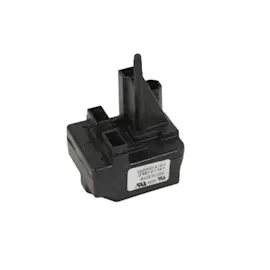
| Compressor start relay/capacitor problem | Clicking, compressor tries then stops | Follow how to replace a freezer compressor start relay |
Parts that can help with sealing and cabinet issues
If warm air is leaking in, sealing small gaps after cleaning and drying the surface can help prevent frost and temperature swings.
- Cement WP279368 (appliance silicone sealant) for sealing small air leaks
- Sealer 212643 for filling minor gaps around panels or pass-throughs
- Insulation 876370 if insulation is damaged and causing sweating or heat gain
Why it matters
When a chest freezer loses cooling, food safety and compressor health are both at risk. Fixing airflow restrictions and air leaks early reduces frost buildup, improves temperature stability, and helps the freezer run more efficiently.
Last updated: February 2026