 Owner’s manual
 Error Codes



Does a 20 year old GE dishwasher have a filter?
Yes. A 20-year-old GE dishwasher like model GSD4930X66WW typically uses a self-cleaning filtration system (often paired with a hard food disposer), so you usually do not remove and rinse a user-cleanable filter the way you would on many newer designs. For model-specific care details, use the GSD4930X66WW owner's manual.
What you will see on many older GE designs
Most older GE dishwashers in this series are built to keep food moving through the wash system rather than relying on a removable filter.
- A coarse screen area in the sump (not meant for frequent removal)
- A self-cleaning filter path that flushes soil away during the cycle
- A food-chopping or shredding action (you may hear it during operation)
- Normal sounds such as “soft food disposal shredding action” and drain valve operation
When you actually need to clean something
Even with a self-cleaning system, buildup can still cause odor, poor cleaning, or drainage issues.
- Clear visible debris from the bottom of the tub and around the sump area
- Check the spray arm holes for clogs; clean if needed
- Run a cleaning cycle periodically (citric acid cleaning is commonly used on this platform)
- If the dishwasher is not draining, inspect the drain path and hose routing
Quick symptom-to-check table
| Symptom | Most likely area to check first | Related part (if replacement is needed) |
|---|---|---|
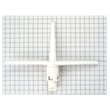
| Grit on dishes | Spray circulation and spray arm ports | Spry arm asm WD22X155 |
| Standing water | Drain path, drain hose, drain valve/solenoid | Drain hose WD24X10014 |
| Loud grinding during wash | Food disposer area or pump components | Pump housing WD26X10013 |
Why it matters
Knowing whether your GE GSD4930X66WW has a self-cleaning filter helps you avoid unnecessary disassembly and focus on the real maintenance items that affect cleaning and draining performance.
Last updated: February 2026
What is the average lifespan of a GE dishwasher?
A GE dishwasher typically lasts 10 to 12 years. For your GE GSD4930X66WW, consistent cleaning, correct detergent use, and fixing small leaks or draining issues early are the biggest factors that keep it running closer to the high end of that range.
Typical lifespan and what changes it
Most GE dishwashers land in this range:
| Usage and care | Typical lifespan | What you usually see first |
|---|---|---|
| Light use, good maintenance | 12 to 15 years | Rack wear, minor leaks |
| Average family use | 10 to 12 years | Drain or wash performance issues |
| Heavy use, poor maintenance | 8 to 10 years | Pump, seals, or door gasket problems |
Top ways to extend the life of GSD4930X66WW
We recommend these habits because they reduce strain on the pump, seals, and spray system:
- Run hot water at the sink before starting a cycle so the dishwasher fills with hotter water.
- Keep the door sealing surfaces clean; wipe the tub lip and gasket area regularly.
- Load so spray arms can spin freely; avoid blocking the power tower or spray arm.
- Use the right amount of detergent; too much can cause residue and extra wear.
- Address draining problems quickly (standing water stresses the motor and can cause odors).
- Follow the care and operating guidance in the GSD4930X66WW owner's manual.
Parts that commonly wear before the dishwasher is “done”
Replacing a few wear items often restores performance and helps you avoid replacing the whole unit.
- Door sealing issues: consider the door gasket WD8X229 if you see leaks at the door.
- Poor draining: inspect the drain path and consider the drain hose WD24X10014 if it is kinked, brittle, or leaking.
- Weak wash action or unusual noise: the wash pump area can be involved (circulation components, seals, or motor assembly).
Why it matters
Knowing the expected lifespan helps you decide whether a repair is cost-effective. If your GSD4930X66WW is under about 10 years old, replacing a gasket, hose, or rack component is often a smart move; beyond 12 years, you may weigh repair cost against overall wear.
Last updated: February 2026
What is the most common problem with GE dishwashers?
The most common GE dishwasher problem is a drain issue: the dishwasher won’t drain fully or leaves water in the bottom. On the GE GSD4930X66WW, we also frequently see “won’t run” complaints caused by a tripped breaker or a control reset need, both covered in the GSD4930X66WW owner's manual.
Most common symptoms we see (and what they usually mean)
- Water left in the tub: drain path restriction, drain valve/solenoid issue, or a hose problem
- Won’t start or stops early: power supply issue, breaker tripped, or control needs a reset
- Not cleaning well: spray system blockage, loading issues, or wash circulation problem
- Leaks at the door: worn door seal or seal insert
- Unusual noises: items loose in racks, normal drain valve action, or food disposal shredding sounds
Quick checks you can do first (5 to 10 minutes)
- Reset power: check the house breaker, then try a control reset per the manual.
- Look for standing water: if water remains after a cycle, inspect the drain route for kinks or clogs.
- Check the drain hose routing: a sag, kink, or blockage can cause slow or no drain.
- Confirm nothing blocks wash action: tall items can interfere with spray coverage.
- Listen for normal sounds: the manual notes several normal operating noises during a cycle.
Parts that commonly solve these problems on GSD4930X66WW
| Symptom | Common part to inspect/replace | What it does |
|---|---|---|
| Not draining | Drain hose WD24X10014 | Carries water to the sink drain/disposer |
| Not draining (valve action) | Solenoid WD21X802 | Actuates the drain valve mechanism |
| Leaking at door | Door gasket WD8X229 | Seals the door to prevent water leaks |
| Poor wash circulation/noisy pump | Pump housing WD26X10013 | Houses pump/motor components for wash/drain flow |
Why it matters
Drain and start problems are the most disruptive because they stop the cycle from completing and can leave dirty water in the tub. Catching a kinked hose, a tripped breaker, or a worn seal early prevents repeat failures and helps the dishwasher clean and dry consistently.
Last updated: February 2026





