




Is FDPC4221AS2A easy to use?
Yes. The Frigidaire FDPC4221AS2A is a straightforward, standard built-in dishwasher with simple controls and no-frills operation, so most owners find it easy to run day to day. If you ever run into a basic “won’t start” situation, the fix is usually a quick check of the door latch and cycle selection.
- Load dishes so spray arms can spin freely and nothing blocks the detergent cup.
- Choose a cycle and options, then start the dishwasher and fully latch the door.
- Use the right detergent amount for your water hardness to prevent residue.
- Clean the filter regularly to keep wash performance consistent.
- Expect longer run times on modern cycles; longer cycles are normal and help cleaning.
| Symptom | Most common cause | What to do first |
|---|---|---|
| Buttons respond but cycle won’t begin | Door not fully latched | Close firmly; inspect the latch area and handle |
| Starts but cleans poorly | Filter or spray path blocked | Clean the filter and re-load to improve water flow |
| Detergent not dispensing well | Cup blocked by a large item | Reposition tall pans; consider checking the dispenser |
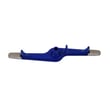
If the door won’t latch reliably, the handle,tug latch,black 5304535626 is the model-matched part to check for wear or damage.
A dishwasher can seem “hard to use” when a simple mechanical issue (like a weak latch) or a maintenance item (like a dirty filter) prevents normal starting, cleaning, or detergent release. Keeping the wash system clear helps the FDPC4221AS2A stay simple and predictable.
Last updated: February 2026
How can I force my Frigidaire dishwasher to drain?
To force a drain on your Frigidaire dishwasher model FDPC4221AS2A, press and hold Start/Cancel for about 3 to 5 seconds, then close the door so the cancel-drain sequence can run. If the unit still will not drain, the issue is usually a clog, a kinked drain hose, or a drain pump problem.
- Press and hold Start/Cancel for 3 to 5 seconds (some consoles label this as Cancel).
- Watch for the indicator light or a change in display that confirms cancel/drain.
- Close the door fully to let the dishwasher begin draining.
- Listen for the drain pump running (a steady humming sound).
- After draining, open the door and check the tub water level.
These checks solve most “won’t drain” complaints on FDPC4221AS2A:
- Check the sink/disposer connection: make sure the disposer inlet plug is removed (new disposer installs commonly block draining).
- Inspect the drain hose routing: look for kinks, crushing, or a low loop that lets water flow back.
- Clean the filter area: remove debris that can block the sump and drain path; a clogged filter can slow or stop draining.
- Check for a blocked hose: if the hose is soft or split, replace it with the dishwasher drain hose 807117001.
- Suspect the drain pump if you hear a hum but no water moves; the pump assembly may need replacement (common when debris jams the impeller).
| What you notice | Most likely cause | Best next step |
|---|---|---|
| Hums but no drain | Pump jam or blockage | Clear debris in sump; consider pump service |
| Drains slowly | Filter/sump restriction | Clean filter and sump area |
| No sound at all | Control/door latch issue | Re-try cancel-drain with door firmly latched |
| Drains into sink then returns | Hose routing/no high loop | Correct hose routing and secure it |
Standing water can cause odors, poor cleaning, and can strain the pump and motor over time. Getting the drain path clear helps the wash system work correctly and protects key parts like the pump and motor.
Related DIY help: dishwasher not draining video
Last updated: February 2026
What plug do I need for a dishwasher?
Most Frigidaire dishwashers like model FDPC4221AS2A use a standard 120V, 15-amp household receptacle; the dishwasher typically plugs into a grounded 3-prong outlet on a dedicated circuit. If your unit is hardwired instead of corded, you will use a junction box connection rather than a plug.
- Outlet type: grounded 3-prong (NEMA 5-15R) receptacle
- Circuit: 120V, 15A dedicated circuit is most common
- Cord: a 3-wire grounded dishwasher power cord (if your model is configured to plug in)
- Location: usually in the adjacent sink base cabinet (not directly behind the dishwasher)
- Protection: GFCI protection is commonly required in many kitchens; follow local electrical code
| Connection type | What you need | When it’s used |
|---|---|---|
| Plug-in | Grounded outlet + dishwasher power cord | Easiest for service and replacement |
| Hardwired | Junction box, strain relief, wire nuts | Common in older installs or some local practices |
- Confirm whether your FDPC4221AS2A currently has a power cord or a hardwire whip.
- Check the breaker size; most dishwashers run on 15A, but some kitchens are wired for 20A.
- Make sure the outlet is properly grounded and not controlled by a wall switch.
- If the dishwasher is dead or intermittent, inspect the house power first, then the dishwasher wiring.
Using the correct grounded plug and circuit helps the dishwasher run reliably and reduces nuisance shutdowns. It also makes troubleshooting easier when issues look like “won’t start” but are actually power related.
Related help: dishwasher wont start video
Last updated: February 2026
How to reset a Frigidaire dishwasher error code?
On a Frigidaire FDPC4221AS2A dishwasher, most error codes clear after you cancel the cycle and restore power; we recommend holding Start/Cancel (or Start/Reset) for about 3 to 5 seconds, then doing a brief power reset. If the code returns, fix the underlying issue (drain, fill, heat, or door latch) so it stays cleared.
- Press and hold Start/Cancel (or Start/Reset) for 3 to 5 seconds to cancel and drain.
- Wait 1 minute; then try starting a normal cycle.
- If the code stays on, turn OFF the dishwasher circuit breaker (or unplug) for 5 to 10 minutes.
- Restore power and start a cycle.
- If the unit will not drain during cancel, check the drain path and consider the dishwasher drain hose 807117001.
Many “reset” problems are really a condition the control detects again. Check these common causes:
- Not draining: kinked hose, clogged filter, blocked sink/disposal inlet
- Not filling: closed water shutoff, low supply pressure, inlet valve issue
- Not heating/drying: heater circuit problem, heavy soil, incorrect cycle options
- Overfill/leak protection: float stuck up, water in the base
- Door not sensed closed: latch not fully engaged
| Symptom after reset | What to inspect first | Model-matched part to consider |
|---|---|---|
| Won’t drain, standing water | Filter and drain hose routing | Dishwasher filter 5304532206 or dishwasher drain hose 807117001 |
| Won’t fill or fills slowly | Shutoff valve, inlet screen | Crosley dishwasher water inlet valve 5304525044 |
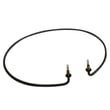
| Poor drying, heat-related errors | Heater wiring, heater terminals | Frigidaire dishwasher heating element 154825001 |
Clearing the code without correcting the cause can lead to repeat shutdowns, longer cycle times, and poor cleaning or drying. A proper reset plus a quick check of drain, fill, and heat systems gets the dishwasher running normally again.
If the dishwasher has power but still will not run after a reset, use dishwasher wont start video to walk through the most common checks.
Last updated: February 2026
What is the average lifespan of a Frigidaire dishwasher?
A Frigidaire dishwasher typically lasts about 10 years. For your Frigidaire FDPC4221AS2A, consistent cleaning, correct detergent use, and fixing small issues early (like poor draining or weak washing) are the biggest factors that keep it running longer.
Most dishwashers in this class land in a predictable window.
| Usage and care level | Typical lifespan | What usually ends it |
|---|---|---|
| Light use, good maintenance | 10 to 12 years | Wear in pump, seals, racks |
| Average family use | 8 to 10 years | Drain or wash motor issues, leaks |
| Heavy use, hard water, little maintenance | 6 to 8 years | Premature pump, heater, valve problems |
These are the most common “lifespan killers” we see with built-in dishwashers:
- Hard water scale building up on the heating system and inside the sump
- Clogged filter that restricts water flow and strains the wash pump
- Poor draining that leaves dirty water in the tub and stresses the drain path
- Overloading that blocks spray arms and causes repeated re-washes
- Small leaks that go unnoticed and damage components over time
A few habits make a measurable difference:
- Clean the filter regularly; replace it if it is warped or won’t rinse clean (see dishwasher filter 5304532206).
- Keep the drain path clear; replace a soft, kinked, or split hose (see dishwasher drain hose 807117001).
- Run a monthly cleaning cycle and wipe the door seal area.
- Use the right detergent amount and avoid packing the detergent cup.
- If drying performance drops, check the heater circuit and mounting hardware (see Frigidaire dishwasher heating element 154825001 and dishwasher heating element nut 154106202).
Knowing the average lifespan helps you decide whether to repair or replace. If your FDPC4221AS2A is under about 10 years old, replacing common wear parts like a filter, drain hose, or heating element often restores performance for far less than a new dishwasher.
For symptom-based help, use how to clean and maintain your dishwasher to prevent the most common failures.
Last updated: February 2026
What is the most common problem with a Frigidaire dishwasher?
The most common Frigidaire dishwasher complaint (including model FDPC4221AS2A) is poor cleaning that traces back to restricted water flow inside the tub, usually from a dirty filter, blocked spray arms, or a weak wash pump. Drain problems and “won’t start” issues are also frequent, but cleaning performance leads the list.
- Clean the dishwasher filter and remove any debris from the sump area.
- Spin the spray arms by hand; clear clogged holes with a toothpick and rinse.
- Run hot water at the sink for 30 to 60 seconds before starting the cycle.
- Confirm the detergent cup opens and you are using fresh detergent.
- Avoid overloading; keep tall items from blocking the detergent door.
| Symptom | Most common cause | What usually fixes it |
|---|---|---|
| Dishes gritty or still dirty | Clogged filter or spray arm ports | Clean filter and spray arms; improve loading |
| Standing water after cycle | Drain restriction | Check drain hose routing and air gap/disposal plug |
| No heat or poor drying | Heating circuit issue | Check settings; inspect heater and connections |
| Won’t start or stops early | Door not latching or control issue | Check latch engagement; reset power |
If cleaning is consistently poor even after cleaning the filter and spray arms, the wash system may be weak. These model-compatible parts are commonly involved:
- Dishwasher filter 5304532206 (restricted filtration can recirculate soil)
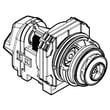
- Crosley dishwasher pump and motor assembly 5304519906 (weak wash pressure, noisy wash)
- Dishwasher drain hose 807117001 (slow drain, backflow, kinks)
- Crosley dishwasher water inlet valve 5304525044 (low fill, weak spray)
A restricted filter or low wash pressure makes the dishwasher recirculate dirty water, which causes spotting, grit, and leftover food. Fixing the root restriction early also reduces strain on the pump, motor, and heating system.
For step-by-step troubleshooting that matches these symptoms, use: dishwasher not cleaning dishes video and dishwasher not draining video.
Last updated: February 2026
What are the commonly replaced parts in a dishwasher?
In a Frigidaire dishwasher like model FDPC4221AS2A, the most commonly replaced parts are the components that handle water flow, heating, draining, and door sealing. We typically see replacements for the pump/motor, heating element, inlet valve, drain hose, and wear items such as filters and rack rollers.
These are the parts we see replaced most often because they wear out, clog, leak, or get damaged over time:
- Circulation pump and motor (drives wash action), for weak cleaning or loud grinding
- Drain components (hose and pump), for standing water or slow draining
- Heating system parts, for poor drying or cool wash water
- Water inlet valve, for no-fill or underfilling
- Filter and sump sealing parts, for clogs, odors, or leaks
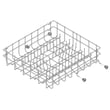
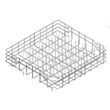
- Rack hardware (rollers/slides), for racks that fall off track or bind
Here are common replacements that fit this model, based on the parts available for FDPC4221AS2A:
| Symptom | Likely part to check/replace | Example model-matched part |
|---|---|---|
| Not cleaning well, loud motor noise | Pump and motor | Crosley dishwasher pump and motor assembly 5304519906 |
| Not drying, water not heating | Heating element | Frigidaire dishwasher heating element 154825001 |
| Not draining, water left in tub | Drain hose (and drain path) | Dishwasher drain hose 807117001 |
| Won’t fill or fills slowly | Water inlet valve | Crosley dishwasher water inlet valve 5304525044 |
| Debris in bottom, odors, poor wash | Filter | Dishwasher filter 5304532206 |
These steps often pinpoint the failed component and prevent repeat failures:
- Clean the filter and check the sump area for broken glass or labels.
- Confirm the sink drain and garbage disposal inlet are clear (new disposals often have a knockout plug).
- Verify the spray arms spin freely and the rack is not blocking them.
- Run hot water at the sink for 30 to 60 seconds before starting a cycle.
- Check for kinks in the drain hose and listen for the drain pump running.
Replacing the right part restores cleaning, draining, and drying performance while preventing secondary damage (for example, a clogged filter can strain the pump, and a restricted drain can cause leaks or error conditions).
For step-by-step symptom guidance, we recommend starting with dishwasher not cleaning dishes video or dishwasher not draining video.
Last updated: February 2026
Can I replace dishwasher parts myself?
Yes, for the Frigidaire FDPC4221AS2A dishwasher, we can replace many common parts ourselves if we shut off power and water first and work carefully. Simple mechanical items (filters, rollers, hoses) are usually DIY-friendly; electrical and leak-related repairs take more skill and testing.
These repairs are typically straightforward with basic hand tools:
- Replace the dishwasher filter 5304532206 to improve cleaning and prevent clogs
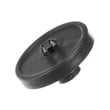
- Swap a worn rack wheel such as the crosley dishwasher dishrack roller, lower 5304532229
- Replace a cracked or kinked dishwasher drain hose 807117001 if the unit will not drain
- Replace the dishwasher detergent dispenser assembly 5304506521 if the cup will not open
- Install a new dishwasher door hinge arm set 5304513274 if the door drops or will not balance
These can be done at home, but they involve wiring, water connections, or diagnosing the real cause:
- Crosley dishwasher water inlet valve 5304525044 (no fill, slow fill, or overfill symptoms)
- Dishwasher electronic control board 5304525200 (dead controls, erratic operation)
- Crosley dishwasher pump and motor assembly 5304519906 (no wash action, loud grinding)
- Frigidaire dishwasher heating element 154825001 (poor drying, water not heating)
- Turn off the breaker (dishwashers are hard-wired or plug-in under the sink)
- Shut off the water supply valve under the sink
- Pull the dishwasher out only as far as hoses and wiring allow
- Take photos of wire locations and hose routing before disconnecting anything
- Run a short test cycle after reassembly and check for leaks at every connection
| Symptom | Most common DIY checks | Parts often involved |
|---|---|---|
| Not draining | Check filter, drain hose routing, sink/disposal inlet | Filter, drain hose, pump |
| Not cleaning | Clean filter, confirm spray path is not blocked | Filter, pump and motor |
| Not drying | Confirm heated dry option, check for heat | Heating element |
| Won’t start | Verify power, latch, and control response | Control board, latch/handle |
Dishwasher repairs are usually successful when we match the symptom to the correct part. Replacing the wrong component can waste time and still leave issues like poor draining, leaks, or no-heat drying.
For step-by-step troubleshooting, we use guides like dishwasher not draining video and dishwasher wont start video.
Last updated: February 2026





