 Installation guide
 Owner’s manual
 Error Codes




How do I know what Frigidaire model I have?
To identify your Frigidaire model, find the model/serial label on the appliance and copy the full model number exactly. For a Frigidaire dishwasher like model FGID2474QF7B, the label is typically on the tub frame around the door opening; confirm the format in the FGID2474QF7B owner's manual.
Where to look on a Frigidaire dishwasher
Check these common spots first (use a flashlight and look for a sticker or metal tag):
- Along the tub frame at the top or side edge when you open the door
- On the left or right inner side wall of the tub
- Near the door hinge area (still inside the door opening)
- Behind the kickplate or toe panel area (less common for the model tag)
What to write down (so parts match)
Model numbers and serial numbers can look similar, so we recommend recording both.
- Model number: letters and numbers (example: FGID2474QF7B)
- Serial number: usually a longer string; helps confirm production details
- Any suffix letters: they matter for parts compatibility
- Exact characters: avoid swapping 0 (zero) and O (letter O)
Quick checklist
| Item | What it’s used for | Tip |
|---|---|---|
| Model number | Choosing correct parts diagrams and parts | Copy it exactly, including the ending letters |
| Serial number | Verifying production run details | Take a photo for clarity |
Why it matters
Frigidaire often uses similar-looking model families, and small differences in the model suffix can change which door latch, dispenser, or water inlet valve fits. Using the exact model number helps ensure you get the right replacement part the first time.
Last updated: January 2026
What causes power failure on a dishwasher?
Power failure on a Frigidaire dishwasher model FGID2474QF7B is most often caused by a tripped breaker or bad outlet, a door that is not fully latched, or a loose/burned connection at the dishwasher’s junction box. We recommend checking the simplest power and door-latch items first using the FGID2474QF7B installation guide.
Quick checks (fastest to rule out)
- Reset the kitchen breaker fully OFF then ON.
- Test the outlet (or hardwired feed) with a known-good device.
- Confirm the door closes firmly; the dishwasher will not run if the latch is not engaging.
- If hardwired, turn power OFF and check the junction box cover is installed and wiring is secured.
- Look for a stuck control lock or cycle that was not started properly (cancel/drain then restart).
Common causes and what to look for
| Symptom | Most likely cause | What to do next |
|---|---|---|
| No lights, no response | House power issue (breaker, outlet, wiring) | Verify supply voltage and connections at the junction box (power OFF first). |
| Lights on, won’t start | Door not latched or latch switch not closing | Inspect latch alignment; replace latch if it will not hold closed. |
| Intermittent power loss | Loose wire nut/connection in junction box | Re-make tight connections; ensure all wiring is enclosed in the junction box. |
| Powers up but acts erratic | Control panel or control issue | Try a power reset; if it repeats, troubleshoot controls. |
Parts that can be involved
If the dishwasher has power but will not run because the door is not registering “closed,” the latch assembly is a common fix.
Why it matters
A dishwasher that “loses power” is often protecting you: the door-latch circuit prevents operation with the door open, and loose electrical connections can overheat. Verifying the supply wiring and junction box connections helps prevent repeat shutdowns.
Safety notes we follow
- Disconnect electrical power at the breaker before opening any access panels.
- Do not use an extension cord; dishwashers require a proper grounded connection.
- Keep all wiring connections enclosed in the junction box.
Last updated: January 2026
What is the most common problem with a Frigidaire dishwasher?
The most common problem we see with Frigidaire dishwashers like model FGID2474QF7B is drainage trouble (water left in the bottom after a cycle), usually caused by a clog in the filter/sump area or a restricted drain hose. A close second is a door latch issue that prevents the dishwasher from starting.
Quick checks you can do first
- Cancel/drain the cycle and listen for the drain pump running.
- Check the bottom of the tub for standing water and food debris.
- Inspect the drain hose routing for kinks and make sure it moves freely behind the unit.
- If the dishwasher will not start, confirm the door closes firmly and the latch engages.
- If the unit was recently installed or moved, verify the drain, water, and electrical connections are correctly routed and not pinched.
Common symptoms and likely causes
| Symptom | Most likely cause | What to check next |
|---|---|---|
| Water left in bottom | Clogged sump screen/filter area, restricted drain hose | Clean sump area; check hose and sink/disposal connection |
| Won’t start | Door not fully latched, latch assembly problem | Check alignment; inspect latch |
| Not filling | Water supply off, inlet restriction, inlet valve issue | Confirm hot water supply is on; check inlet |
| Poor cleaning | Spray arm blockage, low water flow, turbidity sensing issues | Clear spray arm holes; check water flow |
Parts that commonly relate to these problems
If your troubleshooting points to a failed component (not just a clog), these model-compatible parts are commonly involved:
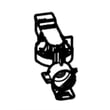
- Crosley dishwasher door latch assembly 111315040 (won’t start, door not registering closed)
- Dishwasher water inlet valve 807445905 (not filling or filling slowly)
- Crosley dishwasher sump screen 111917701 (debris buildup leading to drain or wash issues)
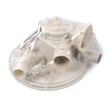
- Sump assembly 5304520660 (persistent drain/wash circulation problems after cleaning)
Why it matters
Drain and latch problems stop the cycle early or prevent it from starting at all. Fixing a simple restriction (filter/sump debris or a kinked hose) often restores normal operation and helps protect the pump and motor from strain.
For installation-related drain, water, and electrical routing details (including kickplate removal and connection locations), follow the installation guide.
Last updated: January 2026
How to do a hard reset on a Frigidaire dishwasher?
For a hard reset on your Frigidaire dishwasher model FGID2474QF7B, we recommend canceling the current cycle using the control panel’s cancel function, then power-cycling the dishwasher at the circuit breaker for 5 to 10 minutes. This clears most electronic control glitches.
Hard reset steps (safe, works on all control layouts)
- If a cycle is running, use the control panel option that cancels the cycle and starts a drain (often labeled Cancel or Cancel/Drain).
- Let the drain finish; wait until the unit is quiet and the indicators stop changing.
- Turn the dishwasher circuit breaker OFF.
- Leave power OFF for 5 to 10 minutes.
- Turn the breaker ON, close the door, then start a short cycle to confirm normal response.
What to do if the buttons do not match what you see
Frigidaire control labels vary by series and panel style, so use the model-specific control panel map and cycle-cancel instructions in the FGID2474QF7B owner’s manual.
Use this quick guide:
| What you see on the panel | What to do | Result |
|---|---|---|
| A button labeled Cancel or Cancel/Drain | Press it to end the cycle | Drains and resets the current cycle state |
| No obvious Cancel label | Use the manual’s “cancel cycle” steps | Same outcome without guessing button names |
| Hardwired unit | Always power-cycle at the breaker | Fully reboots the control |
If a reset does not fix the problem
A reset restores control logic; it does not correct a failed switch, fill problem, or drain restriction. Check these common causes:
- Door not fully latched or misaligned: inspect the latch and strike; replace the crosley dishwasher door latch assembly 111315040 if it will not hold firmly.
- No fill or slow fill: verify the shut-off valve is open and the supply line is not kinked; a failed dishwasher water inlet valve 807445905 can prevent filling.
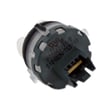
- Stops mid-cycle: check for water level sensing issues; the pressure switch A00055408 can affect fill and wash operation.
Why it matters
A hard reset forces the electronic control to reboot and re-check key inputs (door latch, fill, drain) before starting a cycle. If one of those inputs is still failing, the dishwasher will keep refusing to run.
Last updated: January 2026





