Owner’s manual
 Error Codes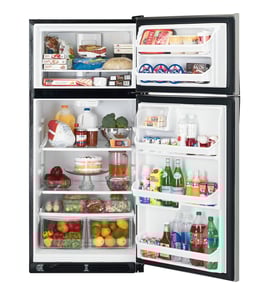


What is the upper part of a fridge called?
On the Frigidaire FRT21HR6AW3 top-mount refrigerator, the upper section is the freezer compartment. It’s the coldest area of the appliance and is designed to keep foods frozen and store items long-term; many models also support ice storage or ice maker components.
What the freezer compartment does
The freezer compartment is built to maintain temperatures low enough to keep food safely frozen and to support proper cold-air circulation into the fresh-food section.
Common freezer uses include:
- Storing frozen foods (meats, vegetables, prepared meals)
- Freezing fresh foods quickly when spaced for airflow
- Holding ice (ice tray or ice maker bin, if equipped)
- Keeping items that soften easily (ice cream) in the interior, not the door
Freezer vs. refrigerator section: quick comparison
| Section | Typical purpose | Temperature goal | Common storage tips |
|---|---|---|---|
| Freezer (upper) | Long-term frozen storage | 0°F | Leave space between packages for airflow |
| Fresh-food (lower) | Short-term refrigerated storage | 37°F to 40°F | Use crispers for produce; wrap strong-odor foods |
Tips that help the freezer work correctly
These basics prevent warm spots, frost issues, and poor freezing performance:
- Avoid overloading the freezer with warm food at one time
- Leave gaps between packages so cold air can circulate
- Keep hard-to-freeze items (like ice cream) off the freezer door shelves
- Make sure the refrigerator is level so doors close tightly
- Do not block the toe grille; airflow is essential for proper operation
Why it matters
Knowing the correct name (freezer compartment) helps when you’re ordering parts, following troubleshooting steps, or using the storage and airflow guidance in the documentation for your Frigidaire FRT21HR6AW3.
For model-specific features and storage guidance, use the FRT21HR6AW3 owner’s manual.
Last updated: January 2026
What is top mount and bottom mount refrigerator?
A top-mount refrigerator (like Frigidaire FRT21HR6AW3) has the freezer on top and the fresh-food section below; a bottom-mount refrigerator flips that layout so the fresh-food section is at eye level and the freezer is on the bottom.
Quick comparison
| Feature | Top-mount refrigerator | Bottom-mount refrigerator |
|---|---|---|
| Freezer location | Top | Bottom |
| Fresh-food location | Bottom | Top (more eye-level access) |
| Typical user experience | More bending for fresh food | Less bending for fresh food |
| Typical cost | Usually lower | Usually higher |
How the layout affects everyday use
- If you use fresh foods most often, a bottom-mount design keeps the refrigerator shelves closer to eye level.
- If you use frozen foods most often, a top-mount design keeps the freezer more accessible.
- Top-mount models are often simpler in design, which can make routine upkeep and organization straightforward.
What stays the same (and what to check on your model)
Both styles still need the basics done right for good cooling and door sealing:
- Keep the refrigerator level so doors close properly.
- Maintain airflow around the cabinet and avoid blocking the toe grille.
- Allow proper installation clearances for ventilation.
- Use the correct storage features (bins, crispers, deli drawer) for better food life.
For model-specific setup details like clearances, leveling steps, and door reversal instructions, follow the FRT21HR6AW3 owner's manual.
Why it matters
Choosing top-mount vs bottom-mount is mostly about ergonomics and budget. The layout changes how often you bend, how you organize food, and how convenient daily access feels, even when overall cooling performance is similar.
Last updated: January 2026
Why is my Frigidaire top mount freezer not freezing?
If your Frigidaire FRT21HR6AW3 top-mount refrigerator freezer is not freezing, the most common causes are incorrect temperature control settings, poor airflow from a failed evaporator fan, or heat not being removed due to dirty condenser coils. Set the freezer for 0°F or lower and confirm the fan runs. See the FRT21HR6AW3 owner's manual for the exact control locations and adjustment guidance.
Quick checks we recommend first
- Confirm the freezer temperature target is 0°F or lower (food safety and proper ice production depend on this).
- Adjust the freezer control slightly toward Colder if the freezer is too warm (small changes, then wait).
- Make sure the refrigerator control is not set to 0 (that turns the compressor off).
- Listen for the evaporator fan in the freezer; if it is not running, cold air will not circulate.
- Check door closing and gasket sealing; warm air leaks quickly prevent freezing.
- Clean condenser coils and make sure the condenser area has good airflow.
What the temperature controls mean on this model
The manual notes that turning the refrigerator temperature control to “0” turns off the compressor (the unit can still have power to lights and other components). Use this table as a quick guide:
| Symptom | Control change | What to expect |
|---|---|---|
| Freezer too warm | Turn freezer control slightly toward Colder | Freezer temp drops over several hours |
| Freezer too cold | Turn freezer control slightly toward Warmer | Freezer temp rises slightly |
| Refrigerator not cooling at all | Check refrigerator control is not at 0 | Compressor should run and cooling returns |
Parts that commonly fix “not freezing” symptoms
If the freezer is warm and you do not hear airflow in the freezer, we focus on the evaporator fan system first.
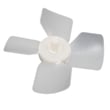
- Evaporator fan not running or noisy: inspect the blade for damage and the motor for failure.
- Helpful parts for this model: refrigerator evaporator fan blade 5308000010, evaporator motor 5303918549
- Temperature control issues: if settings do not respond or temperatures swing widely, the control thermostat can be involved.
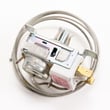
- Helpful part for this model: refrigerator temperature control thermostat 241537103
Why it matters
A freezer that cannot hold 0°F will also struggle to make ice (the manual notes ice maker performance depends on the freezer being cold enough), and food quality drops quickly as temperatures rise.
Last updated: January 2026
What is the most common problem with a Frigidaire refrigerator?
Cooling problems are the most common issue we see with Frigidaire refrigerators like model FRT21HR6AW3; the refrigerator or freezer runs warm because airflow is restricted, controls are mis-set, or a fan or door seal is failing. Start with basic temperature and cleaning checks in the FRT21HR6AW3 owner's manual.
Most common causes (and what to check first)
- Dirty condenser area: Clean the condenser periodically to keep the refrigerator running efficiently.
- Temperature control set incorrectly: Use small adjustments; allow about 24 hours for temperatures to stabilize after changes.
- Evaporator fan problem: If the freezer is cold but the fresh-food section is warm, the evaporator fan system is a top suspect.
- Door seal not sealing: Warm air leaks cause long run times, frost, and warm temperatures.
- Defrost-related frost buildup: Heavy frost on the freezer back wall often points to a defrost system issue.
Quick symptom-to-likely-cause guide
| What you notice | Most likely direction | Common next step |
|---|---|---|
| Freezer cold, fridge warm | Airflow or evaporator fan issue | Inspect fan area; consider evaporator motor 5303918549 |
| Both sections warm | Dirty condenser, control setting, or sealed system | Clean condenser; verify controls and power |
| Frost buildup, weak airflow | Defrost system issue | Check for ice blocking vents; consider refrigerator defrost heater 5303918247 |
| Runs a lot, moisture/frost near doors | Door gasket leak | Inspect gasket for gaps/tears; consider refrigerator gasket 241872512 |
Why it matters
Cooling issues can look like a “bad compressor,” but many are caused by maintenance (condenser cleaning), airflow (fan/ice blockage), or sealing (gasket). Fixing the root cause protects food temperatures and reduces compressor run time.
Helpful DIY resources we use
Last updated: January 2026