Owner’s manual
 Error Codes




Is Frigidaire a good brand for chest freezers?
Yes. Frigidaire is a solid, mainstream choice for chest freezers, and the Frigidaire FFFC15M4TW0 fits what most people want for bulk storage: dependable freezing performance, straightforward controls, and practical long-term value when it’s installed and used correctly (see the FFFC15M4TW0 owner’s manual).
What “good” looks like for a chest freezer
A good chest freezer brand delivers stable temperatures, reasonable energy use, and fewer day-to-day annoyances. For Frigidaire chest freezers, we most often see customers satisfied when they focus on setup and habits that protect temperature stability.
- Keep the lid closed as much as possible; frequent openings warm the interior.
- Set the temperature control colder if food feels soft; then allow time to stabilize.
- Confirm the lid is seating properly if temperatures drift.
- Give the freezer time after a move or outage; many units need several hours to fully pull down.
- Place it in a suitable location and allow airflow around the cabinet.
Setup and placement tips that protect performance
The Use & Care guidance for this model emphasizes installation basics that directly affect reliability.
| Item to check | Best practice | Why it helps |
|---|---|---|
| Clearance | Leave about 3 inches on all sides | Improves air circulation and cooling efficiency |
| Outlet | Use a grounded outlet; avoid GFCI outlets | Reduces nuisance power interruptions |
| Power cord | No extension cord or 2-prong adapter | Prevents voltage drop and overheating risk |
| Room temp | Keep ambient temps at or below about 110°F | Helps the compressor maintain target temps |
Common pros and cons (what owners typically notice)
These are the most common real-world tradeoffs for chest freezers in this class.
Pros
- Strong storage capacity for the footprint
- Efficient cold retention (especially when kept full)
- Simple mechanical temperature control
Cons
- Temperature swings if the lid is opened often
- Organization depends on baskets and how you load food
- Lid seal issues can cause warming if the gasket does not seat well
Why it matters
Chest freezers are simple machines; most “brand reliability” complaints trace back to placement, power supply, airflow, and lid sealing. When those basics are right, Frigidaire chest freezers like the FFFC15M4TW0 typically deliver consistent long-term food storage.
Last updated: February 2026
Why is my chest freezer leaking water from the bottom?
Water under your Frigidaire FFFC15M4TW0 chest freezer almost always comes from defrost water not draining correctly during manual defrosting, or from excess moisture/condensation caused by a lid that is not sealing or the freezer not sitting level. Use the drain plugs correctly and confirm the lid seal.
Quick checks that fix most leaks
- Confirm the freezer is level on a solid floor; an unlevel cabinet can keep the lid from sealing and create moisture problems.
- Check the lid gasket for dirt, gaps, cracks, or areas that are folded over.
- Look for frost buildup; heavy frost increases meltwater during defrosting.
- Verify the drain plugs are installed tightly after defrosting.
- Make sure the drain outlet is aimed into a pan and the pan is large enough.
How to drain defrost water the right way (FFFC15M4TW0)
During defrosting, this model uses two drain plugs: one on the freezer floor and an outside drain plug near the lower left front. When you remove them, place a shallow pan under the drain outlet and monitor it so it does not overflow; then reinstall both plugs when finished. See the FFFC15M4TW0 owner's manual.
Common leak scenarios and what they point to
| What you see | Most likely cause | What to do next |
|---|---|---|
| Water appears after defrosting | Drain plugs left loose or pan overflowed | Re-seat plugs, use a larger pan, check often |
| Water appears in humid weather | Warm, moist air entering | Reduce lid openings, check gasket fit |
| Water appears near one corner | Freezer not level, lid misaligned | Adjust leveling legs until all corners sit firmly |
Why it matters
Water leaks are usually a moisture control issue: if the lid does not seal tightly or the cabinet is not level, warm air enters, frost builds up faster, and you end up with more meltwater to manage during defrosting. Keeping the gasket clean and the freezer level helps prevent repeat leaks.
Last updated: February 2026
What are the parts of a chest freezer?
A Frigidaire chest freezer like model FFFC15M4TW0 is built around a sealed refrigeration system (compressor and refrigerant tubing) plus the cabinet, lid, and electrical controls that keep temperatures stable. These parts work together to remove heat from the interior and keep food frozen.
Main parts you will find in a chest freezer
- Compressor: pumps refrigerant through the sealed system; you may hear it run during cooling cycles.
- Condenser area (hot side): rejects heat to the room; the exterior walls can feel warm during operation.
- Evaporator (cold side): absorbs heat from inside the freezer to create freezing temperatures.
- Refrigerant tubing (capillary tube/lines): meters and moves refrigerant between hot and cold sections.
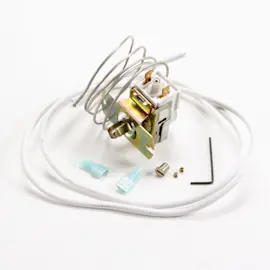
- Temperature control (thermostat/control knob): cycles the compressor to maintain the set temperature.
- Power cord and grounded plug: supplies power; designed to be used with a properly grounded outlet.
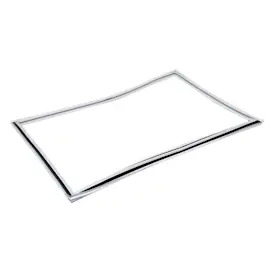
- Cabinet, lid, and lid gasket: insulation and sealing that reduce frost and temperature swings.
What you might notice during normal operation
| What you notice | What it usually relates to | What to do |
|---|---|---|
| Warm exterior walls | Heat being moved out by the sealed system | Leave airflow space around the freezer |
| Bubbling or gurgling sounds | Refrigerant circulating | Normal sound during cooling |
| Popping or cracking sounds | Metal expanding and contracting | Normal as temperatures change |
| Vibration or rattling | Freezer not level or touching a wall | Level the unit and provide clearance |
Why it matters
Knowing the major parts helps you troubleshoot symptoms faster. For example, warm outer walls and occasional compressor noise are normal, but poor airflow, an unlevel cabinet, or frequent lid openings can make the compressor run longer and increase frost.
Model-specific tips we recommend
- Plug into a properly grounded 3-prong outlet; avoid extension cords and adapters.
- Leave about 3 inches of clearance on all sides for air circulation.
- Reduce frost by keeping the lid closed, wrapping foods well, and organizing contents.
- For exact operating and safety details for this freezer, use the FFFC15M4TW0 owner's manual.
Last updated: February 2026
What is the average lifespan of a chest freezer?
Most chest freezers last 10 to 20 years, and a well-maintained Frigidaire chest freezer like model FFFC15M4TW0 commonly lands near the middle of that range. Good airflow, a tight lid seal, and routine cleaning help the compressor run less and extend service life (see the FFFC15M4TW0 owner's manual).
What affects lifespan the most
- Room temperature and ventilation: keep the freezer where ambient temps stay reasonable and leave about 3 inches of space on all sides for airflow.
- Lid seal condition: a dirty, worn, or poorly fitted gasket makes the freezer run longer.
- How often the lid is opened: frequent openings add warm air and increase run time.
- Defrosting and cleaning habits: heavy frost and dirty surfaces reduce efficiency.
- Electrical setup: use a properly grounded outlet; avoid extension cords.
Maintenance checklist that helps a chest freezer last longer
- Keep the freezer level so the lid aligns and seals correctly.
- Wipe the cabinet with mild detergent and warm water; avoid harsh cleaners and abrasives.
- Defrost when frost builds up; use a plastic scraper for soft frost and the drain method for hard frost.
- Confirm the lid closes tightly; clean the gasket and replace it if it is cracked or not sealing.
- After a move or long unplug period, allow a full cool-down period (about 4 hours) before loading unfrozen food.
Quick reference: lifespan expectations
| Freezer type | Typical lifespan | What usually ends life first |
|---|---|---|
| Chest freezer | 10 to 20 years | Compressor wear from long run times, poor airflow, or lid seal leaks |
| Upright freezer | 8 to 15 years | More frequent door openings and air loss can increase run time |
Why it matters
A chest freezer that runs too much or too long uses more electricity and puts extra hours on the compressor. Simple setup steps like leveling, leaving clearance for air circulation, and keeping the gasket sealing well reduce run time and help the freezer reach its full lifespan.
Last updated: February 2026
What can cause a chest freezer to stop working?
A Frigidaire chest freezer like model FFFC15M4TW0 usually stops working because it is not getting steady power, the temperature control is set to OFF, or a household fuse or breaker has tripped. Start with the outlet, plug, and control settings, then move to basic electrical checks.
Quick checks we recommend first
- Make sure the plug is fully seated in the outlet (a loose plug can stop the freezer).
- Confirm the temperature control is not set to OFF.
- Check the home electrical panel for a tripped breaker.
- Replace a blown fuse with a 15-amp time-delay fuse (if your home uses fuses).
- Avoid outlets controlled by a wall switch or pull cord (the freezer can be shut off accidentally).
- Do not use a GFCI-protected receptacle for this freezer (use a standard outlet instead).
Power and electrical causes (most common)
The Use and Care Guide calls out several power-related issues that can make the freezer “dead”:
| What you see | Likely cause | What to do |
|---|---|---|
| No lights, no sound | Power outage | Keep lid closed; check house lights and power status |
| Runs sometimes, then stops | Voltage varies by 10% or more | Have the power company test household voltage |
| Stops unexpectedly | Outlet on a wall switch | Move plug to an always-on outlet |
| Won’t run on that outlet | GFCI outlet | Use another circuit or have an electrician check the outlet |
Other common causes (after power is confirmed)
Once you know the freezer has correct power and the control is ON, these issues commonly stop cooling or make it seem like it stopped:
- Heavy frost buildup (airflow and heat transfer get restricted)
- Lid not sealing (warm air leaks in, temperatures rise)
- Overpacking (reduces cold air circulation around food)
- Dirty or damaged lid gasket (causes long run times and poor cooling)
Why it matters
A “not running” freezer is often a simple power or control setting issue. Fixing that first prevents unnecessary part replacement and helps protect frozen food during a power/freezer failure.
For model-specific operating and troubleshooting steps, use the FFFC15M4TW0 owner’s manual.
Last updated: February 2026
Can I look up Frigidaire parts by model number?
Yes. Looking up parts by model number is the most accurate way to get compatible replacement parts for your Frigidaire chest freezer, including model FFFC15M4TW0. Use the complete model number from the data tag, then confirm the part fits your exact configuration using the diagrams and notes in the FFFC15M4TW0 owner's manual.
How to find the model number on your freezer
On most Frigidaire chest freezers, the model and serial tag is on the cabinet near the lid opening or on an interior wall. Record both numbers so you can match parts and service information.
- Look along the upper rim of the cabinet near the lid seal
- Check an interior side wall near the front corners
- Write down the full model number and serial number exactly as shown
- Keep your purchase date with your records for future reference
How to use the model number to choose the right part
Once you search by FFFC15M4TW0, narrow results by the symptom or the system involved (cooling, lid sealing, electrical). Then cross-check the part description against your freezer’s configuration.
- Match the part to the correct section (cooling system, cabinet, lid, controls)
- Compare any notes about revisions or serial-number ranges
- Verify the part’s purpose (example: lid seal vs. temperature control)
- Use wiring and component references when troubleshooting electrical issues
Quick troubleshooting map (helps you pick the right part)
If you are shopping because the freezer is not performing correctly, these common symptoms point you toward the most likely area to inspect first.
| Symptom | Most common area to check | What to do first |
|---|---|---|
| Interior temperature too warm | Temperature control and lid seal | Set control colder; limit lid openings |
| Runs a lot | Lid sealing and airflow around cabinet | Check lid seating; improve clearance |
| Not running at all | Power supply and electrical components | Confirm outlet power; inspect cord |
Why it matters
Chest freezers often have multiple versions that look similar, and small differences can change which control, gasket, or electrical component fits. Searching by FFFC15M4TW0 reduces returns and gets your freezer cooling back to temperature faster.
Last updated: February 2026
How can I tell how many cubic feet my freezer is?
To tell how many cubic feet your Frigidaire FFFC15M4TW0 chest freezer is, measure the usable inside space (length, width, depth in inches), multiply those numbers, then divide by 1,728 to convert cubic inches to cubic feet. Confirm any model-specific capacity details in the FFFC15M4TW0 owner's manual.
How to measure and calculate capacity
- Empty the freezer enough to measure the interior liner (not the outside cabinet).
- Measure length, width, and depth in inches.
- Use this formula:
| What to do | Example | Result |
|---|---|---|
| Multiply L × W × D (inches) | 30 × 20 × 25 | 15,000 cubic inches |
| Divide by 1,728 | 15,000 ÷ 1,728 | 8.7 cubic feet |
Measuring tips that improve accuracy
- Measure the widest points inside the liner.
- If the bottom slopes toward a drain area, measure the average depth.
- Ignore small intrusions like the lid gasket; focus on the main storage cavity.
- Write measurements down and re-check once to avoid a simple tape-measure error.
Why it matters (food loading and performance)
Capacity is more than a number; it helps you load food in a way that freezes safely. For chest freezers like the FFFC15M4TW0, the manual guidance for freezing fresh food is based on pounds per cubic foot, so knowing your cubic feet helps you avoid overloading during a big restock. See the FFFC15M4TW0 owner's manual for the model’s operating and loading guidance.
Quick reference: common freezer capacity ranges
| Freezer type | Typical capacity range |
|---|---|
| Compact chest freezer | 3 to 7 cu. ft. |
| Mid-size chest freezer | 7 to 14 cu. ft. |
| Large chest freezer | 14 to 25 cu. ft. |
Last updated: February 2026
Why is my Frigidaire chest freezer not freezing properly?
If your Frigidaire FFFC15M4TW0 chest freezer is not freezing properly, the most common causes are a warm temperature control setting, frequent lid openings, a lid that is not sealing, or the freezer not having enough time and airflow to pull down to temperature. Use the FFFC15M4TW0 owner's manual to confirm the correct control setting and operating checks.
Quick checks that fix most “not freezing” complaints
- Turn the temperature control knob colder; then wait several hours for the temperature to stabilize.
- Limit lid openings; warm air enters every time the lid is opened.
- Confirm the lid is seating properly and closing squarely.
- Make sure the freezer is level; an unlevel cabinet can misalign the lid and cause sealing, frost, and moisture problems.
- Avoid loading large amounts of warm or hot food at once; let food cool to room temperature first.
- Verify you have clearance for air circulation around the cabinet, especially in hot rooms.
Cooling timeline: what to expect
The freezer needs time to recover after changes.
| Situation | What’s normal | What to do |
|---|---|---|
| Just plugged in or restarted | Up to about 4 hours to cool down completely | Keep lid closed; recheck later |
| After turning the control colder | Several hours to stabilize | Wait, then measure temperature |
| After adding warm food | Longer run time and slower pull-down | Add smaller batches; pre-chill food |
Lid seal and leveling checks (high impact)
A small air leak can keep a chest freezer from reaching target temperature.
- Check for gaps, warping, or debris on the gasket and rim.
- Do a paper test: close the lid on a sheet of paper; it should drag when you pull it out.
- Level the freezer using the leveling legs so all four corners rest firmly on a solid floor.
Why it matters
When warm air leaks in or the freezer is overloaded, the compressor runs longer and temperatures rise; that can lead to soft ice cream, thawing food, and excess frost buildup.
For electrical checks (outlet, breaker, basic testing), we use the same safe approach shown in how to use a multimeter to test electrical parts video.
Last updated: February 2026
Where can I find my Frigidaire freezer model number?
On your Frigidaire chest freezer, the model number is typically on the left exterior wall, just above the access panel. For your specific model, FFFC15M4TW0, confirm the exact label location and format in the FFFC15M4TW0 owner’s manual.
Common model number label locations
Most Frigidaire freezers use a rating plate or sticker that includes the model and serial number. Check these spots:
- Chest freezer: left exterior wall, above the access panel
- Chest freezer (alternate): inside the lid area near the rim (less common)
- Upright freezer: interior side trim, visible when the door is open
- Back panel area: near the power cord entry (occasionally)
What to write down (so you get the right parts)
When you find the label, record the details exactly as shown.
- Model number (example: FFFC15M4TW0)
- Serial number
- Any revision numbers or letters after the model
- Electrical ratings (volts/amps), if listed
| Label item | Why it matters | Example format |
|---|---|---|
| Model number | Matches diagrams and parts lists | FFFC15M4TW0 |
| Serial number | Helps identify production run details | Varies |
| Revision code | Can change compatible parts | Letter/number suffix |
Why it matters
Freezer parts and diagrams are model-specific. Using the exact model number prevents ordering the wrong lid gasket, thermostat/control, hinge hardware, or interior basket components.
Last updated: February 2026