Owner’s manual
 View engine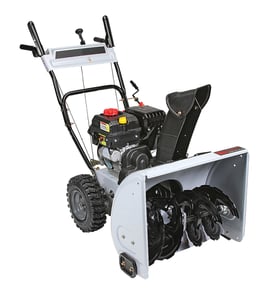


What is the typical lifespan of a gas snowblower?
A gas snowblower typically lasts 10 to 15 years. With consistent seasonal maintenance (oil changes, correct storage, and routine inspections), many machines reach 15 to 20 years of service. For Craftsman model 917881061, following the maintenance and storage steps in the 917881061 owner's manual helps maximize engine and drive system life.
What extends lifespan the most
- Change engine oil on schedule and use the correct oil grade for cold-weather operation.
- Replace the spark plug at the start of each season or about every 100 hours.
- Keep fasteners tight; check shear bolts and other bolts regularly.
- After snow removal, run the machine a few minutes to help prevent freeze-up.
- Store it correctly at season end; clean thoroughly and address worn belts before storage.
Storage and cleaning habits that prevent early failure
Proper storage is a major factor in whether a snow thrower reaches 15+ years.
- Do not store the unit indoors with fuel in the tank where ignition sources may be present.
- Let the engine cool before storing in any enclosure.
- Avoid spraying water into the engine area; water intrusion can shorten engine life.
Maintenance timing guide (typical)
Use this as a practical baseline; match your exact intervals and specs to the 917881061 owner's manual.
| Item | Typical interval | Why it matters |
|---|---|---|
| Engine oil | Each season (more often with heavy use) | Reduces wear in cold starts and high load |
| Spark plug | Each season or 100 hours | Improves starting and combustion efficiency |
| Belt inspection | Each season and before storage | Prevents slip, heat damage, and sudden loss of drive |
| Hardware checks | Frequently during season | Helps keep the machine safe and tight |
Why it matters
Most “short lifespan” snowblowers fail early from preventable issues: stale fuel during storage, water exposure during cleaning, skipped oil service, or running with worn belts. A simple seasonal routine protects the engine, auger drive, and traction system.
Last updated: January 2026
How do I tell what year my snowblower is?
For a Craftsman snow thrower model 917881061, the most reliable way to identify the year is to use the engine identification code (often called the engine model/type/code). That code includes the engine’s manufacture date, which you can match to the date format shown in the 917881061 owner's manual.
Where to find the date information
On most gas snowblowers, the “year” is tied to the engine build date and the unit’s ID labels.
- Check the engine shroud/blower housing for a label or stamped code (engine model/type/code).
- Check the frame or rear housing for a product ID/serial label.
- Use the manual’s parts and identification sections to confirm you are reading the correct label for your unit.
- If the engine has been replaced, the engine date reflects the replacement engine, not the original snowblower.
Quick steps to decode it (engine code method)
- Locate the engine code on the engine cover.
- Write it down exactly (all digits/letters).
- Decode the date using the engine maker’s format (many small engines use a year and day-of-year style code).
- Cross-check the engine model family listed in the manual so you know you are decoding the right engine series.
What “year” you will end up with
| What you check | What it tells you | Best for |
|---|---|---|
| Engine manufacture date code | When the engine was built | Dating the powerplant |
| Snowblower serial/product ID label | When the unit was produced (varies by brand) | Dating the whole machine |
| Parts list consistency | Confirms the correct model and configuration | Ordering the right parts |
Why it matters
Knowing the correct year (or engine build date) helps us match the right Craftsman parts, service procedures, and maintenance schedule, especially for wear items like belts, bearings, and chute hardware.
Last updated: January 2026
What is the most common problem with snow blowers?
The most common snowblower problem we see on the Craftsman 917881061 is a no-start or hard-start condition, usually tied to fuel issues (stale gas, water in fuel) or ignition issues (spark plug or plug wire). Clogs and belt wear are also frequent. For model-specific operating and maintenance steps, use the 917881061 owner's manual.
Most common issues (and what they look like)
- Won’t start: ignition key not inserted, fuel shut-off OFF (if equipped), out of fuel, choke/primer not set, stale fuel, water in fuel, bad spark plug, plug wire disconnected.
- Runs rough or loses power: stale fuel, fuel line restriction, muffler restriction, throwing too much snow too fast.
- Poor snow discharge: clogged discharge chute, packed snow in housing, worn auger/impeller components.
- Auger won’t turn: broken shear bolts/pins, belt slipping or broken.
- Drive won’t pull: traction/drive adjustment needed, friction/drive components worn, wheel issues.
Quick checks we recommend first (fast, low-cost)
- Confirm safety/controls: key fully inserted; throttle not in STOP; choke and primer used correctly.
- Fuel quality: drain old fuel and refill with fresh, season-appropriate gasoline.
- Spark: reseat the spark plug wire; inspect/replace the spark plug if fouled.
- Chute safety: if clogged, shut the engine off and wait for moving parts to stop; use a clean-out tool (never your hand).
- Belts: inspect for glazing, cracking, or slack; replace if worn.
Common symptoms and likely causes
| Symptom | Most likely cause | Typical fix |
|---|---|---|
| Engine won’t start | Stale fuel, bad spark plug, key not inserted | Fresh fuel, replace plug, insert key |
| Snow won’t throw far | Clogged chute or packed snow | Clear chute safely, clean housing |
| Auger stops under load | Belt slipping or shear bolt issue | Replace belt or shear hardware |
When a belt is the culprit
If the auger engages inconsistently or stops when snow gets heavy, the auger belt is a prime suspect. On this model, the listed replacement is the snowblower auger drive belt 532408007.
Why it matters
Starting and discharge problems are usually maintenance-related; fixing them early prevents hard starting, poor performance, and unnecessary wear on the auger, impeller, and drive system.
Last updated: January 2026
Is it cheaper to repair or replace a snowblower?
For a Craftsman snow thrower like model 917881061, it’s usually cheaper to repair when the problem is a normal wear item (belts, bearings, cables, tune-up parts). Replacement makes more sense when the repair involves major drivetrain or repeated failures and the total repair cost approaches about half the price of a comparable new unit.
Quick decision checklist
- Repair if the issue is maintenance-related (oil change, spark plug, belt wear) and the machine is otherwise solid.
- Repair if the snowblower starts reliably and the auger and drive systems work after basic service.
- Replace if the engine has low compression, severe internal damage, or the unit has extensive structural rust.
- Replace if you have frequent breakdowns each season and multiple systems need work at once.
- Replace if a major assembly (gearbox, auger weldment, wheels/drive system) needs replacement and labor is high.
Common repairs that are typically cost-effective
The 917881061 manual calls out routine upkeep like checking/replacing V-belts and replacing the spark plug at least yearly, which are usually the most economical fixes. Use the 917881061 owner’s manual to follow the maintenance schedule and service steps.
Typical “repair-first” items include:
- Belt replacement (auger or traction) when slipping occurs
- Spark plug replacement and fuel system cleaning for hard starting
- Lubrication and freeing up moving parts
- Replacing worn bearings or a control cable
Example part costs (parts only)
| Repair type | Example part for this model | When it’s worth it |
|---|---|---|
| Auger belt | Snowblower auger drive belt 532408007 | Belt slips, auger stops under load |
| Chute/deflector tension issue | Snowblower chute deflector tension spring 532184505 | Deflector won’t hold position |
| Auger support wear | Snowblower auger bearing 532420478 | Noisy auger, wobble, rough rotation |
Why it matters
A well-maintained snowblower can run for many seasons; most “it won’t throw” or “it won’t drive” complaints trace back to wear parts and maintenance. The manual also recommends using OEM replacement parts for safe operation and proper fit.
Cost rule of thumb
Use this simple comparison:
- Repair when the fix is a single system and the total is well under 50% of a new snowblower.
- Replace when multiple major systems are failing or the repair total is near 50% or more of a new unit.
Last updated: January 2026