Owner’s manual
 Error Codes



What are the advantages of bottom mount refrigerators?
A bottom-mount refrigerator like the GE GNE27JMMAFES keeps the fresh-food section at eye and waist level, so we reach everyday items with less bending. The freezer stays below in a pull-out drawer, which helps organize frozen foods and improves access.
Key advantages you will notice day to day
- Easier access to fresh food (less stooping for milk, produce, leftovers)
- Better visibility and organization in the refrigerator section
- Freezer drawer design helps separate and stack frozen items more neatly
- Wide shelves and bins support flexible storage (adjustable door bins on many GE bottom-freezer models)
- Features often emphasize fresh-food convenience, such as a QuickSpace-style shelf and full-width drawers (varies by model)
How this layout supports common GE features
Many GE bottom-freezer designs prioritize usable fresh-food storage and easy-to-reach components. For example, the manual for this platform highlights items like LED lighting, climate zone drawers, and a QuickSpace-style shelf on some models. For model-specific feature details and control settings, use the GNE27JMMAFES owner’s manual.
Bottom-mount vs. top-freezer: quick comparison
| Feature | Bottom-mount (bottom freezer) | Top-freezer |
|---|---|---|
| Fresh-food access | Best (most-used items higher) | Good, but lower shelves require more bending |
| Freezer access | Drawer pull-out, organized | Door swing, items can stack deep |
| Ergonomics | Better for daily use | Better if you use freezer most |
| Typical storage style | Wide shelves, drawers, bins | Simpler layout |
Why it matters
Most households use the refrigerator section more than the freezer. With a bottom-mount design, we spend less time bending and searching, which makes meal prep faster and helps reduce forgotten food in the back of shelves.
Last updated: January 2026
What is the most common problem with a GE refrigerator?
The most common GE refrigerator complaint is not cooling properly (fresh food warm, freezer warming, or temps swinging). On the GE GNE27JMMAFES, the fastest wins are confirming temperature settings, cleaning airflow paths, and checking for frost buildup that points to a defrost or fan issue.
Most common issues we see (and what to check first)
- Not cooling or weak cooling: verify vents are not blocked by food; confirm doors seal fully.
- Strange noises: light buzzing or humming is normal; loud grinding often points to a fan issue.
- Ice maker not working: confirm the water supply is on and the filter is not overdue.
- Water dispenser slow/no water: replace the filter or use a bypass to test flow.
- Water leaking: check for a clogged defrost drain or a loose water line connection.
- Door not closing: inspect gaskets, bins, and leveling.
Quick troubleshooting checklist (10 minutes)
- Set temps to typical targets: 37°F fresh food and 0°F freezer.
- Make sure the condenser area is clean and airflow around the cabinet is open.
- Listen for the evaporator fan; if it is silent while the compressor runs, cooling will suffer.
- Look for heavy frost on the freezer back wall (often a defrost system clue).
- If water/ice is weak, remove and reinstall the filter, then dispense water for a few minutes.
Parts that commonly relate to these symptoms
| Symptom | Likely system | Example part for GNE27JMMAFES |
|---|---|---|
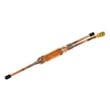
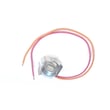
| Warm temps, frost buildup | Defrost system | Refrigerator defrost bi-metal thermostat WR50X10069 |
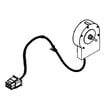
| Warm fresh food, noisy freezer | Air circulation | Refrigerator evaporator fan motor WR60X32614 |
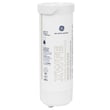
| No water/ice or slow fill | Water supply | GE refrigerator water filter XWFE |
Why it matters
Cooling and water issues can cascade: poor airflow and incorrect temperatures lead to food spoilage, while restricted water flow can cause weak dispensing and ice maker fill problems. Catching the root cause early helps avoid bigger repairs like control or sealed-system work.
For model-specific operating details and recommended settings, use the GNE27JMMAFES owner's manual.
Last updated: January 2026
How to remove bottom grille on GE refrigerator?
On the GE GNE27JMMAFES bottom-mount refrigerator, the bottom grille (base grille) is typically removed by pulling it straight out from the front after releasing any retaining screws or clips. For safe access, we recommend stabilizing the refrigerator and avoiding strain on the water line and power cord; see the GNE27JMMAFES owner's manual.
Steps to remove the bottom grille
- Unplug the refrigerator (or switch it off) before working near wiring or moving panels.
- If the grille has screws, remove them with a Phillips-head screwdriver.
- Grip the grille at the left and right ends.
- Pull the grille straight toward you to release the tabs/clips.
- Set the grille aside on a non-scratching surface.
- To reinstall, align the tabs, push the grille straight in until it seats, then reinstall screws (if used).
What to watch for (to prevent damage)
The grille area is close to the front leveling legs and, on many models, near lines and wiring. When you pull the refrigerator out for access, move it straight out and straight back in to help avoid floor damage and to avoid rolling over the power cord or water supply line.
Quick check table
| What you see at the grille | What it usually means | What to do |
|---|---|---|
| Visible Phillips screws | Screw-retained grille | Remove screws first, then pull straight out |
| No screws visible | Clip/tab-retained grille | Pull straight out evenly from both ends |
| Grille won’t budge | Tabs still engaged or stuck | Recheck for hidden screws; pull gently but firmly side-to-side only a little while pulling outward |
Why it matters
Removing the bottom grille correctly helps you access the condenser area and front components without cracking the grille, bending tabs, or stressing the refrigerator’s water supply line.
Last updated: January 2026