 Owner’s manual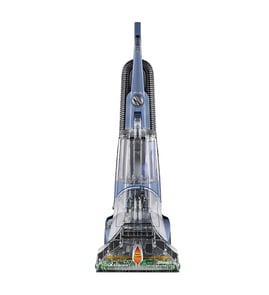

Does BISSELL have replacement parts?
Yes. Bissell 80R4 carpet cleaners use replaceable maintenance and wear items such as belts and brush components, and you can identify the correct replacements by matching your exact model and the part description in the owner's manual.
Common Bissell 80R4 replacement items
These are the parts customers most often replace on a deep cleaner like the Bissell 80R4:
- Drive belt (if the brushes stop turning)
- Brush belt (if brush roll action is weak or intermittent)
- Brush/roller components (if bristles are worn or the unit leaves streaks)
- Nozzle components (if suction at the foot is reduced)
- Hoses and tank seals (if you see leaks or loss of suction)
How to make sure you get the right part
Use this quick checklist before ordering:
- Confirm the model number is 80R4 (it is usually recorded in the manual and on the machine)
- Look up the part in the replacement parts section so you match the correct description
- Compare the symptom to the troubleshooting steps (for example, belt off or broken)
- Inspect for obvious wear: cracks, glazing, stretched belts, or missing bristles
Symptom-to-part guide (quick match)
| What the cleaner is doing | Most likely area to check | What to do next |
|---|---|---|
| Brushes not turning | Belt/brush drive | Inspect belt condition and routing; replace if worn or broken |
| No spray or weak spray | Tank seating/prime | Reseat tank, cycle power, then test spray trigger |
| Poor pickup | Nozzle/air path | Remove and reinstall nozzle; clear debris and check seals |
Why it matters
Replacing worn belts and brush components restores agitation and pickup, which helps your Bissell 80R4 clean more effectively and reduces strain on the drive system.
Last updated: February 2026
What type of carpet cleaner do professionals use?
Professionals typically use hot water extraction (often called steam cleaning) with either truck-mounted systems or high-end portable extractors because they deliver strong suction, consistent heat, and fast drying. Your Bissell 80R4 is a consumer hot water extraction carpet cleaner, so the process is similar, just with lower power and smaller tanks (see the owner's manual).
What pros use most often (and why)
Most professional carpet cleaning companies choose equipment based on heat, suction, and workflow speed.
- Truck-mounted hot water extraction: highest heat and suction; fastest drying in many homes
- High-end portable extractor: used for apartments, upper floors, or where hoses cannot reach
- Pre-spray and agitation tools: precondition soil, then scrub with a brush, CRB machine, or rotary tool
- Rinse or neutralizer: helps remove residue so carpets stay cleaner longer
- Spotting kit: targeted products for pet stains, tannins, grease, and dye-based stains
How to get more “pro-like” results with a Bissell 80R4
We recommend focusing on prep, correct water temperature, and extra dry passes.
- Vacuum thoroughly first; pick up loose dirt and pet hair before deep cleaning
- Pre-treat heavy traffic lanes and stains; let it dwell about 3 to 5 minutes
- Use hot tap water but keep it under 140°F (60°C) max; do not boil or microwave water
- Make slow wet passes, then make multiple dry passes (release the trigger) to pull up more water
- Test any spot formula in a hidden area first to avoid discoloration
- For upholstery, only clean fabrics tagged “W” or “WS”; avoid “X/S” or “dry clean only”
Quick comparison: pro machines vs. Bissell 80R4
| Feature | Pro truck-mount | Pro portable extractor | Bissell 80R4 |
|---|---|---|---|
| Heat | Very high, consistent | Medium to high | Hot tap water (customer supplied) |
| Suction | Very high | High | Moderate |
| Best for | Whole-home deep cleaning | Access-limited jobs | Routine home maintenance |
Why it matters
Professional results come from removing as much soil and moisture as possible. Strong suction and thorough dry passes reduce wick-back, speed drying, and help prevent odors after cleaning.
Last updated: February 2026
What's the number one rated carpet cleaner?
There is no single, universal “number one” carpet cleaner because rankings change by test method, price, and what you’re cleaning (pets, high-traffic carpet, upholstery). For your Bissell 80R4 carpet cleaner, the best choice is the cleaner that matches your needs and that you can use correctly per the owner's manual.
How we recommend choosing a “top-rated” carpet cleaner
Different reviewers score different things. Use these criteria to decide what “best” means for your home:
- Cleaning performance on set-in stains vs. fresh spills
- Pet hair and odor handling (basket, suction path, rinse ability)
- Ease of use (tank fill, trigger control, tool setup)
- Dry time (how well it extracts water on dry strokes)
- Maintenance (how easy it is to rinse tanks, clear the hose, and clean the nozzle)
What matters most for Bissell 80R4 results
Even a highly rated machine underperforms if setup and technique are off. The Bissell 80R4 manual emphasizes vacuuming first, optional pretreating, and using hot tap water up to 140°F/60°C max (do not boil or microwave). It also recommends a water-only rinse until the recovered water looks clear. See the owner's manual for the exact steps.
Quick technique checklist
- Vacuum loose dirt and pet hair before deep cleaning.
- Pretreat heavy-traffic areas; let it dwell a few minutes.
- Use steady wet strokes (trigger pressed), then dry strokes (trigger released).
- Do a water-only rinse after cleaning for better residue removal.
- Empty and rinse the tank after use; clear water from the hose before storage.
“Best for you” comparison guide
| If your priority is... | Look for... | Why it matters |
|---|---|---|
| Pet messes | Pretreat + rinse routine | Helps reduce odor and sticky residue that attracts soil |
| High-traffic carpet | Strong extraction + consistent passes | Improves appearance and reduces re-soiling |
| Upholstery and stairs | Hose and attachment control | Better reach and less overspray |
| Fast dry time | Good suction and more dry strokes | Less downtime and lower mildew risk |
Why it matters
“Top-rated” lists are useful, but your real-world results depend on matching the machine to your carpet type and using the right water temperature, formula amount, and stroke pattern. That is where the Bissell 80R4 instructions make the biggest difference.
Last updated: February 2026
How to disassemble a BISSELL carpet cleaner?
To disassemble a Bissell carpet cleaner like model 80R4, we start by unplugging it, removing the 2-in-1 water tank, then taking off the nozzle and end caps. For deeper access (belts, brushes, diverter), we remove a few screws and lift off specific assemblies as outlined in the 80R4 owner's manual.
Safety first
- Turn the power switch off.
- Unplug the carpet cleaner before any maintenance.
- Let the machine cool and drain/empty the tank before tipping it.
- Work on a towel or tray so small washers and screws do not get lost.
Basic disassembly (quick access)
These steps cover the most common “take-apart” tasks for cleaning and routine maintenance.
- Remove the 2-in-1 water tank: lift it up by the carry handle.
- Unlatch the tank (if you are cleaning it): release the latches on either side and lift the top off.
- Remove the nozzle and end caps (needed for belt and brush access).
Deeper disassembly for belts and brushes
Use this when you need to reach the drive belt, brush belt, or brush rolls.
- Remove the water tank.
- Remove the nozzle and end caps.
- Tip the machine on its side (cord side up).
- Remove 1 silver screw from the pivot arm.
- Lift the pivot arm up gently.
- Remove/replace the drive belt (small drive wheel to the inside brush).
- Pull brush rolls off the metal rods (do not lose the small washer at each end), then replace the brush belt if needed.
Diverter housing disassembly (for clogs)
If suction is weak or the hose path seems blocked, we typically clean the diverter area.
- Remove the two screws on the back of the diverter housing.
- Rinse the diverter housing at a sink and clear debris.
- Reinstall the housing and the two screws.
What you remove depends on the job
| Task | Parts typically removed | What it helps with |
|---|---|---|
| Clean tank and filters | 2-in-1 water tank (top/bottom) | Odors, dirty water flow issues |
| Replace drive belt | Tank, nozzle/end caps, pivot arm screw | Brushes not turning |
| Clean/replace brushes | Same as drive belt steps; remove brush rolls | Poor agitation, streaking |
| Clear diverter clog | Diverter housing screws | Low suction, hose issues |
Why it matters
Disassembling only as far as needed prevents stripped screws, broken tabs, and lost washers. It also helps keep the brush system aligned so your Bissell 80R4 cleans evenly and maintains strong suction.
Last updated: February 2026
Can I use vinegar and water in my BISSELL carpet cleaner?
No. For the Bissell 80R4 carpet cleaner, we use only Bissell cleaning fluids intended for use with the machine; vinegar and other non-Bissell solutions can damage internal components and can void the warranty. Follow the mixing and fill directions in the 80R4 owner's manual.
What to use instead (safe options)
Use the cleaning formula type and dilution listed for your carpet and soil level, then fill with hot tap water as directed.
- Use genuine Bissell 2X deep cleaning formulas
- Measure the formula first, then add hot tap water (140°F/60°C max)
- Do not boil or microwave water
- Vacuum loose dirt, debris, and pet hair before deep cleaning
- Pretreat heavy-traffic areas and stains with a compatible pretreat when needed
Quick fill guidance for the Bissell 80R4
This model uses a 2-in-1 water tank with a formula bladder.
| Step | What you add/do | Key detail |
|---|---|---|
| 1 | Add cleaning formula | Use the measuring cup and follow the formula label |
| 2 | Add hot tap water | 140°F/60°C max |
| 3 | Close and latch the tank | Secure both latches; test they are locked before lifting |
Why it matters
Approved Bissell formulas are designed to control foaming and protect seals, pumps, and internal passages. Vinegar can increase corrosion risk and leave residues that reduce spray flow, suction performance, and overall cleaning results.
If you already used vinegar
Flush the system right away to reduce residue and odor.
- Empty the tank and dispose of the mixture
- Rinse the tank and bladder thoroughly with clean water
- Run a full tank of clean hot tap water through the machine (water-only rinse)
- Empty and rinse again, then let the tank components air-dry
Last updated: February 2026